Showing posts with label #Equality. Show all posts

Monday, July 19, 2021

Senate Democrats propose requiring women to register for military draft

gettyimages-1232593247-1.jpg

Senate Democrats are proposing a sweeping rewrite of the military draft laws aimed at requiring women to register for the Selective Service System, according to a draft authored by Senate Armed Services Chair Jack Reed and obtained by POLITICO.

The changes to Selective Service could be attached to the National Defense Authorization Act, a defense policy bill that’s one of the few pieces of legislation considered a “must-pass” by Congress. The move would reignite a contentious debate over whether women should be required to register for the draft, a move the House and Senate have each considered in recent years, though the change has never become law.

The language proposed by Reed (D-R.I.) would expand registration for the service to “All Americans,” striking explicit references to males. It’s expected to be considered during committee markup this week; floor action on the bill would wait until later this year. A spokesperson for Reed declined to comment.

Currently, law states that U.S. men must register for the service when they turn 18 for potential military conscription, though no one has been drafted into the military in more than four decades. Men who fail to register for the draft can be fined, imprisoned or denied federal government jobs or student loans.

Calls to expand the draft to include women have grown in recent years, particularly after the Pentagon opened all combat roles to women in 2015. A congressionally-mandated commission that reviewed the draft also backed the change last year.

Multiple lawsuits have taken aim at the current draft law, alleging it’s unconstitutional. The Supreme Court in June declined to hear a case brought by the National Coalition for Men challenging the male-only draft.

Whether to include women in the draft became the subject of a marquee defense battle on Capitol Hill in 2016. The Senate voted to make the change as part of its annual defense policy bill with the backing of then-Senate Armed Services Chair John McCain (R-Ariz.), despite opposition mostly raised by conservative Republicans. The House Armed Services Committee adopted a similar provision, which was later stripped from the bill.

Rather than go forward with the major change, lawmakers compromised by creating an independent commission to study the draft as part of a broader review of how to boost military and public service. In the meantime, the panel’s yearslong study effectively kept further congressional action on women in the draft at bay.

The 11-member panel’s final report, issued in March 2020, backed requiring women to register for the draft, among other recommendations.

“This is a necessary and fair step, making it possible to draw on the talent of a unified Nation in a time of national emergency,” the panel wrote in its report.

Reed, who has backed making women eligible for the military draft, said during a March hearing on the panel’s findings that he hoped the changes would “in large part” be included in the upcoming defense bill.

The draft language is just one of several contentious issues expected to be considered by the Senate Armed Services Committee. In addition, senators are expected to debate a bid by Sen. Kirsten Gillibrand (D-N.Y.) to reform the treatment of military sexual assault and extremism in the military.

Source: https://www.politico.com/news/2021/07/19/senate-democrats-propose-women-military-drafts-500153
Droolin’ Dog sniffed out this story and shared it with you.
The Article Was Written/Published By: Burgess Everett and Connor O’Brien


! #Headlines, #Congress, #Democrats, #Equality, #Military, #Newsfeed, #Political, #Politico, #Politics, #Trending, #Women, #News

Friday, June 18, 2021

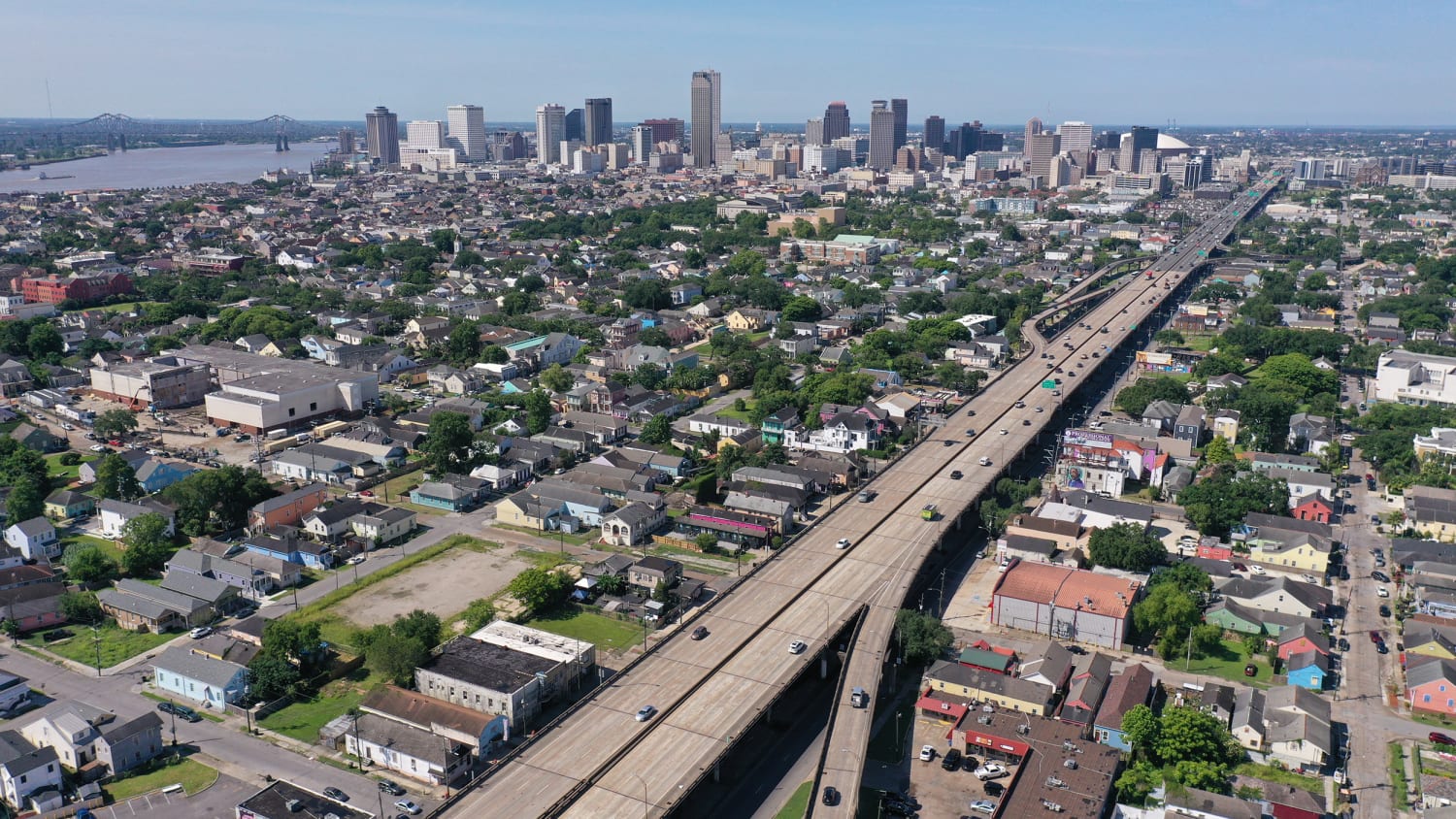
How American highway construction built a legacy of inequality

210616-treme-highway-cover-photo-se-336p

The federal highway program barreled through Black and Latino neighborhoods in the 1950s. But will new solutions repeat past mistakes?

Source: https://www.nbcnews.com/specials/america-highways-inequality/index.html
Droolin’ Dog sniffed out this story and shared it with you.
The Article Was Written/Published By: Suzanne Gamboa and Josh Lederman and Phil McCausland and Ben Popken


! #Headlines, #Cars, #Equality, #Government, #Newsfeed, #Racism, #News

Thursday, June 17, 2021

Income inequality is primarily automation-driven, economists argue

1623854195549.jpg

Automation technology has been the primary driver in U.S. income inequality over the past 40 years, according to a new paper by two prominent economists in the field.

Why it matters: Offshoring, the decline of unions, and corporate concentration have all played a part in widening the gap between lower-skilled and higher-skilled workers, but automation is the single most significant factor, and will likely grow even more important in the years ahead.


By the numbers: The real wages of low-education workers have declined significantly over the past four decades, with the real earnings of men who lack a high-school degree now 15% lower than they were in 1980.

  • Over the same time, real wages for workers with a post-graduate degree — and to a much lesser extent, those with a bachelor’s degree — rose sharply.

The big picture: In their paper, MIT’s Daron Acemoglu and Boston University’s Pascual Restrepo calculate that 50 to 70% of the changes in the U.S. wage structure since 1980 can be accounted for by relative wage declines among workers who specialize in routine tasks in industries hit by rapid automation.

  • Workers who perform tasks that can be increasingly automated — think manufacturing work done by robots or clerical work performed by software — lose out on labor share.
  • They’re then forced to compete with other lower-skilled workers for fewer remaining jobs, further bidding down wages.
  • Higher-skilled workers have largely escaped this trap not so much because of a rising demand for those skills, but because they perform tasks that can’t be — or haven’t yet been — automated.

What’s next: More of the same, barring major political changes.

The bottom line: As Acemoglu wrote in a recent essay, “The only path out of our current predicament requires both robust regulation and a fundamental transformation in societal norms and priorities.”

Source: https://www.axios.com/automation-ai-income-inequality-53825b79-7c4d-42c2-9c04-8eb52a782f86.html
Droolin’ Dog sniffed out this story and shared it with you.
The Article Was Written/Published By: Bryan Walsh


! #Headlines, #Axios, #Economy, #Employment, #Equality, #Newsfeed, #Coronavirus, #News

Tuesday, June 8, 2021

Senate GOP blocks bill to combat gender pay gap

mcconnellmitch_052821gn3_lead.jpg

Senate Republicans on Tuesday blocked legislation aimed at addressing pay inequality, marking their second successful use of the filibuster under President Biden.Senators voted 49-50 to try to advance the legislati…

Source: https://thehill.com/homenews/senate/557457-senate-gop-blocks-bill-to-combat-gender-pay-gap
Droolin’ Dog sniffed out this story and shared it with you.
The Article Was Written/Published By: Jordain Carney


! #Headlines, #CivilRights, #Congress, #Employment, #Equality, #Newsfeed, #Political, #Politics, #Republicans, #Sexism, #Women, #News

Sunday, May 2, 2021

Vermont becomes first state to allow women to enlist for combat in its National Guard

women_military.jpg

Vermont’s National Guard announced this week that it will now allow women to fill roles in its combat arms units, making it the first state in the country to do so.The announcement came in a …

Source: https://thehill.com/homenews/state-watch/551160-vermont-becomes-first-state-to-allow-women-to-enlist-for-combat-in-guard
Droolin’ Dog sniffed out this story and shared it with you.
The Article Was Written/Published By: Cameron Jenkins


! #Headlines, #Diversity, #Equality, #Government, #Military, #Newsfeed, #Political, #Vermont, #Warfare, #Women, #News

Thursday, April 29, 2021

Biden to transgender Americans: ‘Your president has your back.’

210429-joe-biden-jm-0914_55d23117dd074be

President Biden’s remarks, made during his first joint address to Congress, comes amid a wave of state bills targeting transgender people.

Source: https://www.nbcnews.com/feature/nbc-out/biden-transgender-americans-your-president-has-your-back-n1265836
Droolin’ Dog sniffed out this story and shared it with you.
The Article Was Written/Published By: Brooke Sopelsa and Jo Yurcaba


! #Headlines, #Biden, #CivilRights, #Diversity, #Equality, #HateCrimes, #Newsfeed, #People, #Politics, LGBTQ, #News

Wednesday, April 28, 2021

More than 400 businesses back LGBTQ rights act

161026-apple-logo-store-211p_9edbb31f4f9

Apple, PepsiCo, General Motors, Delta Airlines and Amazon are among the companies that have signed on to support the federal Equality Act.

Source: https://www.nbcnews.com/feature/nbc-out/more-400-businesses-back-lgbtq-rights-act-n1265605
Droolin’ Dog sniffed out this story and shared it with you.
The Article Was Written/Published By: The Associated Press


! #Headlines, #BusinessNews, #CivilRights, #Congress, #Equality, #Government, #Newsfeed, #People, #Politics, LGBTQ, #News

Sunday, April 4, 2021

How Chicago’s affordable housing system perpetuates city’s long history of segregation

210326-downtown-chicago-al-1036_9ce4fda3

Government backed affordable housing in Chicago has largely been confined to majority Black neighborhoods with high concentrations of poverty, a design that has perpetuated the city’s long history of segregation.

Source: https://www.nbcnews.com/news/us-news/how-chicago-s-affordable-housing-system-perpetuates-city-s-long-n1262119
Droolin’ Dog sniffed out this story and shared it with you.
The Article Was Written/Published By: Safia Samee Ali


! #Headlines, #CivilRights, #Equality, #Newsfeed, #People, #Racism, #TwoAmericas, Chicago, #News

Biden’s latest stimulus plan: Reducing inequality

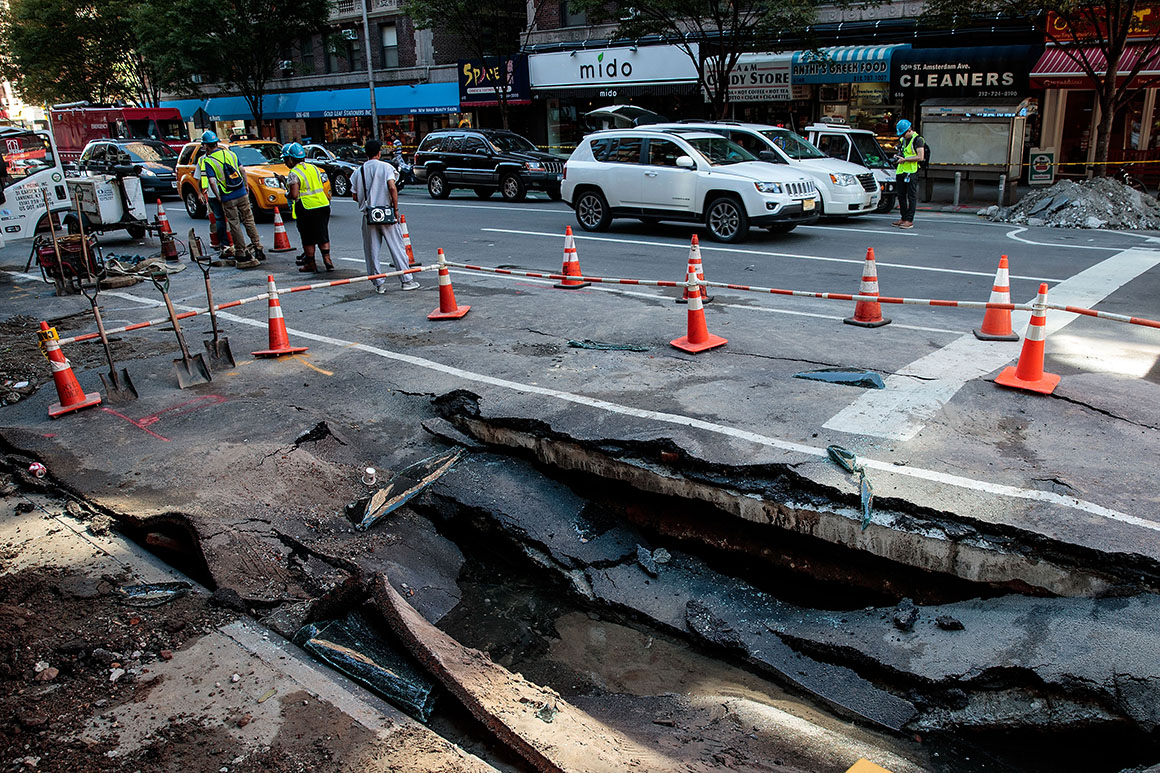
210402-sinkhole-getty-773.jpg

Republican lawmakers for years have longed to pass legislation that would rejuvenate the nation’s aging infrastructure and boost economic growth. They might finally get it with Joe Biden as president but with a focus they never counted on: targeting inequality.

Biden’s $2 trillion plan is aimed at boosting productivity — the key to raising wages and improving American living standards — by generating jobs, and bolstering transportation, communications systems and power lines. But he wants to do that not just by investing in the regions that already have the most potential but by also directing capital into underserved areas where people suffer the most from potholes, poor public transportation and lack of internet access.

It would represent the government’s most extensive bid to spend federal dollars not just on helping poor people but on revitalizing the places where they live: housing, child care centers, water systems, roads and public transit. It’s an ambitious experiment that is part of Biden’s pledge to combat racial and economic inequality.

“We all will do better when we all do well,” he said in his speech Wednesday announcing the plan. “We’re going to bring everybody along. Regardless of your background, your color, your religion, everybody gets to come along.”


The White House released a fact sheet explicitly laying out its intention to help marginalized groups, saying: “These investments will advance racial equity by providing better jobs and better transportation options to underserved communities.”

Economists say that focusing on these long-neglected communities could produce dramatic results — including in deeply red rural areas — something that the 2017 GOP tax overhaul failed to do. It’s a new approach to a long-term problem that economists say is holding back the country’s potential: The U.S. has seen disappointing productivity growth since the mid-2000s. Raising productivity — how much is produced for every hour of work — is about fostering a sweet spot where businesses are able to more efficiently deliver goods and services, and people have the means to buy what those businesses produce.

“The beauty of productivity growth is living standards can improve more rapidly in the future without generating inflation, so achieving that is really the key to making people’s lives better,” said Dan Sichel, an economics professor at Wellesley College.

Some critics, however, are casting doubt on the strategy of spending so much money on rehabilitating depressed areas, arguing that the government should instead aim to make it easier for people to relocate to more viable regions.

“Certainly, there are people who would say, you shouldn’t be subsidizing these areas which are not working,” said James Pethokoukis, an economist at the conservative American Enterprise Institute. He said the government doesn’t have a good track record of turning places into thriving centers of commerce, though he added, “maybe the sheer sort of overwhelming financial might of this will cause something to happen.”

“There are plenty of examples where politicians have dreamily thought there’s some magic infrastructure project that’s going to revitalize an area,” he said.


Yet proponents argue that improving infrastructure in areas that suffer most from lack of transportation, or even lack of clean water, could mean future gains in productivity. The “place-based” investments envisioned by the Biden administration have never been tried at this scale, and the details will matter immensely. The need is certainly there.

Liberal think tank Demos found in 2017 that Asian American, African American and Latino workers commute by public transportation at much higher rates than white workers, a disparity that’s starker in certain metropolitan areas. In Atlanta, Latino workers are 6.6 times more likely not to have a car than white workers, while African Americans are six times more likely not to have a car than white workers in Minneapolis. Workers of color also are much more likely to have public transit commutes that take at least an hour each way.

But the effect of aging infrastructure on poor communities goes far beyond transportation. “Individuals and families in poverty are exposed to environmental hazards commonly found in low-income communities, such as old, dilapidated housing that can cause ‘asthma, respiratory infections, lead poisoning, learning disabilities, behavioral and mental health problems, injuries, long-term brain damage, cancer, and other harmful conditions,’” wrote Emily Benfer, a law professor at Wake Forest University, in 2017.

“What we’re trying to do with this package is take the best of every American city and realize that across the country,” a Treasury official said. “It’s not just about growing the economic pie; it’s about using our existing resources better.”

One of the best ways to both address inequality and boost growth is increasing people’s access to the internet. According to Pew Research data from 2019, only 63 percent of people in rural areas had home broadband. But even in urban communities, that number was just 75 percent, while suburban areas came in the highest at 79 percent.

“Especially around rural broadband and 5G broadband connectivity, once the infrastructure is laid, you really are creating the conditions for a productivity renaissance,” said Joseph Brusuelas, chief economist at RSM US, who estimates the Biden plan could add 0.4 percentage point to GDP every year for 10 years. “You are creating the conditions for a significant step up among disadvantaged communities in the overall economy.”

Matthew Josephs, senior vice president for policy at Local Initiatives Support Corp., a community development financial institution, also said federal investments in child care and early learning facilities are “desperately needed.”

“You can’t shove kids and child care staff into makeshift spaces like basements,” he said. “You need age-appropriate furnishing like child-height sinks and toilets, as well as good air ventilation and surfaces that are easily cleaned. If we really want to get America back to work we have to solve the child care crisis.”

More broadly this approach could build structural support around lower-income people that will make it easier for them to get jobs and stay employed, said Kristen Broady, a fellow at the Brookings Institution.

“You can get job training, but if there’s no job there, you still have to move,” she said. “All of those wraparound services need to go along with it.”

Larry Summers, a former Treasury secretary who has been critical of the level of spending in last month’s coronavirus relief package, is much more enthusiastic about the infrastructure plan and its prospects for increasing growth. But he argued that helping lower-income areas is much more about fairness than productivity.

“The case for focusing on disadvantaged communities turns on the fact that they’re disadvantaged,” he said. “It’s much more important to provide internet access to people who have none than it is to provide better internet access to people who have good internet service.”

“If you fix highways and people no longer have to get their chassis fixed because there are fewer potholes, we’re going to have a more productive economy,” he added. “But I think the case, which I strongly support, for targeting infrastructure in disadvantaged areas is not primarily not one about increments to GDP.”

Regardless, activists on the left say it’s a step in the right direction. “When I think of folks who are in communities like the one I’m in … people are taking care of their families,” said Maurice BP-Weeks, co-director of the Action Center on Race and the Economy. “They don’t have the money for a car. Public transportation takes you an hour and a half to get somewhere” fairly close.

“If there was enough investment for people to watch their child or an elderly relative, you could imagine getting a job or having a larger choice of jobs,” he said. “There’s just a lot more opportunity for folks to really achieve.”

Still, “we’ve got a long way to go,” he said. “Do these investments actually happen?”

Source: https://www.politico.com/news/2021/04/04/biden-stimulus-plan-reduce-inequality-478991
Droolin’ Dog sniffed out this story and shared it with you.
The Article Was Written/Published By: Victoria Guida


! #Headlines, #Biden, #CoronaVirus, #Equality, #Government, #Newsfeed, #Political, #Politico, #Politics, #Trending, covid19, pandemic, stimulus, #Coronavirus, #Health, #News, #Protest, #Science

Wednesday, March 31, 2021

Reversing Trump, Pentagon to release new transgender policy

ap21090546233348.jpg

The Pentagon on Wednesday will sweep away Trump-era policies that largely banned transgender people from serving in the military, issuing new rules that offer them wider access to medical care and assistance with gender transition, defense officials told The Associated Press.

The new department regulations allow transgender people who meet military standards to enlist and serve openly in their self-identified gender, and they will be able to get medically necessary transition-related care authorized by law, said the officials, who spoke on condition of anonymity to discuss internal decisions not yet made public.

The changes come after a two-month Pentagon review aimed at developing guidelines for the new policy, which was announced by President Joe Biden just days after he took office in January.

Biden’s executive order overturned the Trump policy and immediately prohibited any service member from being forced out of the military on the basis of gender identity. Defense Secretary Lloyd Austin then gave the Pentagon two months to finalize the more detailed regulations that the military services will follow.

The new rules also prohibit discrimination based on gender identity. Their expected release Wednesday coincides with International Transgender Day of Visibility.

Austin has also called for a reexamination of the records of service members who were discharged or denied reenlistment because of gender identity issues under the previous policy. Results of that review have not been released.

Until a few years ago, service members could be discharged from the military for being transgender, but that changed during the Obama administration. In 2016, the Pentagon announced that transgender people already serving in the military would be allowed to serve openly, and that by July 2017, they would be allowed to enlist.

After Donald Trump took office, however, his administration delayed the enlistment date and called for additional study. A few weeks later, Trump caught military leaders by surprise, tweeting that the government wouldn’t accept or allow transgender people to serve “in any capacity” in the military.

After a lengthy and complicated legal battle and additional reviews, the Defense Department in April 2019 approved a policy that fell short of an all-out ban but barred transgender troops and recruits from transitioning to another sex and required most individuals to serve in what the administration called their “birth gender.”

Under that policy, currently serving transgender troops and anyone who had signed an enlistment contract before the effective date could continue with plans for hormone treatments and gender transition if they had been diagnosed with gender dysphoria.

But after that date, no one with gender dysphoria who was taking hormones or had transitioned to another gender was allowed to enlist. Troops that were already serving and were diagnosed with gender dysphoria were required to serve in the gender assigned at birth and were barred from taking hormones or getting transition surgery.

The new policies being released Wednesday are similar to those developed in 2016.

As of 2019, an estimated 14,700 troops on active duty and in the reserves identify as transgender, but not all seek treatment. There are more than 1.3 million active-duty troops and close to 800,000 in the National Guard and Reserves.

Since July 2016, more than 1,500 service members were diagnosed with gender dysphoria; as of Feb. 1, 2019, there were 1,071 currently serving. According to the Pentagon, the department spent about $8 million on transgender care from 2016 to 2019. The military’s annual health care budget tops $50 billion.

All four service chiefs told Congress in 2018 that they had seen no discipline, morale or unit readiness problems with transgender troops serving openly in the military. But they also acknowledged that some commanders were spending a lot of time with transgender people who were working through medical requirements and other transition issues.

Source: https://www.politico.com/news/2021/03/31/pentagon-to-reverse-trump-transgender-policies-478709
Droolin’ Dog sniffed out this story and shared it with you.
The Article Was Written/Published By: Associated Press


! #Headlines, #Biden, #CivilRights, #Equality, #Military, #Newsfeed, #Political, #Politico, #Trending, LGBTQ, #Health, #News, #Politics, #Trump

Thursday, February 25, 2021

Here are the three GOP lawmakers who voted for the Equality Act

pride_lgbtq_flag_capitol_getty.jpg

Three Republicans opted to buck party lines and join Democrats in voting for the Equality Act on Thursday.The sweeping civil rights bill …

Source: https://thehill.com/homenews/house/540605-here-are-the-three-gop-lawmakers-who-voted-for-the-equality-act
Droolin’ Dog sniffed out this story and shared it with you.
The Article Was Written/Published By: Juliegrace Brufke


! #Headlines, #CivilRights, #Congress, #Equality, #Government, #Newsfeed, #Political, #Politics, #Republicans, #News

Monday, January 25, 2021

World’s richest got wealthier during pandemic while inequality grew for the rest

201230-jeff-bezos-al-0851_4c4099d33f9a47

Almost every country in the world is likely to see an increase in inequality because of the pandemic, according to a new report.

Source: https://www.nbcnews.com/news/world/world-s-richest-become-wealthier-during-covid-pandemic-inequality-grows-n1255506
Droolin’ Dog sniffed out this story and shared it with you.
The Article Was Written/Published By: Rachel Elbaum


! #Headlines, #CoronaVirus, #Equality, #Money, #Newsfeed, #TwoAmericas, Billionaires, covid19, inequality, #Coronavirus, #Health, #News

Thursday, October 15, 2020

LGBT groups in Japan launch petition seeking equality law

Sexual minority groups and human rights activists are launching a petition calling for an LGBT equality law in Japan in hopes that it can be enacted next year, when the country is to host the Olympics and will be the focus of international attention

Source: https://www.independent.co.uk/news/lgbt-groups-in-japan-launch-petition-seeking-equality-law-tokyo-petition-country-people-focus-b1044094.html
Droolin’ Dog sniffed out this story and shared it with you.
The Article Was Written/Published By: Via AP news wire


! #Headlines, #Asia, #CivilRights, #Equality, #LGBT, #Newsfeed, #Trending, #WorldNews, Japan, #News, #Protest

Saturday, July 25, 2020

Ten myths about the racial wealth gap

1594658431787.jpg

For years, there’s been a popular notion — even among some Black people — that the wealth difference between white and Black Americans could be closed if Black folks collectively “got it together.”

Reality check: The wealth gap — which could more accurately be described as a wealth chasm because of just how large it is —would not be closed by Black Americans doing any of the things that have been proposed, or all of them.


Why it matters: The argument goes that Black Americans should focus more on education, family structure and home ownership, put money in Black-owned banks, start more Black-owned businesses, increase savings and investment and generally take personal responsibility the way other “model minorities” have and that would close the wealth gap.

The fact of the matter — evidenced by decades of reporting from the Federal Reserve System, U.S. Department of Labor, Department of Commerce and various academic and professional studies — is that the wealth gap is the product of centuries of inequality and racism that has grown too large to be impacted significantly by individual actions, achievements or choices.

Here are some of the most popular myths about the racial wealth gap’s causes and solutions — and why each falls apart with a closer look.

1. The myth of closing the racial wealth gap through education

Adapted from the Cook Center on Social Equity; Chart: Naema Ahmed/Axios

On average, Black households in the U.S. with heads who have completed a college degree have lower net worth than white households headed by someone with less than a high school education.

Why it matters: It is only after completing advanced post-college work that the median Black household surpasses the median white household’s net worth for a head with only a high school degree.

  • Even then, the average Black earner has about half as much wealth as the average white earner with just a college degree.

Education also makes much less difference than being white, as Black Americans with Master’s degrees have about a 7% chance of becoming a millionaire compared to a 37% chance for white Americans, St. Louis Fed data show.

  • White Americans with a high school education have about the same likelihood of becoming a millionaire as Black Americans with a Master’s degree.

Read more …

2. The myth of closing the racial wealth gap through personal responsibility

Data: Survey of Consumer Finances, reproduced from Hamilton Project; Chart: Axios Visuals

As noted in a report last year by the Cleveland Fed, the income gap between Black and white Americans is the result of “persistent systemic differences in economic opportunity,” rather than a lack of responsibility.

What happened: Efforts by Black Americans to build wealth have been impeded in a host of ways, research from the Brookings Institution led by Kriston McIntosh notes, “beginning with 246 years of chattel slavery and followed by Congressional mismanagement of the Freedman’s Savings Bank (which left 61,144 depositors with losses of nearly $3 million in 1874).”

  • Then there was the violent massacre decimating Tulsa’s Greenwood District in 1921 (a population of 10,000 that thrived as the epicenter of African American business and culture, commonly referred to as “Black Wall Street”).
  • “And discriminatory policies throughout the 20th century including the Jim Crow Era’s ‘Black Codes’ strictly limiting opportunity in many southern states, the GI bill, the New Deal’s Fair Labor Standards Act’s exemption of domestic agricultural and service occupations, and redlining.”

Read more …

3. The myth of closing the racial wealth gap through home ownership

Reproduced from Urban Institute; Chart: Axios Visuals

Many have suggested that a key to closing the racial wealth gap between Black and white Americans is to encourage more Black families to own homes, but data shows that would be woefully insufficient.

Between the lines: “Rather than homeownership creating wealth, having family wealth in the first place leads to homeownership, particularly high equity homeownership,” a 2018 study from the Samuel DuBois Cook Center on Social Equity finds.

  • This is borne out in the fact that Black homeowners in the U.S. on average start with much less wealth, purchase lower-priced houses and grow less value in their homes, no matter their age or income level, compared to white homeowners.

The backstory: Much of this can be traced back to U.S. homeownership history. White families were able to benefit from federal housing programs and secure mortgages for generations while Black families were often denied bank loans outright or had to accept predatory loans at extreme interest rates.

Read more …

4. The myth of closing the racial wealth gap with individual accomplishment

Data: Samuel DuBois Cook Center on Social Equity; Chart: Danielle Alberti/Axios

The increasing number of Black millionaires and billionaires and the success of people like former President Obama have led many to speculate that the racial wealth gap in the U.S. is closing, but in fact the opposite is happening.

The big picture: Data shows that over the last 30 years, even as individual Black Americans have seen increased success, the overall wealth gap has widened.

What’s happening: As of 2016, 15% of white families were millionaires, according to the latest data from the Fed, compared to 7% in the Fed’s 1992 Survey of Consumer Finances.

  • The percentage of Black households worth more than $1 million rose from about 1% in 1992 to a little less than 2% in 2016.

Between the lines: Fed data show that white Americans get more help accumulating wealth — 26% of white families reported receiving an inheritance, compared with 8% of Black families and 5% of Hispanics.

Read more …

5. The myth of closing the racial wealth gap through increased savings

Reproduced from the Federal Reserve Bank of Cleveland; Table: Axios Visuals

An oft-suggested reason for the massive wealth gap between Black and white families in the U.S. is that Black Americans simply don’t save or invest enough. Data shows that is untrue.

What they’re saying: A 2004 study by Maury Gittleman and Edward N. Wolff, using data from the Panel Study on Income Dynamics (PSID), tracked the financial position of Black and white families and found that if income is controlled, there is “a slight savings edge for Black households.”

What’s really happening: “The current racial wealth gap is the consequence of many decades of racial inequality that imposed barriers to wealth accumulation,” the Cleveland Fed noted in a 2019 report.

  • And while white Americans’ head start in amassing wealth plays some role in the wealth gap, the primary driver for its continued presence is “persistent systemic differences in economic opportunity.”

Read more …

6. The myth of closing the racial wealth gap by investing in Black-owned banks

Data: FDIC; Chart: Axios Visuals

Politicians and others have long suggested that if more Black families and businesses used Black-owned banks, it would help Black people overcome the racial wealth gap.

  • However, a recent Brookings Institution report shows Black-owned firms with paid employees generated just over $103 billion in revenue annually.

What it means: If every single Black-owned business put every single dollar of its revenue into Black-owned banks every year, after a decade Black-owned banks would have 6% of the total assets that banks led by white people had in the fourth quarter of 2019.

  • It would take just under 30 years of every dollar earned by all of the Black-owned businesses invested in Black-owned banks for their assets to surpass those held by one bank, JPMorgan Chase, in the first quarter of this year.

Read more …

7. The myth of closing the racial wealth gap through entrepreneurship

Adapted from Federal Reserve Bank of Atlanta; Chart: Axios Visuals

Black Americans’ attempts at entrepreneurship are often foiled by an initial lack of capital and an inability to obtain financing, especially through government programs.

By the numbers: According to the Federal Reserve Bank’s 2016 report on minority firms, “40% of firms owned by people of color received the full amount of capital sought, compared to 68% of nonminority-owned firms.”

  • The Atlanta Fed’s 2019 report on minority-owned firms found that even though Black-owned businesses were the highest percentage of firms expecting revenue growth and employment growth over the next 12 months, they were significantly less likely to get loans.

Reality check: “A review of national and regional studies over several decades indicates that limited financial, human, and social capital as well as racial discrimination are primarily responsible for the disparities in minority business performance,” a 2017 report (the latest available) from the Department of Commerce’s Minority Business Development Agency finds.

Read more …

8. The myth of closing the racial wealth gap through financial literacy

Adapted from the Cook Center on Social Equity; Chart: Naema Ahmed/Axios

A recent CNBC article suggests financial literacy is the “critical link” that could “help bridge America’s racial wealth gap.”

What it means: The focus on financial literacy generally points to disproportionate use of services like payday lending and check cashing stores with fees and interest payments much higher than traditional lending or banking options by Black folks.

  • However, a 2017 report from the St. Louis Fed finds: “[M]eager economic circumstances — not poor decision making or deficient knowledge — constrain choices and leave asset-poor borrowers with little to no other option but to use predatory and abusive alternative financial services.”

Read more …

9. The myth of closing the racial wealth gap by emulating “model minorities”

Data: Federal Reserve; Chart: Axios Visuals

A prevailing myth about the wealth gap between white and Black Americans is that it could be closed if Black people valued hard work and education like so-called model minorities, typically Asians and other recent U.S. immigrants.

Reality check: Data shows that to be untrue. A 2014 Bureau of Labor Statistics study finds that across races in the U.S., “Once families decide to invest in their children’s higher education, little difference exists in the level of expenditures between racial and ethnic groups.”

The big picture: The success of recent immigrants and “model minorities” has much to do with U.S. immigration laws. Since 1965, the U.S. “has given preferential admission to those with higher-than-average levels of education; white-collar, professional, and technical employment; and thus household incomes,” University of Texas history professor Madeline Y. Hsu wrote in 2015.

  • Even as newcomers, “‘successful’ immigrant groups actually retrieve a comparable class position as the one they held in their country of origin,” the Samuel DuBois Cook Center on Social Equity notes.

State of play: The wealth gap has widened despite the fact that Black Americans increased their holdings of financial assets — an often-suggested remedy — to 96.7% in 2016 from 63.5% in 1989.

Read more …

10. The myth of closing the racial wealth gap through “stronger families”

Reproduced from Zaw e. al, 2017, “Women, Race & Wealth“; Note: “With children” refers to households with children under 18; Chart: Axios Visuals

Often the increased rate of Black single motherhood or “Black family disorganization” is referenced as a reason for the gap in wealth accumulation between Black and white Americans.

By the numbers: “Compared to both white and Hispanic women, Black women marry later in life, are less likely to marry at all, and have higher rates of marital instability,” a 2015 study posted to the National Institutes of Health library finds.

  • And marriage clearly helps increase family wealth. Data show that married Black women have substantially more wealth than single Black women.

Yes, but: “[W]ealth differences among white and Black women persist despite type of family structure, marriage, age, or education,” the DuBois Cook Center’s study finds, tracking data from the Panel Study of Income Dynamics.

The bottom line: “[N]either marriage, a college education nor a lifetime of work provides the answer for equalizing opportunity between Black and white women.”

Read more …

Source: https://www.axios.com/racial-wealth-gap-ten-myths-d14fe524-fec6-41fc-9976-0be71bc23aec.html
Droolin’ Dog sniffed out this story and shared it with you.
The Article Was Written/Published By: Dion Rabouin


! #Headlines, #Axios, #Economy, #Equality, #Money, #Newsfeed, #Racism, #Truth, #TwoAmericas, #Health, #News, #Science

Monday, June 22, 2020

Now is the perfect time to talk about how the Ivy League enables inequality

200619-harvard-commencement-2019-ew-625p

Why do the nation’s best universities want to serve as finishing schools for the elite rather than launching pads for the determined?

Source: https://www.nbcnews.com/think/opinion/protests-race-injustice-should-make-us-look-how-ivy-league-ncna1231618
Droolin’ Dog sniffed out this story and shared it with you.
The Article Was Written/Published By: Gayle Tzemach Lemmon


! #Headlines, #CivilRights, #Diversity, #Education, #Equality, #Newsfeed, #Politics, #TwoAmericas, #News

Sunday, June 7, 2020

'It's time for new leadership in this country': George W Bush and Mitt Romney among Republicans who say they won't back Trump re-election

donald-trump.jpg

Growing numbers of prominent GOP figures debating how far to go in opposing president

Source: https://www.independent.co.uk/news/world/americas/us-politics/trump-presidential-us-election-republicans-george-w-bush-mitt-romney-a9553111.html
Droolin’ Dog sniffed out this story and shared it with you.
The Article Was Written/Published By: Jonathan Martin


! #Headlines, #Election2020, #Equality, #People, #Politics, #Republicans, #Trending, #Trump, #TrumpLiesMatter, #News, #Newsfeed, #WorldNews

Saturday, March 7, 2020

We all have a part to play in the battle for gender equality – it needs to be a reality, not just an ideal

women-march.jpg

As we unite this International Women’s Day, let’s reaffirm our commitment to working towards lasting change

Source: https://www.independent.co.uk/voices/sadiq-khan-international-womens-day-gender-equality-a9384401.html
Droolin’ Dog sniffed out this story and shared it with you.
The Article Was Written/Published By: Sadiq Khan


! #Headlines, #CivilRights, #Diversity, #Equality, #politics, #Protest, #Sexism, #Trending, #Women, #Newsfeed, #syndicated, news

Tuesday, February 25, 2020

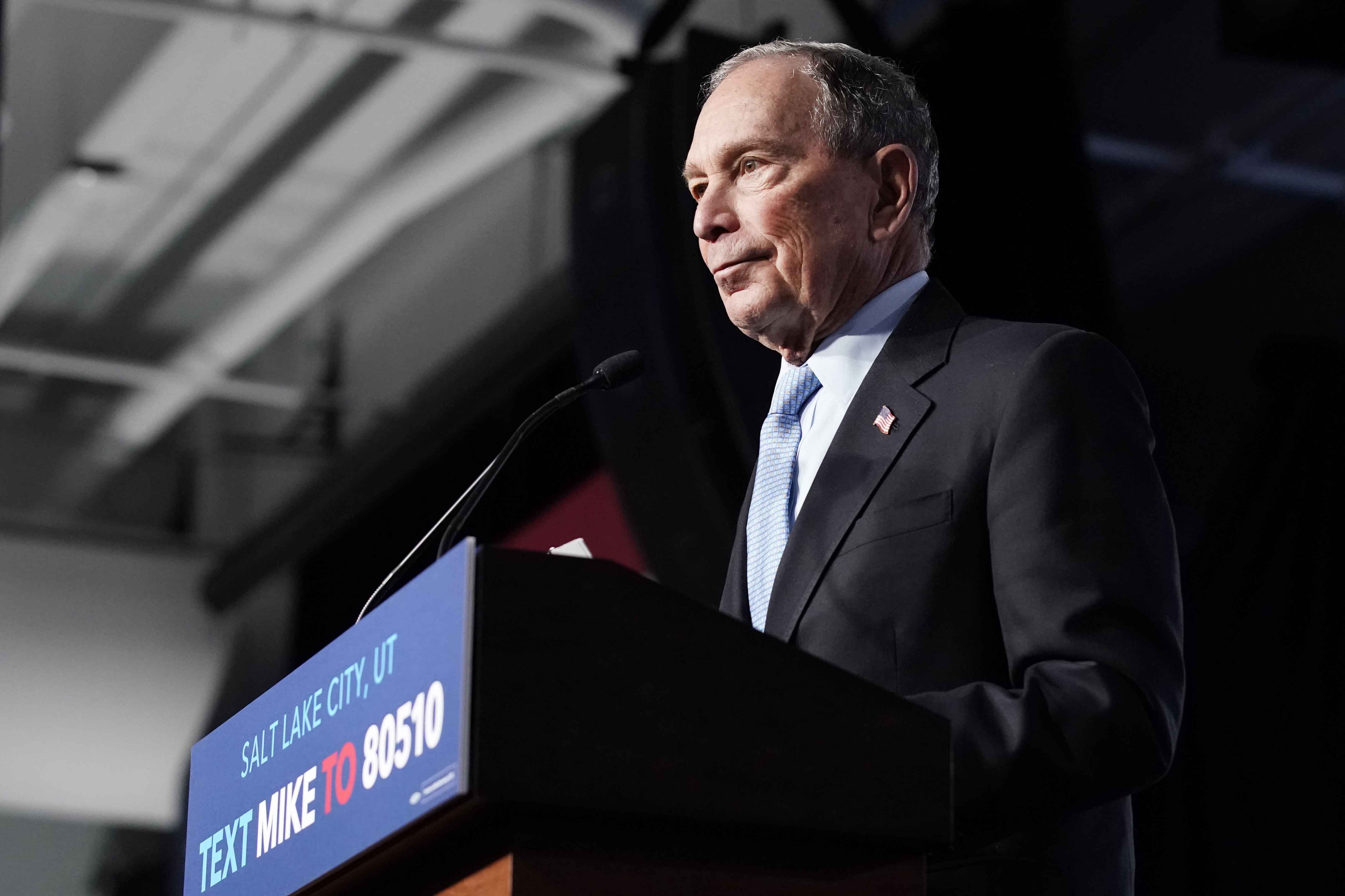
City Hall record muddles Bloomberg’s income inequality message

200225-mike-bloomberg-gty-773.jpg

NEW YORK — Michael Bloomberg casts himself as a champion for working-class Americans in his free-spending bid for the White House, but his record as New York City mayor is complicating that message.

A report released as his third term was winding down placed nearly half the city’s residents at or near the poverty line. Under his rule, the city’s homeless population swelled and public housing conditions deteriorated.

The result was a surge of anger over the yawning gap between rich and poor that underscored the nonpartisan mayor’s tenure and vaulted his chief critic, Bill de Blasio, into City Hall as his successor. Now, as Bloomberg campaigns for the Democratic nomination for president, he is spending an unprecedented amount of his own fortune to meet the populist moment taking hold in the party — while blurring the parts of his mayoral record that contradict it.

“Do not mistake the two sides of Michael Bloomberg. When it comes to the environment and public health, he is an interventionist. When it comes to economics he is a pure free marketeer,” de Blasio, who is backing Bernie Sanders, said in an interview with POLITICO this week. “He vehemently opposed using the tools of government to address the most profound economic crisis of our times.”

As a mayor who took office months after Sept. 11, Bloomberg reimagined New York City as a chic metropolis with gleaming towers rising along the once-industrial waterfront and atop rail yards. But as a presidential candidate, neither that vision nor his alignment with Democrats on climate change, immigration and gun control was enough to shore up his chances at a moment when the Democratic party’s progressive wing was on the rise. Recognizing that, Bloomberg has proposed a tax increase on high earners like himself, called for stronger union protections and promised to double spending on homelessness.

“I believe America should always be a country where a middle-class kid like me can start a business and succeed beyond her or his wildest dreams. But just as important, America must always be a place where the middle class grows bigger and stronger,” he wrote in a New York Times op-ed last month. “Right now that’s not happening, because the rewards of the economy are far too concentrated at the top.”

His team is quick to point out he drove up graduation rates and test scores, which improve earning potential, established a commission to tackle poverty and expanded tax credits. They argue New York City bucked national trends by holding the line on poverty better than other major American cities during his tenure.

“From successful efforts to improve schools and narrow achievement gaps, to our groundbreaking financial empowerment initiatives, eliminating inequality and providing economic opportunity was at the heart of everything the Bloomberg administration did,” a campaign official said in a prepared statement. “New York City’s economy became more diverse and inclusive with Mike as mayor, and the same will happen for America with Mike as president.”

But his data-driven policies and dispassionate rhetoric on poverty over the course of his mayoralty disaffected low-income pockets of the city. He vetoed bills to require paid sick days for private-sector workers and higher wages at companies receiving city subsidies, arguing it was akin to “a big managed economy [like] the USSR.”

“What he is saying now, as he is running for president, is much different than what he did when he was mayor,” said Stuart Appelbaum, president of the retail workers union that advocated for the wage measure. “I’m disappointed that when he had the power to do something about it as mayor, he was not supportive of living wage or paid family leave and instead chose to veto both bills.”

His mayoralty was embraced by New York’s wealthy and elite, who applauded his grandiose vision for rebuilding a city devastated by the terror attacks. But as he was supporting developments with high-end homes and shops — albeit alongside a city-funded affordable housing program — his appointees to a local board were raising rents on regulated apartments during the recession.

That wasn’t the only aspect of Bloomberg’s record that has long troubled advocates for low-income New Yorkers. By the beginning of Bloomberg’s final year in office in 2013, living conditions for more than 400,000 public housing residents had so deteriorated that the New York City Housing Authority’s repair backlog exceeded 420,000. He vowed to tackle it, and a year later, NYCHA reported a reduction to 106,000 repairs.

But it had all been sleight of hand, a U.S. attorney’s office investigation later found: Agency workers had come up with ways to “manipulate” the numbers, rather than actually fix apartments.

Investigators also discovered that during Bloomberg’s third term, the agency began submitting false information to the federal government to certify its inspectors were doing required lead paint checks while actually skipping them, leaving children to reside in apartments with contaminated paint.

“He didn’t believe housing was a responsibility of city government, or government in general, which is why there was little to no attention paid to NYCHA until it blew up into a full blown crisis towards the very end of his administration,” said state Sen. John Liu, who served dual roles as city comptroller and permanent critic during Bloomberg’s time in office.

The damning investigation released by U.S. Attorney Geoffrey Berman in 2018 led to the appointment of a federal monitor last year. The documented failures — mold, rats and leaking ceilings — spanned the Bloomberg and de Blasio administrations. Housing professionals generally agree that decades of federal disinvestment were exacerbated by local management flaws.

In Bloomberg’s case, critics said the agency that housed predominantly poor, black and Latino families never appeared to be a priority.

“No one had taken real responsibility for NYCHA over many decades, and that includes Bloomberg,” said Ray Lopez, a leader of Metro IAF, an advocacy organization whose 2013 lawsuit over mold in public housing led to a consent decree in the last month of Bloomberg’s tenure.

Some tenant leaders give Bloomberg credit for lending an ear, despite the troubling conditions.

“When he was mayor he listened to the residents of public housing,” said Danny Barber, head of the Citywide Council of Presidents, who said he appreciated Bloomberg’s business-like approach to government. “The follow through on his behalf could have been better.”

Bloomberg also stoked anger when he appointed John Rhea, a former investment banker with no prior housing experience, to run the housing authority. His budgets contributed comparatively little in capital funding for the agency, and in many years the city collected more from NYCHA in payments in lieu of taxes than it gave the agency in expense funding. (De Blasio stopped requiring NYCHA to make those payments.)

In 2013, staffers were allowed to close work orders by reporting a resident wasn’t home when a maintenance worker arrived, leading to 200,000 repairs being removed from the backlog without real fixes. Residents would sit around with their doors propped open waiting for workers to arrive, only to find that their complaint had been closed because they were falsely marked as not home, Lopez said.

Starting in 2011, NYCHA falsely certified to the Department of Housing Preservation and Development that it was conducting required lead inspections — a practice that continued until 2016, federal prosecutors found. More than 1,100 children living in NYCHA apartments were found to have dangerous levels of lead in their blood between 2012 and 2018.

The lead deception became public during de Blasio’s tenure and ballooned into a full-fledged scandal, leading to the resignation of his NYCHA chair Shola Olatoye.

“It was a mounting problem under the previous administration,” Liu said. “The pipes were already leaking and finally burst under the current administration.”

New York’s homeless population also skyrocketed during Bloomberg’s time in office.

The number of people sleeping in city shelters soared to more than 53,000 by January 2014, a month after he left office, from 31,000 when he began, according to reports from the Coalition for the Homeless.

“Every time I pass a homeless person on the street I can’t help but think that the current crisis we’re facing right now has deep roots in his administration,” said Mary Brosnahan, who headed the coalition during his administration.

The sky-high cost of housing in New York combined with an economic crash and policy decisions to force more and more families into shelters. At the beginning of 2014, there were more than 22,000 homeless children. Families were staying in shelters longer than ever before, an average of 14.5 months.

A turning point came when a rental-assistance voucher program was terminated in 2011, after the state withdrew aid.

Bloomberg and his aides suggested at the time that some families were intentionally moving into shelters in order to qualify for the subsidy. Later, he said families extended shelter stays because they were “pleasurable,” even as residents complained of rodents, dirty rooms and spoiled food.

“We had a financial meltdown in ‘08 and a recession in ‘09 and ‘10, and any policy hobbyist knows that after a recession, homelessness is going to go through the roof. People lose jobs. They’re not able to hold onto their homes. And yet there was zero preparation for that. There was zero preparation in anticipation of a rise in homelessness,” Liu said.

Bloomberg’s team stresses that the number of homeless people sleeping on the street declined during his tenure, and he signed a deal with the state to create thousands of apartments for people in need of social services.

But he also moved to tighten the rules to get into homeless shelters, requiring single adults to show proof they had nowhere else to go.

The City Council successfully sued to block the rules, calling them “cruel and punitive.” The administration also tried to require shelter residents with jobs to pay rent, but ultimately backed down and agreed to instead create a new savings program.

Brosnahan recalled appearing with Bloomberg at a press conference on the deal and hearing him talk about the need to teach homeless people how to save. “It was so tone deaf and I think telling of this guy’s mindset,” she said. “Anything having to do with there the rubber meets the road for our poorest neighbors, he didn’t put much energy into whatsoever.”

Source: https://www.politico.com/news/2020/02/25/mike-bloomberg-income-inequality-117440
Droolin’ Dog sniffed out this story and shared it with you.
The Article Was Written/Published By: Sally Goldenberg and Erin Durkin


! #Headlines, #Bloomberg, #Democrats, #Equality, #Justice, #NYC, #Political, #Politico, #politics, #Trending, #Newsfeed, #syndicated, news

Sunday, February 16, 2020

A cure for income inequality?

20200214-ubi-yang-gty-773.jpg

NEWARK, N.J. — Local leaders across the United States are turning to private donors to fund an out-of-the-box policy experiment they think could go mainstream: Giving cash to residents, no strings attached.

Newark, Milwaukee and Stockton, Calif., are among the cities testing versions of what’s known as universal basic income, a program under which residents receive a set amount of money, regardless of their income level.

Universal basic income has long been discussed as a potential remedy for income inequality, but former Democratic presidential candidate Andrew Yang thrust the idea into the national debate when he made it a centerpiece of his campaign. While Yang may now be out of the race, conversation around universal basic income isn’t going away.

Milwaukee Alderwoman Chantia Lewis, who is spearheading a pilot program in her city, said she hopes the local experiments prove so successful that they‘ll force action at the national level.

“I would love to see this spark a flame across the country,” she said.

At a time when Republicans are controlling the agenda in Washington, local officials in Democrat-controlled Newark, Milwaukee and Stockton see an opportunity for their cities to become laboratories for policy making. Not only will these experiments prompt more public discourse, but they‘ll likely add to the existing body of research on the subject.

The pilot programs in the three cities are in various stages of implementation, and it’s possible more cities will join the effort. The 18-month experiment in Stockton is more than halfway complete, while Newark and Milwaukee plan to launch their pilots later this year. Chicago is also considering a universal basic income program.

“It’s a novel idea, but I don’t think people take it seriously,” Newark Mayor Ras Baraka said in an interview. “That’s why it’s important for us to do these pilots, and show people the seriousness of this.”

In its truest form, universal basic income, sometimes referred to as guaranteed income, gives the same amount of money to residents regardless of income level.

In Stockton, 125 residents — all living at or below the median income level — receive $500 a month. Details of the Milwaukee and Newark pilots are still being worked out, but both Baraka and Lewis say they want to include residents who are living in poverty as well as those considered lower middle class.

In October, Stockton officials released preliminary findings of their program, which indicated participants were spending the money on necessities like food, utility bills and gasoline. Proponents of universal basic income cite these early findings as proof people wouldn’t spend the money on frivolous items.

“This has been an idea whose time has come,” Stockton Mayor Michael Tubbs said. “People are paying off credit cards, paying for dentures, helping family members in hard times, and being able to afford tutoring for kids.”

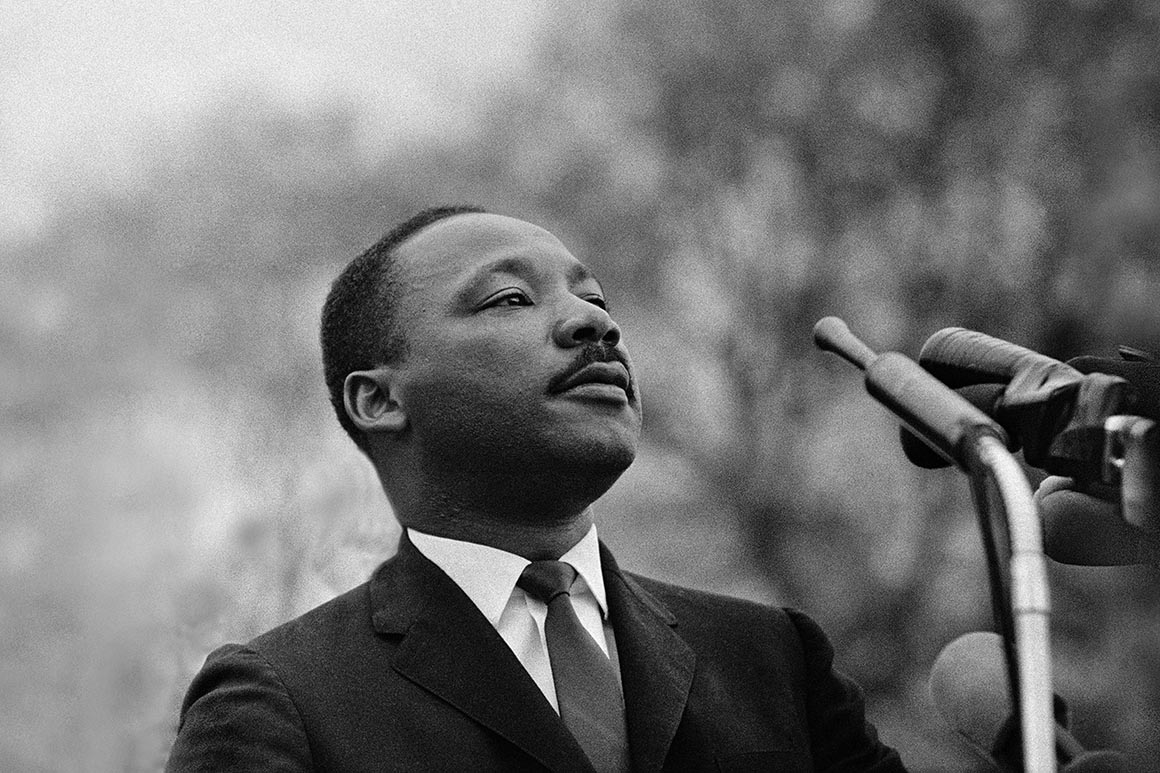
Universal basic income is not a new idea. There were several pilot experiments in the United States and in Canada in the 1970s, and Alaska has had its own form of it for decades, cutting residents checks from oil industry profits. Civil rights leader Martin Luther King Jr. advocated for guaranteed income in the 1960s and more recently, tech moguls like Mark Zuckerberg and Elon Musk have endorsed the idea.

190603-mlk-gty-773.jpg

In 2017, Finland became the first European nation to test out universal basic income, giving 2,000 unemployed residents the equivalent of about $634 a month. One stated goal of the program was to see if the base income would help people find jobs. Employment levels did not improve during the two-year study, according to the BBC, though participants did report feeling happier and less stressed.

The idea of universal basic income is supported by those on both the left and the right, with one key ideological difference: Democrats tend to think a basic income should be given in addition to benefits poorer Americans receive, while Republicans and Libertarians believe it should replace entitlements.

The three city-led pilot programs are designed to ensure participants do not lose their existing benefits.

While many, including Yang, have framed the need for universal basic income around increased workplace automation and job loss, officials where the program is being tested emphasize it would also help bridge income inequities for people of color.

“Yang talks about the change in the labor pool, but that’s just one aspect of it,” said Baraka. “There has been a deep-seated wealth gap in this country for a long time.”

Opponents often note universal basic income will be a costly endeavor. Yang’s proposal of giving $1,000 a month for every adult in the United States would have a multi-trillion dollar price tag. He said he would pay for it by adding a tax on the production of goods or services and consolidating some welfare programs.

The pilot programs are and will operate on relatively modest budgets, from several hundred thousand dollars to $3 million, and are largely being paid for with private donations. A bulk of the $3 million pilot in Stockton is being funded by Economic Security Project, a pro-basic income advocacy and research group, as well as other donors.

In Milwaukee, Lewis initially proposed funding the several hundred thousand dollar program for her city, in part, with $100,000 that was earmarked for computer upgrades in the police department. But some local officials protested the use of public funds, and the idea was scrapped.

Andrew Yang on his giveaway, automation and Asian stereotypes

Elected officials acknowledge that if universal basic income were attempted at the national level, it could not be done with private donations.

“To be as impactful and sustainable, that would take some really serious dollars,” Lewis said.

It’s too soon to say whether the pilot programs could help pave the way for policy making at the state or national level. Tubbs said he’s had conversations with California Gov. Gavin Newsom’s office as well as state lawmakers and some of the Democratic presidential candidates.

What is clear is that elected officials and researchers believe the pilots will add to the existing research on universal basic income.

Stacia Martin-West, one of the researchers monitoring the Stockton program, said the advice she’s given to anyone who has approached her about universal basic income is to “come research with us.”

“One study is but a brick in the wall of the knowledge we have around universal basic income,” she said, “and no study is going to be able to answer all of the questions we have.”

Source: https://www.politico.com/news/2020/02/16/universal-basic-income-cure-inequality-115335
Droolin’ Dog sniffed out this story and shared it with you.
The Article Was Written/Published By: Katherine Landergan


! #Headlines, #Diversity, #Economy, #Equality, #Money, #Political, #Politico, #politics, #Trending, #Newsfeed, #syndicated, news
Saturday, February 1, 2020

Rising diversity further complicates Iowa’s first status in the primary

dresmallthumbnail.jpg

Source: https://www.politico.com/video/2020/01/31/diversity-iowa-democrats-caucus-069526
Droolin’ Dog sniffed out this story and shared it with you.
The Article Was Written/Published By: Eugene Daniels


! #Headlines, #Diversity, #Election2020, #Equality, #Political, #Politico, #politics, #SocialJustice, #Trending, #Newsfeed, #syndicated, news