It's Not All The News. Just The Stuff The Dog Chooses. Real News, That's Barking Up The Right Tree, The Stuff That's Tough To Chew On For Some. Global news from around the web. Not necessarily the news you see on TV.
In what is a surprise to absolutely no one, NASA won’t be sending astronauts to the lunar surface in 2024. Blaming everyone but the kitchen sink for the delay, the space agency now intends to send a crew, including a woman and a person of color, to the Moon in 2025.
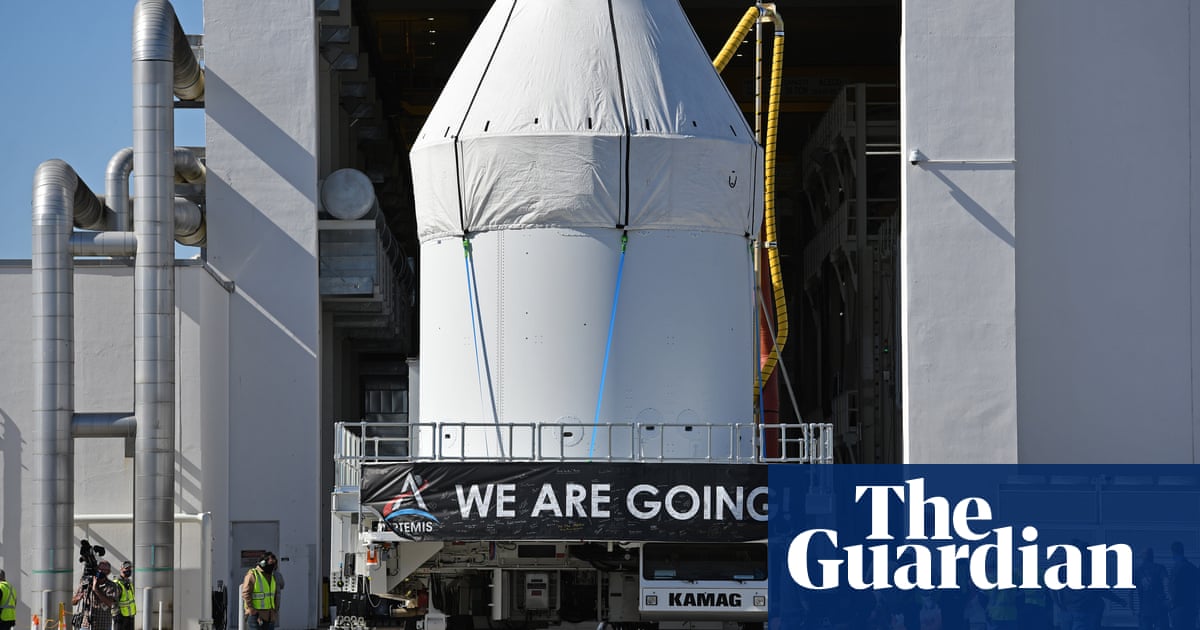
The Orion capsule will be launched on the Space Launch System, paving the way for the resumption of people to walk on Earth’s satellite again
Nasa has announced plans to launch an uncrewed flight around the Moon in February 2022, paving the way for astronauts to once again set foot on Earth’s satellite.
The US space agency said on Friday that it was in the final phase of testing to send its Orion capsule on an orbit around the Moon on its Space Launch System rocket.
On May 26, a total lunar eclipse will be visible in the pre-dawn sky over much of North America. Skygazers will see the Moon pass completely into the shadow of Earth. As this happens, our familiar planetary companion will grow continually redder, before becoming extremely (yet, not entirely) dark. The lunar eclipse on May 26 should be a delight for amateur astronomers (especially in the western United States), or casual stargazers willing to venture outside late at night. “[C]ertain skywatchers will be able to catch a glimpse of a rare lunar trifecta: a ‘super blood moon.’ Not only will this be…
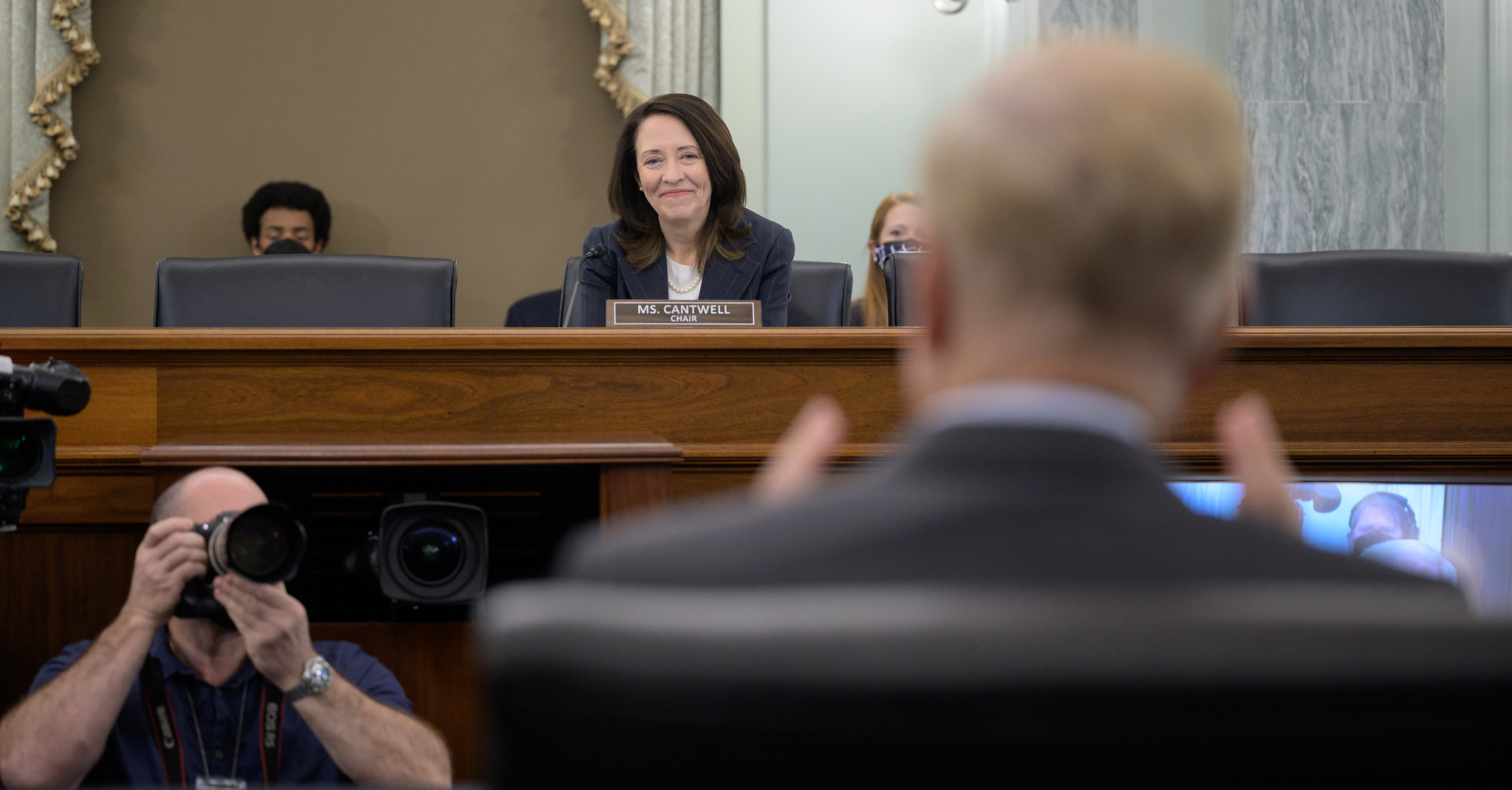
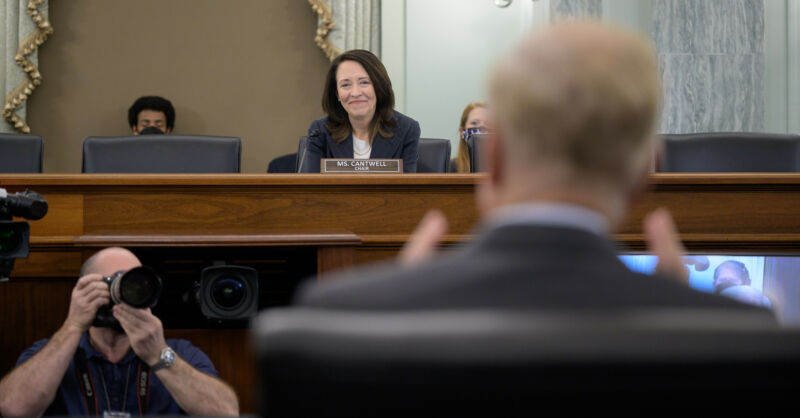
Enlarge/ Committee Chair Sen. Maria Cantwell, D-Wash., listens to former US Sen. Bill Nelson, President Biden’s nominee to be the next administrator of NASA, on April 21, 2021. (credit: NASA)
On Wednesday, a US senator added an amendment to unrelated science legislation that would impose significant restrictions on NASA and its plans to return to the Moon.
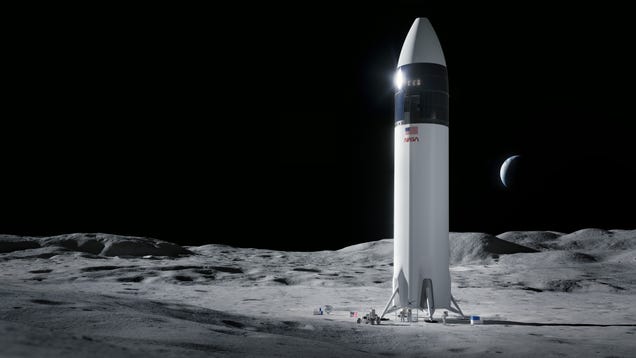
The amendment (see document) was spurred by NASA’s decision in April to select SpaceX as its sole provider of a human landing system for the Artemis Program. Senator Maria Cantwell, a Democrat from the state of Washington, where Blue Origin is based, authored the legislation. Owned by Amazon founder Jeff Bezos, Blue Origin led a lunar lander bid that was rejected by NASA.
The US Senate Committee on Commerce, Science, and Transportation passed the amendment without any debate, adding the NASA changes to the Endless Frontier Act, a bill to keep US scientific and technology innovation competitive with China and other countries.
Enlarge (credit: Simon Stacpoole | Offside | Getty Images)
The heads of the Chinese and Russian space agencies signed an agreement on Tuesday to work together to build a “scientific” station on the Moon.
Under terms of a memorandum of understanding, the two countries will cooperate on creation of an “International Lunar Science Station” and plan to invite other countries to participate. The agreement was signed by Zhang Kejian, director of the China National Space Administration, and Dmitry Rogozin, the chief of Russia’s space corporation, Roscosmos. The agreement was announced by Roscosmos.
Details about the project were fairly sparse, specifying only that the countries would work together to create research facilities on the surface and/or in orbit around the Moon. The goal was both to establish long-term, uncrewed facilities on the Moon as well as to build up the capabilities for a human presence there.
Enlarge/ Workers at the landing site of the return capsule of China’s Chang’e 5 probe in Siziwang Banner, north China’s Inner Mongolia Autonomous Region, on Dec. 17, 2020. (credit: Xinhua/Ren Junchuan via Getty Images)
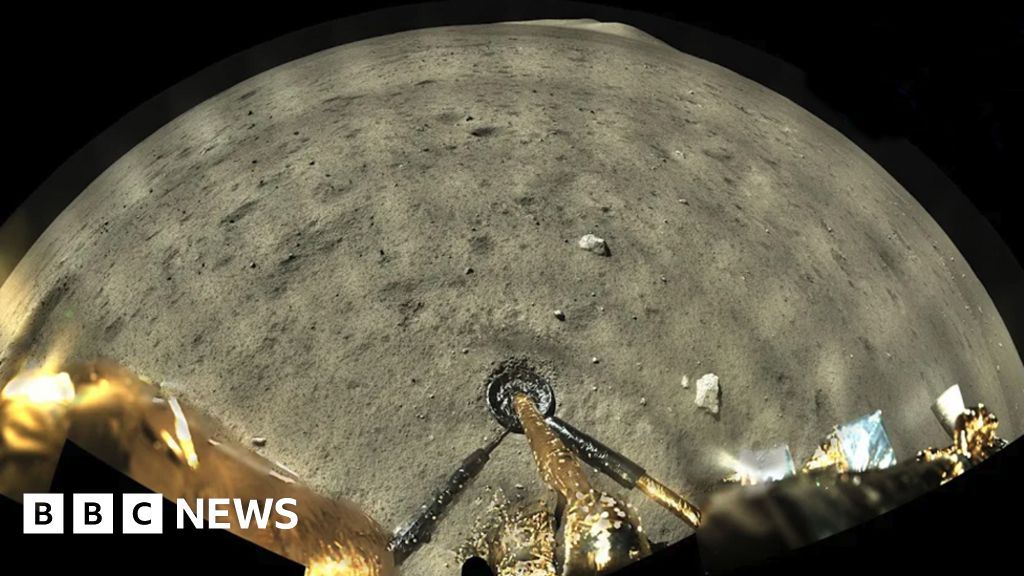
China’s increasingly ambitious space program completed a 23-day mission on Wednesday that culminated in the return of about 2kg of rocks from the Moon. During the final phase of the mission, a singed spacecraft carrying the lunar cargo landed in Mongolia and was recovered by Chinese teams.
This Chang’e 5 mission represents a significant success for China and its space program, becoming only the third nation—after the United States with its crewed Apollo program and the Soviet Union with a robotic program in the 1970s—to return samples from the Moon.
During a post-landing news conference, Chinese officials said they would emulate the United States and Soviet Union in sharing the samples with international partners, including the United Nations. However, sharing material with the United States seems unlikely due to the Wolf Amendment, a law passed by Congress in 2011 that prohibits direct cooperation with China.
Elon Musk’s SpaceX and Dynetics also in competition
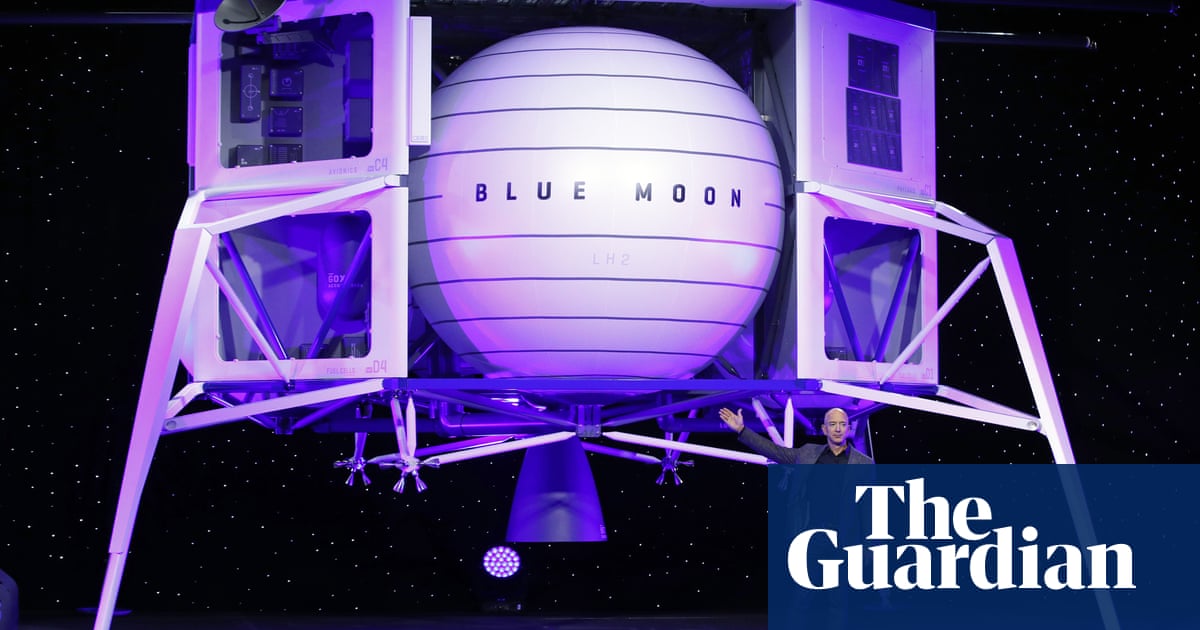
Jeff Bezos’ space company Blue Origin will take the first woman to the moon, the billionaire said as Nasa nears a decision over who will supply its first privately built lunar landers, meant to be capable of sending astronauts to the moon by 2024.
Yesterday, China’s Chang’e-5 robotic lunar lander successfully set down on the lunar surface marking, for the first time in four decades, that humans have travelled to the moon to collect soil samples. Today, the Chang’e-5 reported back to Earth, tra…
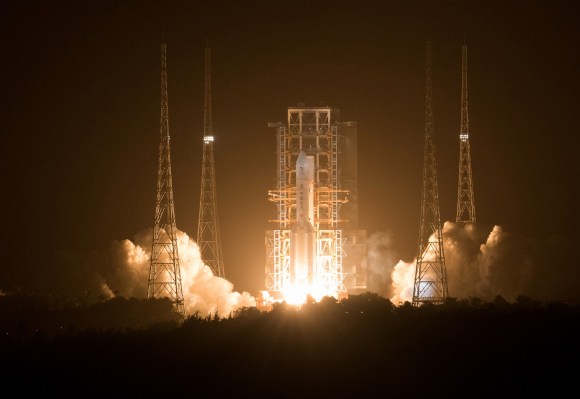
Chinese state news agencies are reporting a successful landing of the Chang’e-5 lunar robotic lander, which will seek to return lunar rock samples back to Earth. The launch took off on November 23, and attained lunar orbit on November 28. It launched the lander vehicle on November 30, and the reports today from the China National Space Administration (CNSA) says that at shortly after 10 AM EST it achieved its goal of touching down on the Moon’s surface intact.
China’s Chang’e-5 mission will be the third ever to bring back soil or rock samples from the Moon – only the U.S. and the former Soviet Union have accomplished that so far. The mission landed on the side of the Moon closest to the Earth (which is always the same side, since the Moon is locked in its orientation during its orbit around our planet).
This landing starts a clock that has a pretty fixed duration in terms of the next steps for the mission – the lander doesn’t actually have a heater unit on board, so it can’t withstand the lunar night. That means it will have to collect the samples it hopes to return within a period spanning the next 14 Earth days, with a potential landing planned for around December 16 or 17 (which means, coincidentally, that if everything goes to plan, China will have its Moon rocks back to study just in time for our debut TC Sessions: Space event).
This isn’t the only extraterrestrial sample return mission going on right now – a Lockheed Martin-designed probe successfully retrieved samples from near-Earth asteroid Bennu just last month, and will seek to return those with a trip beginning next March. NASA has also launched its Mars sample-return mission, using the Perseverance rover it launched in July.
Chinese technicians are making final preparations for a mission to bring back material from the lunar surface in what would be a major advance for the country’s space program
A group of astronomers from the University of Texas at Austin believe that reviving an old NASA plan from a decade ago could solve a problem other telescopes are unable to tackle. The astronomers believe that the massive telescope would be able to study the first stars in the universe. Researchers in the project say that the James Webb Space … Continue reading
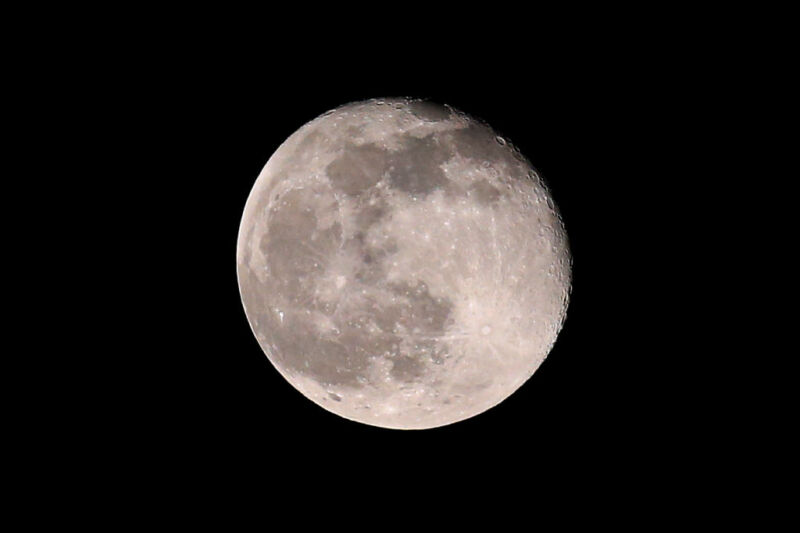
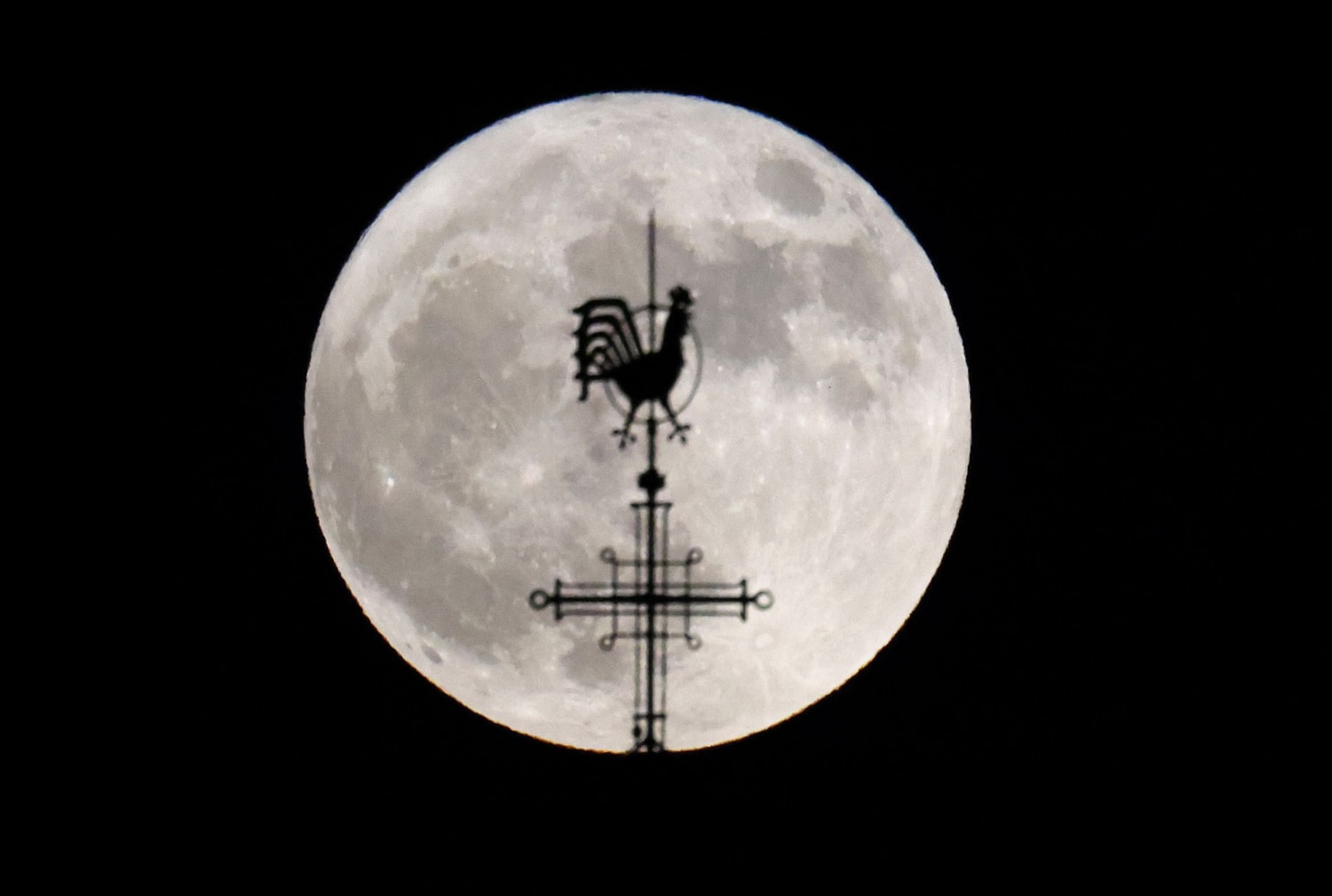
The moon won’t actually appear to be the color blue — the moon gets its name from a 16th century folklore writer and back then, the term meant something impossible or absurd.
NASA says that 4.5 billion years ago, the surface of our planet was extremely hot and unable to sustain life. The sun constantly bombarded the planet with solar flares and coronal mass ejections. Scientists at the space agency said that a neighboring shield could’ve helped the planet to retain its atmosphere and eventually transform into a habitable planet. The shield … Continue reading
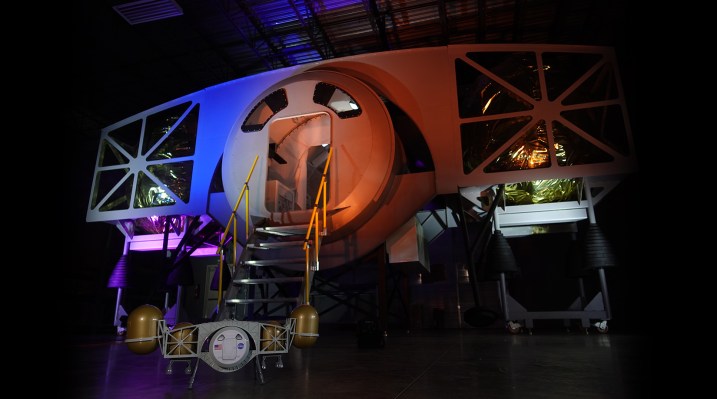
One of the three companies chosen by NASA to create a Human Landing System (HLS) for NASA has completed a key step by building a full-scale test article of its lander for its team and NASA to evaluate and review. The Dynetics HLS is roughly the size of the Apollo Moon lander, but it’s laid out very differently, as you can see in the image above.
Dynetics provided a brief overview of the test article and its purpose in a video introduction on Tuesday. As you can see in the walkthrough below, it’s essentially a true-to-size 3D model that includes modular, re-arrangeable components. These don’t include actual working electronics or anything – they’re more like lego blocks that NASA and the Dynetics engineers working on the product can use together to ensure that the HLS design works well ergonomically and functionally for the astronauts who will eventually be using it to make the trip down to the lunar surface.
The components of this test article include the crew module where astronauts will be living and working during their stay at the Moon, as well as the tanks that will hold the propellant fo r the ascent and descent phases of its flight, a autonomous cargo platform, and the tall solar arrays that will help power the spacecraft. Dynetics and its subcontractor LSINC created the mock vehicle in just three months after being awarded the contract by NASA.
The goal for Dynetics, as well as for Blue Origin and SpaceX, is to compete with one another for the initial contract to take humans to the surface of the Moon for NASA’s initial human landing as part of its Artemis program, currently scheduled for 2024. Earlier this week, Blue Origin announced that it had passed a critical initial design requirements review, and Dynetics says it has accomplished the same. Blue Origin also delivered a full scale test article of its own to NASA back in August.











 A group of astronomers from the University of Texas at Austin believe that reviving an old NASA plan from a decade ago could solve a problem other telescopes are unable to tackle. The astronomers believe that the massive telescope would be able to study the first stars in the universe. Researchers in the project say that the James Webb Space …
 NASA says that 4.5 billion years ago, the surface of our planet was extremely hot and unable to sustain life. The sun constantly bombarded the planet with solar flares and coronal mass ejections. Scientists at the space agency said that a neighboring shield could’ve helped the planet to retain its atmosphere and eventually transform into a habitable planet. The shield …