Showing posts with label Mueller. Show all posts

Wednesday, May 5, 2021

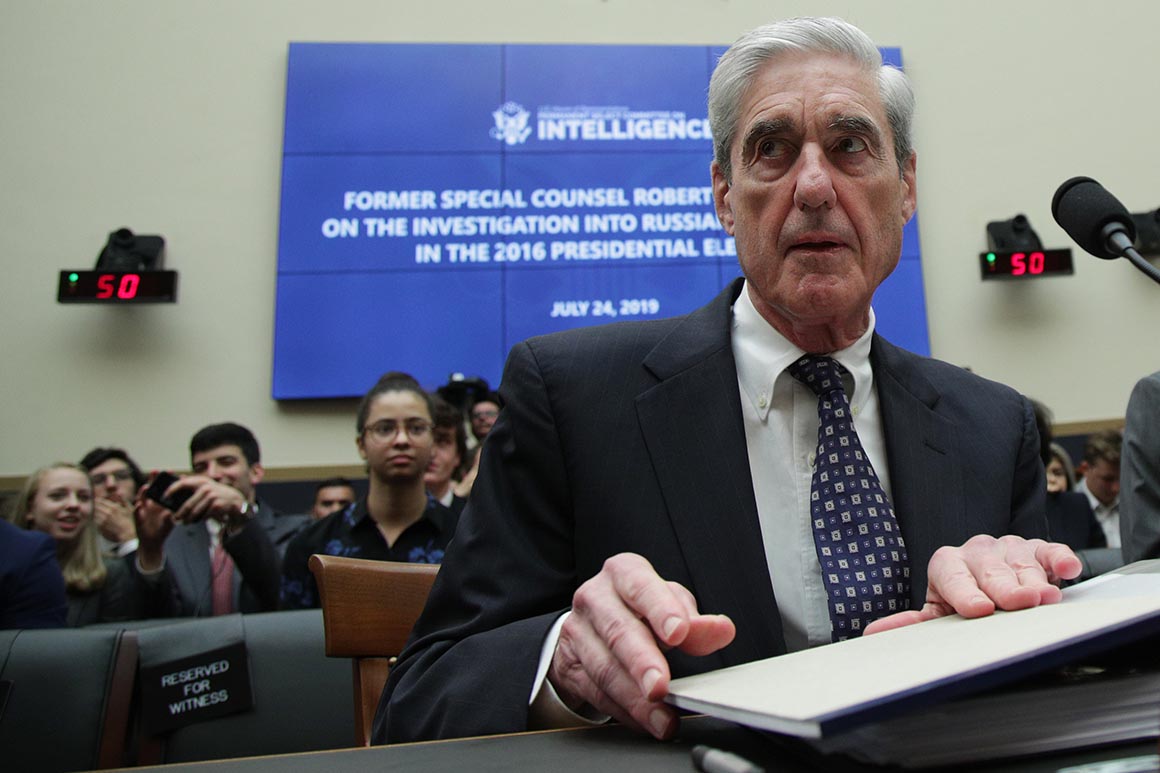
Judge orders release of memo on Trump obstruction decision

4481.jpg?width=1200&height=630&quality=8

DoJ attorneys ‘disingenuous’ in attempts to keep document at conclusion of Mueller investigation secret, judge says

A justice department memorandum explaining the decision not to charge Donald Trump with obstruction at the conclusion of the Mueller investigation must be made public, a federal judge has ruled.

Attorneys for the department were “disingenuous” in their attempts to keep the document secret, district court judge Amy Berman Jackson said, according to CNN which reported the story on Wednesday.

Continue reading…

Source: https://www.theguardian.com/us-news/2021/may/05/donald-trump-obstruction-memo-barr-mueller-investigation
Droolin’ Dog sniffed out this story and shared it with you.
The Article Was Written/Published By: Richard Luscombe


! #Headlines, #Elections, #Investigation, #Newsfeed, #Politics, #Trending, #Trump, #TrumpLiesMatter, #Truth, Mueller, #News

Thursday, November 26, 2020

Mueller prosecutor says Trump should be investigated and face charges after leaving office

Attorney who investigated Russian ties to US president cites ‘ample evidence’ for criminal charges 

Source: https://www.independent.co.uk/news/world/americas/us-election-2020/trump-investigation-crimes-mueller-andrew-weissman-b1762286.html
Droolin’ Dog sniffed out this story and shared it with you.
The Article Was Written/Published By: Gino Spocchia


! #Headlines, #Investigation, #Newsfeed, #Politics, #Trending, #Trump, #TrumpLiesMatter, Mueller, #News, #WorldNews

Sunday, October 25, 2020

Steele dossier source insists he is not Russian agent: ‘It’s slander’

steele_dossier_121119gn_lead.jpg

Igor Danchenko, a Russia analyst who gathered intelligence on possible links between President Trump and Russia that was used in a controversial dossier, said Wednesday that he wants to clear his name, adding that t…

Source: https://thehill.com/homenews/news/522114-steele-dossier-source-insists-he-is-not-russian-agent-its-slander
Droolin’ Dog sniffed out this story and shared it with you.
The Article Was Written/Published By: Celine Castronuovo


! #Headlines, #FBI, #Investigation, #Newsfeed, #Political, #Politics, #Trump, #TrumpLiesMatter, #Truth, Mueller, #News, #WorldNews

Saturday, August 22, 2020

Mueller’s investigation was never a hoax. And a new report proves it.

200629-donald-trump-ac-913p_c1e2ee337ebb

Trump and Biden’s contrasting positions on Russian interference in American elections are clear. Whether voters care about these differences, however, is not as obvious.

Source: https://www.nbcnews.com/think/opinion/senate-russia-report-proves-trump-was-wrong-mueller-was-right-ncna1237743
Droolin’ Dog sniffed out this story and shared it with you.
The Article Was Written/Published By: Michael McFaul


! #Headlines, #Congress, #Elections, #Investigation, #Newsfeed, #Russia, #Trump, #TrumpLiesMatter, biden trump, Mueller, #News, #Politics, #WorldNews

Sunday, July 26, 2020

Republicans and Democrats want Mueller to testify again. They may regret it.

200520-mueller-gty-773.jpg

Lindsey Graham once said he had no interest in hearing from Robert Mueller.

Now, 100 days out from Election Day, the South Carolina Republican and Senate Judiciary Committee chairman is teasing a blockbuster hearing with the former special counsel, joining Democrats’ monthslong push for Mueller to appear before the panel.

But hauling Mueller back to the Capitol won’t be easy. And some doubt it will even happen so close to the election, in part because of the political land mines such an event would create for both Republicans and Democrats.

“I’ll believe it when I see it,” Sen. Richard Blumenthal (D-Conn.), a Judiciary Committee member, said in a brief interview. “I have seen nothing since that leads me to think [Graham] is actually going to call Mueller.”

Despite the public bipartisan agreement, there are real obstacles and risks to securing Mueller’s testimony. For Republicans, a strong defense by Mueller could shed unwelcome light on President Donald Trump’s previous statements and conduct in the final stretch of the election. For Democrats, another halting performance by the ex-FBI chief could give Trump and his allies more ammunition for their attacks on the investigations that have dogged Trump and his associates for years.

Then, there’s the logistical hurdles.

House Democrats faced an uphill battle to pressure a reluctant Mueller to testify last year; it took weeks of talks, and eventually a subpoena, for Mueller to appear before the House Judiciary and Intelligence committees — an appearance Graham later called “not pretty.”

Negotiating with Mueller a second time won’t be any easier, and Graham said his staff isn’t yet in contact with Mueller or his team.

Graham is spearheading a comprehensive review of the origins of the Russia investigation, which ensnared Trump and his allies for years. And he’s eyeing testimony from former FBI bigwigs in the coming months, including former FBI Director James Comey and the ex-FBI deputy director, Andrew McCabe, even before hearing from Mueller.

That puts a potential Mueller hearing just weeks before Americans head to the polls. Democrats view Graham’s posture as simply an effort to discredit Mueller’s investigation and, in the process, boost a key theme of Trump’s reelection campaign as close to the November election as possible. Graham has maintained that his investigation has nothing to do with the election.

“He’ll be invited,” Graham reiterated last week. “[But] that’ll come at the end. I’m just working through the nuts and bolts.”

A spokesman for Mueller and former deputy special counsel Aaron Zebley, declined to comment on possible testimony before the panel.

With Graham’s investigation, Democrats also see an election-year plot by Republican senators to run cover for Trump, who has sought to hit back against those who spearheaded the various investigations that targeted him and his associates. To this day, Trump continues to remind Americans of the probes that he believes unfairly targeted him — an effort that invigorates his loyal base of supporters.

At the same time, Democrats still welcome Mueller’s appearance before the committee and dismiss the notion that it would be politically risky for them, leaning on Mueller to push back on Republicans’ characterizations of his investigation as unfounded and to defend what they believe was a properly predicated inquiry.

“They’ll hear more of the truth. It’s the old Harry Truman story — someone from the crowd called out, ‘Give ‘em hell, Harry.’ And he said, ‘I’m just going to tell them the truth and they’ll think it’s hell,’” Blumenthal quipped.

Sen. Chris Coons (D-Del.), another member of the panel, talked up Mueller as a skilled professional who is “more than capable” of defending his probe, which yielded 34 criminal indictments.

“I would think for people who are trafficking in these conspiracy theories and these unfounded allegations about Mueller, the risk is that he’ll be forceful and clear, and demonstrate that it was a well-predicated investigation,” Coons said in a brief interview.

In justifying their investigation into the origins of the Russia probe, Republicans point to several pieces of recently declassified information that calls into question the genesis of the investigation into potential ties between Trump associates and the Kremlin. That includes a Justice Department inspector general report that documented serious errors and abuses as part of the warrant application process for a former Trump campaign adviser.

Earlier this month, Graham released documents suggesting that senior FBI officials were initially skeptical of the emerging narrative early in Trump’s presidency that his campaign was in contact with Russian intelligence officers. Republicans assert that the risks of hearing from Mueller instead lie with Democrats, whom they say will be forced to defend an investigation riddled with biases and corruption.

“I want to know how, [did] this become a fishing expedition — and we got plenty of evidence that it should have never started in the first place,” said Sen. Chuck Grassley (R-Iowa), the former Judiciary Committee chairman.

“Now, that’s probably not his fault. He didn’t make the decision to set up his job,” Grassley added of Mueller. “But it’s just kind of irritating that the president has gone through two years of Russia-gate, $30 million, and then you’ve got impeachment and I don’t know how many other things that ever since before he was elected president, they were going to get him out of office.”

Indeed, Republicans concede that their concerns about the Russia investigation have less to do with Mueller himself and focus more on the Justice Department officials who spearheaded the counterintelligence investigation that eventually spun off into the Mueller probe, after then-Deputy Attorney General Rod Rosenstein appointed Mueller as special counsel.

Republicans have focused more of their ire on the Obama administration, specifically the senior FBI agents who opened and continued pursuing an investigation that Trump has said was a “hoax” and a “witch hunt,” even as more evidence began to emerge that Russia was interfering in the 2016 campaign to boost Trump’s prospects against Hillary Clinton.

“More and more disturbing evidence has come up about the politicization and corruption of the Obama FBI and Department of Justice, and I think it’s important for Mr. Mueller to describe what they knew and when they knew it,” said Sen. Ted Cruz (R-Texas), a one-time Trump foe who has used his perch on the Judiciary Committee to hammer the Obama administration for its handling of the Russia probe.

Graham announced earlier this month that he would grant Democrats’ request for Mueller to appear before the committee, citing Mueller’s July 11 Washington Post op-ed in which he strongly defended his nearly two-year investigation into Russia’s interference in the 2016 election.

In the op-ed, Mueller also defended his office’s prosecution of Roger Stone, the longtime Trump confidant whose prison sentence the president had commuted just a day earlier. Stone was convicted on seven counts including obstruction, witness tampering and making false statements.

“Bottom line is, I had no intention of calling Mr. Mueller. He testified before the House. It was not pretty to watch. But at the end of the day, Trey, he decided to interject himself into the Roger Stone case,” Graham said recently on a Fox News podcast with former Rep. Trey Gowdy (R-S.C.).

Democrats had said they were eager for Mueller to appear before the committee to allow him to more thoroughly justify his investigation, which has drawn consistent attacks from Trump and his allies, particularly as the committee continues to release new information about the probe’s origins.

Asked about the timing of Mueller’s possible appearance before the Senate, Sen. Mazie Hirono (D-Hawaii), a Judiciary Committee member, said her party’s initial calls for Mueller to testify came months ago, noting that Democrats have since sought testimony from other central figures in the Russia investigation like Trump’s senior adviser and son-in-law, Jared Kushner, and his former campaign chairman, Paul Manafort — only to be shut down by the committee’s Republican majority.

“That pretty much gives you an idea of where Lindsey is coming from with regard to getting to the truth of anything,” Hirono added.

Democrats insist they’re not afraid of what could come out of a Mueller hearing, even if it happens so close to the election. They said Americans would see through what they perceive to be a partisan stunt.

“Everything that Lindsey has been doing lately is really, in my view, for political purposes,” Hirono said. “And he’s very much in step with the president, who does nothing without a political motive behind it, which has to do with protecting — as we say in Hawaii — his okole.”

Source: https://www.politico.com/news/2020/07/26/republicans-democrats-mueller-testify-again-381300
Droolin’ Dog sniffed out this story and shared it with you.
The Article Was Written/Published By: Andrew Desiderio


! #Headlines, #Congress, #Investigation, #Newsfeed, #Political, #Politico, #Politics, #Trending, #Trump, Mueller, #News, #WorldNews

Saturday, July 11, 2020

Actually, the Supreme Court Just Gave Congress a Big Win

ap20167502772964-773.jpg

In the immediate aftermath of Thursday’s Supreme Court rulings on who has the right to access the president’s financial records, numerous commentators cast the decisions as a “split” that gave prosecutors a clear win but thwarted Congress’s ability to obtain Trump’s financial records. But while Trump might have won a short-term political battle by effectively managing to keep his records hidden until after the November election, there should be no confusion about who won on Thursday.

The 7-2 majority rejected Trump’s claim of absolute immunity for himself, his businesses and his children from state grand jury subpoenas and subpoenas from three congressional committees. Yes, the court did not give Congress the immediate and largely unconditional win that it handed prosecutors in New York. But that scorecard misses the bigger picture. Indeed, in some respects, Congress emerged with more clarity about its oversight powers, and how to enforce them, than it had before the Supreme Court weighed in.

To understand why Congress (and in a larger sense the Constitution and the rule of law) is a big winner here, it’s important to understand how these new cases differ from the Court’s previous major pronouncements on investigating presidents: United States v. Nixon, which prompted release of the Watergate tapes and Nixon’s resignation, and Clinton v. Jones, which forced a sitting president to testify in a civil deposition, prompting his impeachment for perjury. In the two recent cases, Trump v. Vance and Trump v. Mazars USA, the subpoenas went to third parties—an accounting firm and two banks, not to the White House or Trump himself. And there were no claims of executive privilege involved—that is, nothing sought by the subpoenas is relevant to the actual work of the Executive Branch. Trump’s breathtaking plea for absolute presidential immunity, if accepted, would have fractured the Constitution’s system of separated powers itself, giving the motherlode of power to the presidency.

Keep in mind that, for purposes of the Vance matter, there exists a vast body of case law governing challenges to grand jury subpoenas that can be brought to bear on the Manhattan District Attorney’s information request. Like any litigant, the accounting firm that received the subpoena can try to argue that it was brought in bad faith, that compliance would impose an undue burden on the firm, that it’s too broad, or that it calls for privileged information. According to the majority, Trump might also endeavor to advance an argument that Mazar’s compliance with the subpoena would cause “significant interference” with his functions as president under Article II of the Constitution. Courts know how to handle these things, and Trump doesn’t get a Teflon shield from state criminal process just because he is president. The criminal justice system must go on, after all, and the public need not wait until he’s out of office absent a really good reason (and so far, Trump has none).

For purposes of the Mazars case, by contrast, there is no body of law that the lower court can apply to ascertain the propriety of the congressional subpoenas. Why? Because, in the words of Chief Justice Roberts, “Congress and the Executive have . . . managed for over two centuries to resolve such disputes among themselves without the benefit of guidance from us.” The Supreme Court hasn’t had to wade into this kind of mess until now because every president before Trump struck deals with the coordinate legislative branch of government. The fact that Trump pushed this envelope so far is precisely why the Court’s decision is so critical to protecting the rule of law and the separation of powers in the United States.

Because there was no precedent in Mazars, the Court had to make up some law. Which it did. The Chief Justice unveiled a multi-part test to guide lower courts faced with subpoenas for information bearing on sitting presidents. In particular, the Court sent the matter back to the lower court with directions that it consider whether the subpoenas have a significant legislative purpose that is supported by sufficiently “detailed and substantial” evidence; whether Congress can reasonably get the information from other sources; whether the subpoenas are “no broader than reasonably necessary to support Congress’s legislative objective”; and whether the third parties’ compliance with the subpoenas would somehow burden the president. The congressional subpoenas to Mazars and Trump’s banks, as drafted, may well pass this test. But even if they need tweaking, it’s virtually impossible to imagine that Congress won’t figure out a way to satisfy the Court’s new standard.

The decision in Mazars USA could have been far worse for Congress.

To begin with, the Court made very clear that Congress does have the power to issue subpoenas. The so-called “textualists” on the Court—including Trump-appointed Justices Neil Gorsuch and Brett Kavanaugh—could easily have refused to recognize Congress’s investigative power based on a strict reading of the Constitution. Here’s Chief Justice Roberts: “Congress has no enumerated constitutional power to conduct investigations or issue subpoenas, but we have held that each House has power ‘to secure needed information’ in order to legislate.” Trump’s appointees didn’t point to the dearth of express constitutional authority as an excuse to tie Congress’s hands. “Without information,” Roberts reasoned instead, “Congress would be shooting in the dark, unable to legislate ‘wisely or effectively.’”

Second, the majority did not rule—as it did last year in a case challenging political gerrymandering—that the issue was too political for the courts to handle in the first place. Roberts acknowledged that Congress and the president are “‘opposite and rival’ political branches,” and that “[t]he subpoenas do not represent a run-of-the-mill legislative effort but rather a clash between rival branches of government over records of intense political interest for all involved.” Again, however, the conservatives in the majority didn’t use the “political question doctrine” as a way to give Trump unprecedented powers vis-à-vis Congress.

Third, the majority did not erect an especially high bar for congressional subpoenas seeking information about presidents’ finances. Roberts noted that, “[q]uoting Nixon, the President asserts that the House must establish a ‘demonstrated, specific need’ for the financial information, just as the Watergate special prosecutor was required to do in order to obtain the tapes.” Had Trump won on this point, it would have been a blow to Congress. Yet Roberts rejected Trump’s plea for a high bar: “Unlike the cases before us, Nixon . . . involved Oval Office communications over which the President asserted executive privilege.” (Kavanaugh indicated in a concurring opinion that he favors the higher threshold.) When it comes to records of his time as a private citizen, Trump isn’t as special as he thinks he is.

Finally, legal analysts posited that the Court might impose a standard that required courts to probe the subjective motives behind congressional subpoenas implicating the president. As Roberts noted, the Supreme Court has long rejected Congress’s use of subpoenas “for the purpose of ‘law enforcement,’ because ‘those powers are assigned under our Constitution to the Executive and the Judiciary.’” Had the Court erected a test that forced lower courts to climb into the minds of individual or collective members of Congress and tease apart valid and invalid motives, it would have effectively insulated presidents from congressional subpoena powers because subjective state-of-mind standards are extremely difficult to satisfy. (Think: Special Counsel Robert Mueller’s conclusion that his team uncovered insufficient evidence to prove that members of the Trump campaign subjectively conspired with the Russians to thwart the 2016 election, setting aside whether there was “collusion,” a non-legal term that is arguably easier to prove.)

The Supreme Court’s decision in Mazars USA is best viewed in tandem with the Republican Senate majority’s acquittal of Trump for obstruction of Congress. Trump’s lawyers successfully argued that the president can totally flout any requests for information from Congress to the Executive Branch with impunity, leaving American voters and their representatives without the basic information needed for oversight. Congress gave that power away, with nothing gained in return. The Supreme Court just handed it back.

Source: https://www.politico.com/news/magazine/2020/07/11/actually-the-supreme-court-just-gave-congress-a-big-win-356274
Droolin’ Dog sniffed out this story and shared it with you.
The Article Was Written/Published By: Kimberly Wehle


! #Headlines, #Congress, #Newsfeed, #Political, #Politico, #Politics, #Trending, #TrumpLiesMatter, Mueller, new york nyc NY nypd nyfd, #News, #Trump

Wednesday, May 20, 2020

Michael Cohen: Trump's former lawyer to be released from prison

michael-cohen.jpg

Michael Cohen expected to spend remainder of sentence at home amid pandemic fears

Source: https://www.independent.co.uk/news/world/americas/us-politics/michael-cohen-trump-prison-release-coronavirus-covid-19-a9525211.html
Droolin’ Dog sniffed out this story and shared it with you.
The Article Was Written/Published By: Alex Woodward


! #Headlines, #Trending, #Trump, Mueller, #Coronavirus, #Health, #News, #Newsfeed, #Politics, #WorldNews

Wednesday, May 6, 2020

DOJ releases Mueller’s marching orders

191118-mueller-gty-773.jpg

The Department of Justice has released a less redacted copy of a memo laying out the scope of former special counsel Robert Mueller’s investigation to Sen. Lindsey Graham (R-S.C.) after the Judiciary Committee chairman requested it.

The memo, “The Scope of Investigation and Definition of Authority,” was sent on Aug. 2, 2017, to Mueller by Rod Rosenstein, the deputy attorney general at the time.

The unredacted bullet points include four names, beginning with former Trump campaign foreign policy adviser Carter Page. It tasks Mueller with determining whether Page committed a crime by “colluding with Russian government officials” as they interfered in the 2016 election.

Mueller was also tasked with investigating whether former Trump campaign manager Paul Manafort likewise colluded with the Russian government, whether he committed crimes related to his work in Ukraine, and whether he committed a crime by taking loans from a bank CEO who was pursuing a job in the Trump administration.

The memo makes the same collusion allegation regarding former Trump campaign volunteer George Papadopolous, and also asks Mueller to look into whether he was an unregistered agent of the government of Israel.

The memo asks Mueller to probe four questions regarding Michael Flynn, the former Trump national security adviser who was fired less than a month into the job: whether he committed crimes by talking to Russian government officials during the Trump transition, whether he lied to the FBI about contacts he had with the Russian government, whether he failed to report foreign contacts and income on his background investigation application and whether he did not properly register as an agent for the Turkish government.

The scope memo also permitted Mueller to add additional avenues of investigation with approval from Rosenstein’s office.

The memo is also the second of three Rosenstein issued to structure Mueller’s probe. In his final report, Mueller indicated that the first memo —- issued in May 2017 — simply outlined the broad overview of his probe to avoid identifying targets. The third memo, issued October 20, 2017, added Michael Cohen, Richard Gates, Roger Stone and other individuals to the scope of Mueller’s probe.

A section of the memo is completely blacked out, which could indicate that whoever was named was not charged or was connected to an ongoing matter. A DOJ spokesperson did not immediately respond to a request seeking clarification.

President Donald Trump’s allies on Capitol Hill have long sought the memo, which until now has remained classified, arguing it will show that Mueller exceeded his authority.

Many of the allegations Rosenstein listed were borne out in what Mueller actually charged, although some were not.

Manafort was convicted of eight counts of fraud related to his foreign business dealings, Papadopolous pleaded guilty to lying to the FBI about his contacts with Russian officials and Flynn pleaded guilty to making false statements to the FBI about his dealings with the Russian ambassador, although he’s now trying to withdraw his plea.

Page was never charged, and an inspector general’s report faulted the FBI for its handling of applications for warrants to allow the bureau to monitor his communications.

Trump has long said that Flynn was mistreated by government prosecutors, and in March, he tweeted that he is “strongly considering a Full Pardon!” While he dodged questions last week about whether he would grant Flynn a pardon, the president said that Flynn “is in the process of being exonerated.”

Natasha Bertrand contributed.

Source: https://www.politico.com/news/2020/05/06/doj-releases-robert-mueller-memo-240666
Droolin’ Dog sniffed out this story and shared it with you.
The Article Was Written/Published By: Daniel Lippman and Kyle Cheney


! #Headlines, #Investigation, #Political, #Politico, #Politics, #Trending, #Trump, Mueller, #News, #Newsfeed, #WorldNews