Showing posts with label #Energy. Show all posts

Monday, October 18, 2021

‘We want sun’: the battle for solar power in Puerto Rico

2400.jpg?width=1200&height=630&quality=8

Many people suffered following power cuts in the aftermath of two hurricanes, but advocates say solar power will withstand future disasters

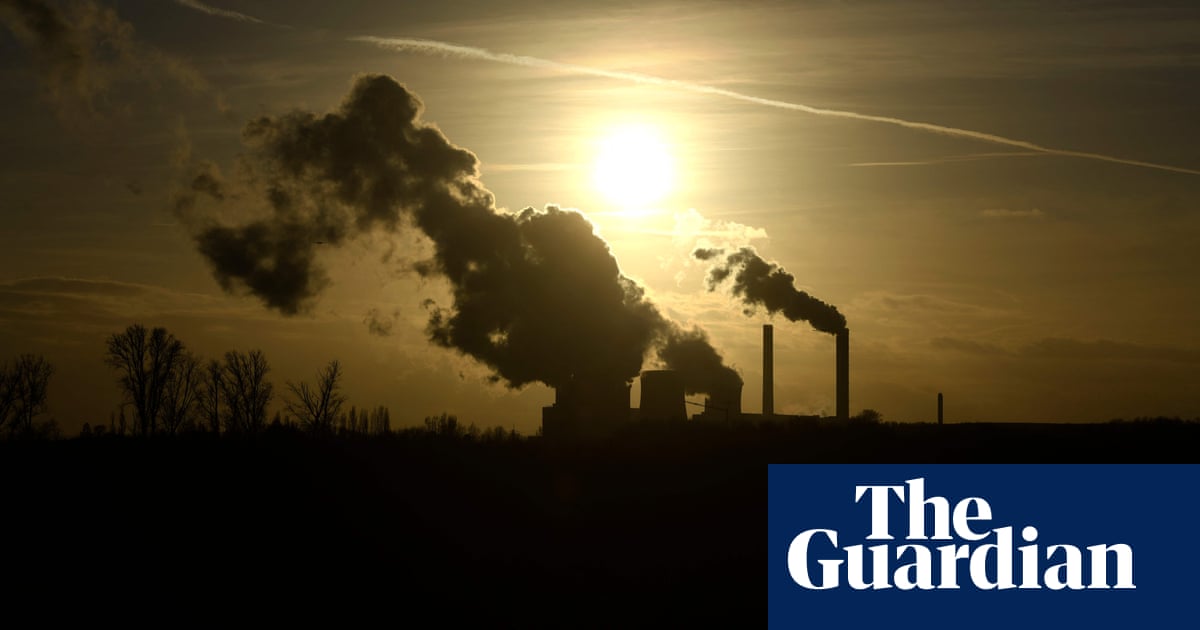
Rosalina Marrero spends the best part of each day ironing and watching telenovelas at her modest bungalow in Puerto Rico’s coastal Guayama province. When it gets too hot or her asthma plays up due to the toxic coal ash from the nearby power plant, the 78-year-old widow rests on an adjustable hospital bed, clicks on the fan and thanks God for the solar panels on her roof.

Earlier this year, Marrero was among two dozen residents in a low-income, predominantly Black neighbourhood blighted by coal pollution, fitted with a rooftop solar and storage system. Campaigners say systems like hers should be rolled out more widely to tackle the island’s energy crisis and the global climate emergency – both of which are exacerbating racialized health inequalities.

Continue reading…

Source: https://www.theguardian.com/environment/2021/oct/18/puerto-rico-solar-power-climate-resilience
Droolin’ Dog sniffed out this story and shared it with you.
The Article Was Written/Published By: Nina Lakhani in Guayama and Adjuntas, Puerto Rico


! #Headlines, #Energy, #Environment, #Newsfeed, #Politics, #PuertoRico, #Solar, #Sustainability, #ThePlanet, #Trending, solar power, #Health, #News, #Science

Saturday, October 9, 2021

Fossil fuel companies paying top law firms millions to ‘dodge responsibility’

8256.jpg?width=1200&height=630&quality=8

Over the last five years, the 100 top law firms in the US represented fossil fuel clients in 358 legal cases and transactions worth $1.36tn

The world’s biggest corporate law firms have been making millions of dollars representing fossil fuel companies but, as the climate crisis intensifies, this work is coming under increasing scrutiny.

Over the last five years, the 100 top ranked law firms in the US facilitated $1.36tn of fossil fuel transactions, represented fossil fuel clients in 358 legal cases and received $35m in compensation for their work to assist fossil fuel industry lobbying, according to a “climate scorecard” published in August.

Continue reading…

Source: https://www.theguardian.com/environment/2021/oct/09/fossil-fuel-companies-law-firms
Droolin’ Dog sniffed out this story and shared it with you.
The Article Was Written/Published By: Isabella Kaminski


! #Headlines, #Conservation, #Corruption, #Energy, #Environment, #FossilFuels, #Government, #Newsfeed, #Politics, #Trending, #News, #Science, #ThePlanet

Tuesday, October 5, 2021

8 Devastating Aerial Photos of California’s Oil Spill

028a808e6fe50b668a1c349c881bd4ad.jpg

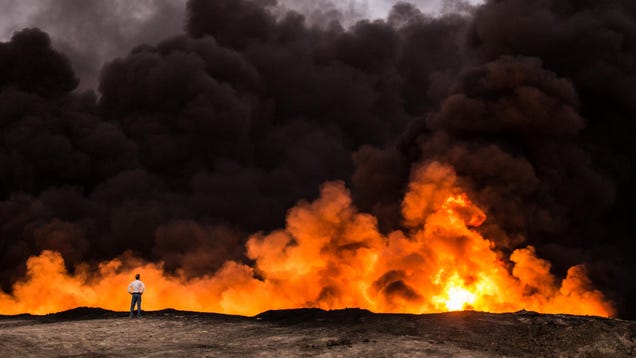
New information about California’s biggest oil spill in decades continues to emerge, as federal and state officials scramble to contain the damage and lawmakers call for changes and accountability.

Read more…

Source: https://gizmodo.com/8-devastating-aerial-photos-of-californias-oil-spill-1847801048
Droolin’ Dog sniffed out this story and shared it with you.
The Article Was Written/Published By: Molly Taft


! #Headlines, #California, #Energy, #Environment, #FossilFuels, #Gizmodo, #Newsfeed, #Oceans, #Pollution, #TechNews, #ThePlanet, #News

What’s behind the rising energy prices

1633389252740.jpg

Energy prices are climbing around the world amid a perfect storm of extreme weather, rising power demand, and supply constraints. It’s roiling markets overseas, with China and India facing electricity crises while a dozen power companies in the U.K. have gone belly-up.

Driving the news: Oil prices jumped again Monday after OPEC decided not to boost production beyond the modest increase that it had previously outlined.


  • Prices for both oil and natural gas have roughly doubled over the last year, and gasoline at U.S. pumps is up by about 50% on average.

Why it matters: Commodities like oil and gas operate in global markets, so the U.S. isn’t immune to the effects of rising prices.

  • Just look at the Consumer Price Index, one major gauge of inflation — its latest reading in September showed energy costs up 25% compared to a year ago.

The big picture: Higher energy costs impact our economic recovery. Every dollar that goes to electric and heating bills is a dollar that isn’t spent on holiday shopping or going out to eat.

  • And prices may go up further this winter. Bank of America analysts estimate Brent crude oil could hit $100 per barrel — a price not seen since 2014.

What happened: The current price trajectory is the result of supply moderating while demand heads skyward, Luke Tilley, chief economist at Wilmington Trust, tells Axios.

  • On the demand side, the reopening of the global economy over the last year sent energy needs up around the world, he says.
  • High demand led to natural gas shortages in Europe and China. That prompted some power companies to swap gas for oil — pushing up prices of both.

The supply side is more complicated.

  • For one, oil production dropped off at the start of the pandemic when demand cratered for everything from airplane fuel to gasoline. U.S. independent producers are far more cautious about cranking the spigot open every time prices inch up, thanks to a recent wave of bankruptcies and investors demanding more focus on returns.
  • OPEC isn’t raising supply significantly, in a bid to keep prices at profitable levels.
  • And production has been more constrained because the world’s largest economies have made transitioning to more renewable power a top priority, says Phil Orlando, chief equity market strategist at Federated Hermes.

The impact: “All of those different moving pieces took U.S. energy production down by about 2 million barrels a day over the course of the last year, at a time when demand has surged based on the global reopening trade,” Orlando adds.

  • Be smart: The climate-related pullback in production is driven by investors in energy companies, as well as public sentiment, as much as it is by governments.

Our thought bubble, via Felix Salmon: The effect of oil companies refusing to raise output in response to higher demand is functionally identical to the effect of a carbon tax. The longer fossil fuels remain pricey, the more attractive the development of renewable alternatives will be.

Source: https://www.axios.com/energy-prices-rising-crisis-fd8ce2f0-53d6-43b9-8ff8-93107e109722.html
Droolin’ Dog sniffed out this story and shared it with you.
The Article Was Written/Published By: Kate Marino


! #Headlines, #Axios, #Economy, #Energy, #Money, #Newsfeed, #Coronavirus, #News, #Science, #ThePlanet, #WorldNews

Friday, October 1, 2021

Puerto Rico is on the brink of a power supply crisis. Protesters demand answers.

211001-Puerto-Rico-Power-Authority-al-14

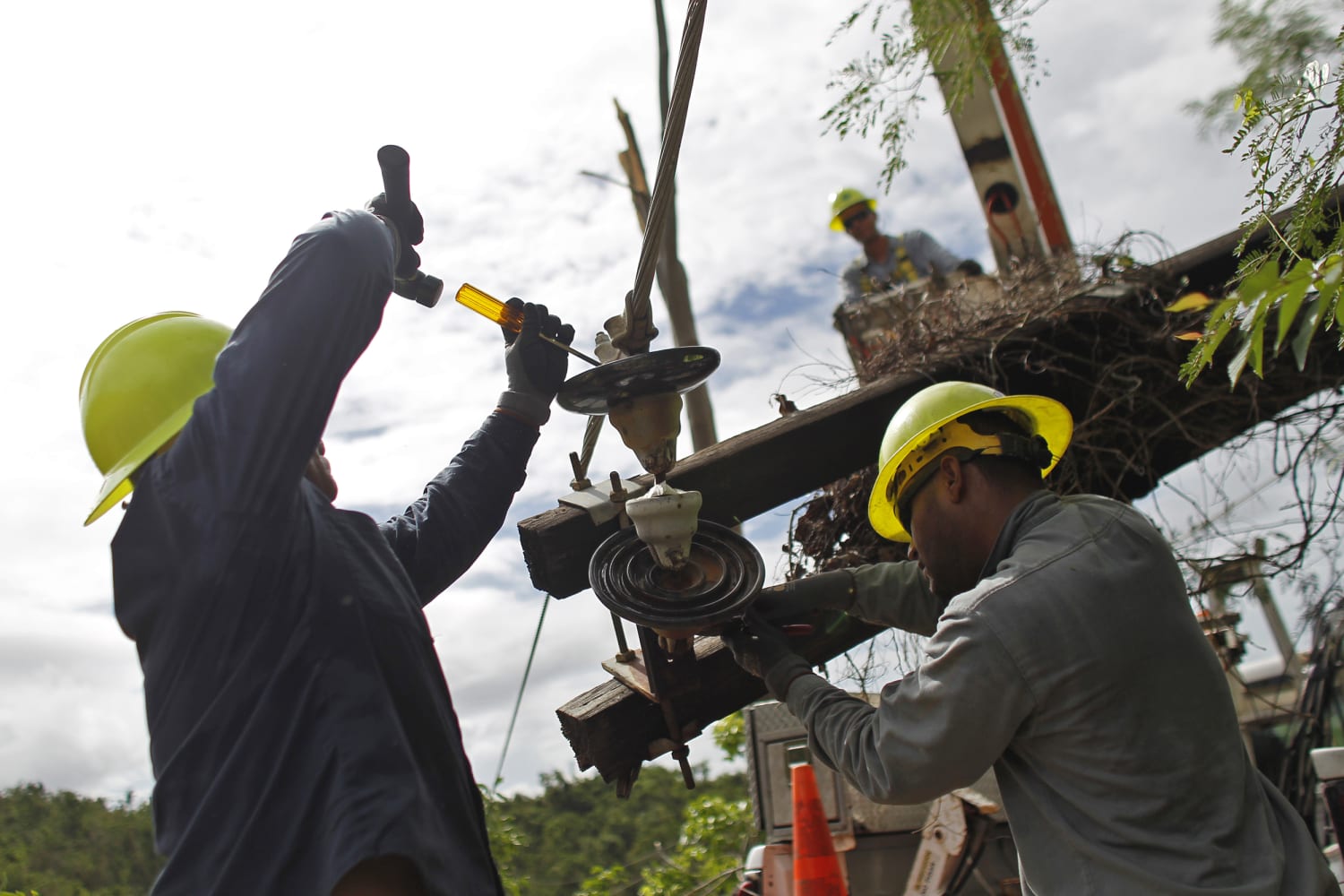
Puerto Rico residents are seeing an increase in their electric bill amid ongoing blackouts, and community groups are protesting to call attention to the crisis.

Source: https://www.nbcnews.com/news/latino/puerto-rico-brink-power-supply-crisis-protesters-demand-answers-rcna2508
Droolin’ Dog sniffed out this story and shared it with you.
The Article Was Written/Published By: Nicole Acevedo


! #Headlines, #Energy, #Newsfeed, #Politics, #PuertoRico, #News

Saturday, September 25, 2021

Can green energy power Africa’s future?

_120664548_gettyimages-1330011805.jpg

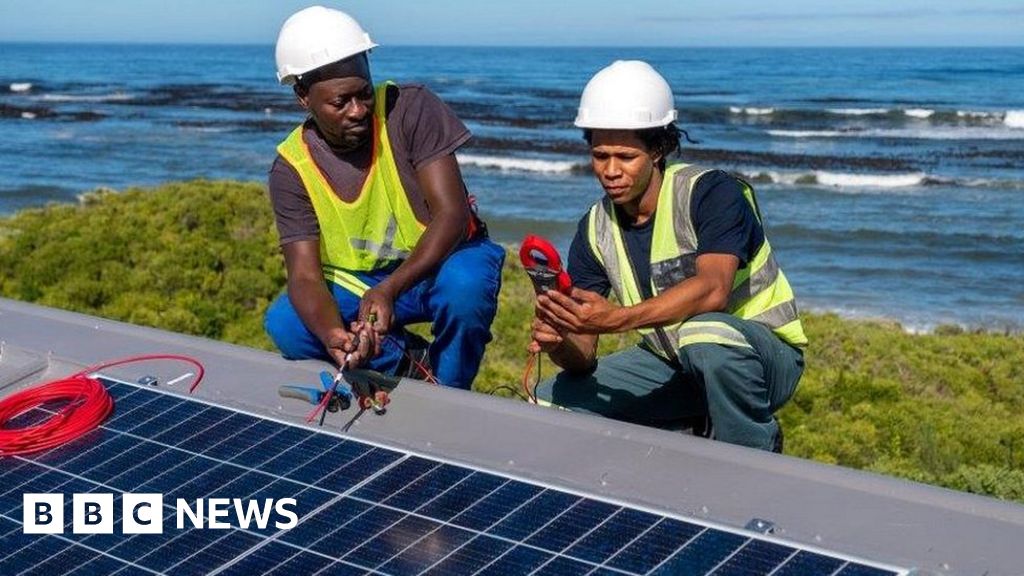
Energy access is a big issue for businesses in Africa, but can the continent go green as well?

Source: https://www.bbc.co.uk/news/business-58652848?at_medium=RSS&at_campaign=KARANGA
Droolin’ Dog sniffed out this story and shared it with you.
The Article Was Written/Published By:


! #Headlines, #Africa, #Energy, #GreenPower, #Newsfeed, #Sustainability, #TechNews, #ThePlanet, #News, #Politics, #UK, #WorldNews

Sunday, September 12, 2021

Fusion energy nears reality thanks to an ultra-powerful magnet

Fusion energy just had its second breakthrough in as many months. Motherboardnotes an MIT- and Commonwealth Fusion Systems-led research team has successfully demonstrated a high-temperature superconducting electromagnet producing a field strength of 20 tesla — the most powerful field of its kind on Earth. The technology could be the key to SPARC, a fusion device due in 2025 that could foster a plasma field producing more energy than it consumes.

Systems based on superconducting electromagnets aren’t new. The under-construction ITER device in France will use low-temperature superconductors. However, the MIT-CFS hardware’s high-temperature technology (built using a ribbon-like tape material) allows for much stronger magnetic fields. It can match the field of a low-temperature magnet system 40 times its size, according to MIT.

SPARC and its net positive energy output would be just the start. MIT and CFS still plan to develop a fusion power plant, ARC, that might go online as soon as 2033. Should that happen, fusion energy would finally become a practical reality — just in time to help a world transitioning to electric vehicles that demand more from power grids.

Source: https://www.engadget.com/fusion-energy-superconducting-electromagnet-172303204.html?src=rss
Droolin’ Dog sniffed out this story and shared it with you.
The Article Was Written/Published By: Jon Fingas


! #Headlines, #Discoveries, #Energy, #Engadget, #Newsfeed, #Nukes, #Science, #TechNews, #News, #WorldNews

Scientists discover how to turn toxic sewer gas into hydrogen fuel

Researchers have found a way to convert foul-smelling, dangerous sewer gas into useful hydrogen fuel.

Source: https://www.digitaltrends.com/news/chemical-looping-sewer-gas-hydrogen/
Droolin’ Dog sniffed out this story and shared it with you.
The Article Was Written/Published By: Georgina Torbet


! #Headlines, #Conservation, #Energy, #Environment, #GreenPower, #Hydrogen, #Newsfeed, #Science, #TechNews, #News

Friday, August 27, 2021

Big Oil Coined ‘Carbon Footprints’ to Blame Us for Their Greed. Keep Them on the Hook.

d822730c663651849d6fac263ed5c6e9.jpg

This story originally appeared in The Guardian and is republished here as part of Covering Climate Now, a global journalism collaboration strengthening coverage of the climate story.

Read more…

Source: https://gizmodo.com/big-oil-coined-carbon-footprints-to-blame-us-for-thei-1847570535
Droolin’ Dog sniffed out this story and shared it with you.
The Article Was Written/Published By: Rebecca Solnit


! #Headlines, #ClimateChange, #Energy, #Environment, #FossilFuels, #Gizmodo, #GreenPower, #Newsfeed, #Politics, #TechNews, #ThePlanet, #News, #Science

Tuesday, August 24, 2021

Severe oil leaks worsened Keystone pipeline’s spill record, GAO finds

200529-canada-pipeline-gty-773.jpg

The company behind the controversial Keystone XL project that President Joe Biden effectively killed on his first day of office had an oil spill record “worse than the national average” over a five-year period thanks to two major spills, according to a Government Accountability Office report published Monday.

The two spills from the Keystone pipelines dumped a combined 12,000 barrels of oil in the Dakotas even as operator TC Energy was planning to expand that pipeline with its proposed Keystone XL project, which would have tripled the amount of crude the pipeline system would carry from Canada into the United States. Biden revoked the permit necessary to allow Keystone XL to cross the U.S.-Canada border, essentially killing the project in a bid to demonstrate his climate bona fides. TC Energy is now in court seeking $15 billion from the U.S. government for the cancellation.

Despite the quick action on Keystone, environmental justice advocates have criticized the Biden administration for failing to take similarly decisive action to shut down other Canada-U.S. pipelines, such as the Line 3 pipeline in Minnesota.

The decision to revoke the Keystone permit cheered Democrats but was criticized bitterly by Republicans.

Jane Kleeb, chair of the Nebraska Democratic Party who has been opposing pipelines including Keystone XL for years, said the GAO report highlighted issues that environmental groups had already voiced concern over. But having the information in an official government report would help people in future protests against pipelines, she said.

“These are not new weapons per se,” Kleeb said of the report’s description of the faulty material and subpar construction. “But I am deeply grateful that this is now in the formal record.”

The study came at the behest of House Transportation and Infrastructure Chair Peter DeFazio (D-Ore.), Commerce Chair Frank Pallone (D-N.J.), and other Democrats in November 2019 in the wake of the two major Keystone oil spills.

“GAO’s report validates President Biden’s decision to revoke the permit to build the Keystone XL pipeline,” DeFazio and Pallone said in a joint statement. “President Biden was clearly right to question this operator’s ability to construct a safe and resilient pipeline, and we support his decision to put Americans’ health and environment above industry interests.”

Energy and Commerce Committee Republicans spokesperson Jack Heretik said in a statement that the committee is looking forward to “reviewing the GAO report and working with our colleagues to modernize our pipeline systems to strengthen our energy security,” while also criticizing the Biden administration for its “efforts to destroy jobs, support Russia’s Nord Stream 2 pipeline and ask OPEC to produce more oil.”

The GAO study showed that the U.S. stretches of TC Energy’s 2,700-mile Keystone pipeline had a failure rate in line with the national average during its first six years of service, with most of Keystone’s 22 accidents from 2010 through 2020 releasing fewer than 50 barrels of oil.

But two major spills in 2017 and 2019 that dumped nearly 12,000 barrels of oil combined “put TC Energy worse than the nationwide average over the past five years” up to 2020. The 2017 accident in South Dakota was caused by faulty pipeline materials and bad construction of the pipeline, while the 2019 North Dakota accident was caused by defects in the original pipe manufacturing, according to inspections cited in the GAO study.

Issues found with the pipeline material and construction practices leading to the spills caused the Pipeline and Hazardous Materials Safety Administration — the part of the Department of Transportation that regulates pipeline safety — to beef up its inspections of early construction activity, GAO said.

“We have taken meaningful action over the last several years to implement measures to strengthen our approach to safety and the integrity of our system with a laser-focus on incident prevention,” Leslie Kass, TC Energy technical center executive vice president, said in a video response to the GAO report. “These actions have contributed to a significant improvement in our safety performance, with zero high-impact incidents in 18 months.”

Source: https://www.politico.com/news/2021/08/23/oil-leaks-keystone-pipeline-spill-record-506613
Droolin’ Dog sniffed out this story and shared it with you.
The Article Was Written/Published By: Ben Lefebvre


! #Headlines, #Energy, #Environment, #FossilFuels, #Government, #Newsfeed, #Political, #Politico, #ThePlanet, #Trending, #Health, #News, #Politics, #Science, #WorldNews

Monday, August 23, 2021

California Just Approved 5 Temporary Gas Plants as Drought Cripples Hydropower

a86c6fa9b0ffa10eb3d204648d112565.jpg

Wildfires and declining water levels at reservoirs have threatened California’s power supply at various points this summer. Desperate to avoid blackouts amid the compounding crisis, California’s Gov. Gavin Newsom is eyeing the construction of five “temporary” gas-fueled plants in the coming months.

Read more…

Source: https://gizmodo.com/california-just-approved-5-temporary-gas-plants-as-drou-1847538224
Droolin’ Dog sniffed out this story and shared it with you.
The Article Was Written/Published By: Brianna Provenzano


! #Headlines, #California, #Climate, #Energy, #FossilFuels, #Gizmodo, #Newsfeed, #TechNews, #Weather, drought, water, #News

Thursday, August 19, 2021

Texas Is Letting Shell, Exxon, and Other Oil Producers Break the Rules

b84add3d3e758e61a5b42bd0e6118397.jpg

Even when policymakers set the easiest rules for fossil fuel producers to follow, it seems like many companies choose to flaunt them anyway. A new analysis from Earthworks suggests that oil and gas producers in the Permian Basin in Texas, one of the largest oilfields in the world, are routinely emitting carbon dioxide…

Read more…

Source: https://gizmodo.com/texas-is-letting-shell-exxon-and-other-oil-producers-1847516033
Droolin’ Dog sniffed out this story and shared it with you.
The Article Was Written/Published By: Molly Taft


! #Headlines, #Energy, #Environment, #FossilFuels, #Gizmodo, #Government, #Newsfeed, #TechNews, #Texas, #ThePlanet, #News

Judge throws out Trump-era approvals for Alaska oil project

210601-alaska-refuge-arctic-caribou-unda

Ruling calls federal reports flawed and says plan didn’t do enough to prevent further harm to polar bears and their habitat.

Source: https://www.nbcnews.com/politics/politics-news/judge-throws-out-trump-era-approvals-alaska-oil-project-n1277125
Droolin’ Dog sniffed out this story and shared it with you.
The Article Was Written/Published By: The Associated Press


! #Headlines, #Alaska, #Energy, #Environment, #FossilFuels, #Government, #Newsfeed, #ThePlanet, lawsuit, #News, #Politics, #Trump

Friday, August 13, 2021

“Blue” hydrogen is worse for the climate than coal, study says

A Hyundai Nexo patrol car at a hydrogen filling station in Lower Saxony, Germany.

Enlarge / A Hyundai Nexo patrol car at a hydrogen filling station in Lower Saxony, Germany. (credit: Friso Gentsch/picture alliance)

Gas companies and utilities are in a pickle. Their entire business model relies on the extraction, transport, and combustion of methane, one of the most potent greenhouse gases known to humankind. With many countries aiming to reach net-zero emissions by 2050, these companies face an uncertain future. 

One solution they’ve proposed is slipping hydrogen into their distribution lines, either partially or fully replacing natural gas, so that people can burn it to heat their homes or generate electricity. When produced using solar and wind power, hydrogen is a zero-carbon fuel, and while refitting natural gas infrastructure would be expensive, it would give gas-only utilities a reason to exist.

The problem is that producing so-called “green” hydrogen is expensive and will remain so for a decade or more, according to forecasts.

Read 13 remaining paragraphs | Comments

index?i=WU_ysVYZiv4:STIENbroYbI:V_sGLiPB index?i=WU_ysVYZiv4:STIENbroYbI:F7zBnMyn index?d=qj6IDK7rITs index?d=yIl2AUoC8zA

Source: https://arstechnica.com/science/2021/08/blue-hydrogen-pushed-by-gas-companies-harms-climate-more-than-coal-study-says/
Droolin’ Dog sniffed out this story and shared it with you.
The Article Was Written/Published By: Tim De Chant


! #Headlines, #Energy, #GreenPower, #Hydrogen, #Newsfeed, #Sustainability, #TechNews, solar power, #News, #Science, #ThePlanet, #WorldNews

Wednesday, August 11, 2021

Most of the power sector’s emissions come from a small minority of plants

Most of the power sector’s emissions come from a small minority of plants

Enlarge (credit: Picture Alliance / Getty Images)

The world seems to be simultaneously on fire and flooding, and the latest expert report indicates that we’ve just about run out of time to avoid even more severe climate change. All of that should have us looking for ways to cut carbon emissions as quickly and economically as possible.

Some good news in that regard came via the recent release of a paper that looks at how much each power plant contributes to global emissions. The study finds that many countries have many power plants that emit carbon dioxide at rates well above either the national or global average. Shutting down the worst 5 percent of this list would immediately wipe out about 75 percent of the carbon emissions produced by electricity generation.

CARMA revisited

It’s easy to think of power generation in simple terms, like “renewables good, coal bad.” To an extent, that statement is accurate. But it also compresses all power generation, from “somewhat bad” to “truly atrocious,” into a single category. And it’s clear from a variety of research that the situation is more complex. Depending on their vintage, many plants convert fossil fuels to power at different degrees of efficiency. And some of the least efficient plants are only brought online during periods of very high demand; the rest of the time, they’re idle and produce no emissions at all.

Read 13 remaining paragraphs | Comments

index?i=D__6trFDbU0:jFJ4c7q5k4Y:V_sGLiPB index?i=D__6trFDbU0:jFJ4c7q5k4Y:F7zBnMyn index?d=qj6IDK7rITs index?d=yIl2AUoC8zA

Source: https://arstechnica.com/science/2021/08/most-of-the-power-sectors-emissions-come-from-a-small-minority-of-plants/
Droolin’ Dog sniffed out this story and shared it with you.
The Article Was Written/Published By: John Timmer


! #Headlines, #ClimateChange, #Energy, #GreenPower, #Newsfeed, #TechNews, #News, #Science, #ThePlanet

The Texas Power Grid Is Hanging on by Its Fingernails

af72e30c5b6acb35c59fa8b637ea62fd.jpg

On Tuesday, Reuters reported that The Electric Reliability Council of Texas (ERCOT) predicted this week that the system will see peak highs in energy use this week, topping out at a possible 74,034 megawatts on Wednesday. It’s not super likely that consumers will see problems—but given the state of the grid and the…

Read more…

Source: https://gizmodo.com/the-texas-power-grid-is-hanging-on-by-its-fingernails-1847466510
Droolin’ Dog sniffed out this story and shared it with you.
The Article Was Written/Published By: Molly Taft


! #Headlines, #Energy, #Gizmodo, #Government, #Newsfeed, #TechNews, #Texas, #News

Monday, August 9, 2021

New IPCC climate report is the clearest guidebook for selecting a future

Cover art of the new report.

Enlarge / Cover art of the new report. (credit: IPCC)

It has been eight years since the last major report from the Intergovernmental Panel on Climate Change (IPCC), though it has produced smaller reports since then. But today, the first piece of the 6th Assessment Report is out. Most of it should not surprise you—the basics of climate science have been known for decades. And the general outlines were already obvious: almost all of the warming is due to human activities, and, without immediate action, we’re poised to blow past 1.5ยบ C of warming.

Still, each report is a little more useful than the last, and we’re going to go over what has changed in terms of the science and what has changed in how that information is being shared with the public.

The IPCC is the product of a United Nations organization that coordinates—but does not write—these reports. The writing is done by scientists from around the world who volunteer their time to create these daunting tomes that seek to summarize the entire state of scientific knowledge for all kinds of decision-makers. Each major report is split into three working groups. The first focuses on the physical science of the climate system, the second on the impacts of climate change on humans and other species, and the third on methods for mitigating climate change.

Read 17 remaining paragraphs | Comments

index?i=KKfm2gXmqrI:qHnc8ww9kc0:V_sGLiPB index?i=KKfm2gXmqrI:qHnc8ww9kc0:F7zBnMyn index?d=qj6IDK7rITs index?d=yIl2AUoC8zA

Source: https://arstechnica.com/science/2021/08/new-ipcc-climate-report-is-the-clearest-guidebook-for-selecting-a-future/
Droolin’ Dog sniffed out this story and shared it with you.
The Article Was Written/Published By: Scott K. Johnson


! #Headlines, #Climate, #ClimateChange, #Energy, #Environment, #Government, #GreenPower, #Newsfeed, #Politics, #Science, #Sustainability, #TechNews, #ThePlanet, #UnitedNations, #WorldNews, #News

Saturday, August 7, 2021

The hydrogen economy is about to get weird

Image of a blue light rail vehicle.

Enlarge / A Coradia iLint hydrogen fuel-cell powered prototype railway train, manufactured by Alstom SA, travels in Salzgitter, Germany. (credit: Bloomberg/Getty Images)

If you were paying attention at the start of this century, you might remember the phrase “hydrogen economy,” which was shorthand for George W. Bush’s single, abortive attempt to take climate change seriously. At the time, hydrogen was supposed to be a fuel for vehicular transport, an idea that still hasn’t really caught on.

But hydrogen appears to be enjoying a revival of sorts, appearing in the climate plans of nations like the UK and Netherlands. The US government is investing in research on ways to produce hydrogen more cheaply. Are there reasons to think hydrogen power might be for real this time?

A new report by research service BloombergNEF suggests that hydrogen is set for growth—but not in transport. And the growth has some aspects that don’t actually make sense given the current economics.

Read 10 remaining paragraphs | Comments

index?i=MARB2ksjd80:UFh8zfFDj54:V_sGLiPB index?i=MARB2ksjd80:UFh8zfFDj54:F7zBnMyn index?d=qj6IDK7rITs index?d=yIl2AUoC8zA

Source: https://arstechnica.com/science/2021/08/the-hydrogen-economy-is-about-to-get-weird/
Droolin’ Dog sniffed out this story and shared it with you.
The Article Was Written/Published By: John Timmer


! #Headlines, #BusinessNews, #Economy, #Energy, #Hydrogen, #Newsfeed, #TechNews, #News, #Science, #ThePlanet, #WorldNews

Wednesday, August 4, 2021

Debt investors retreat from funding dirty energy

1628021245224.jpg

Banks are coming under fire from all sides for their role in funding fossil fuel companies, even though most have pledged to pull back over the coming decades.

What’s happening: Despite pressure from activists, shareholders and Democratic politicians to finally divest from carbon-spewing businesses as the planet warms, the biggest American banks are still energetically backing dirty energy.


The big picture: Withdrawing capital from fossil fuel companies is only half the story in the transition to a sustainable future. The other half is investment in developing the technology and infrastructure to support widespread adoption of renewable power.

  • Banking heavyweights like JPMorgan Chase and Bank of America have committed trillions to sustainable projects. And this year has brought a surge of private capital investment and major fund closings in the climate tech space, as Axios Generate author Ben Geman reports.

Where it stands: Until that renewable infrastructure is in place at a larger scale, there’s still a need for some level of fossil fuel power.

  • Those companies need funding — but simple supply-and-demand dynamics means fossil fuel companies increasingly have to pay up for the privilege of borrowing cash, sources tell Axios.
  • “There’s a growing number of [credit] investors who have oil and gas on their list of what they don’t want to lend to,” a capital markets banker tells Axios.

The impact: How much more do dirty energy companies have to pay? The cost compared to non-fossil fuel businesses can range from a half a percent premium to more than 5% for riskier endeavors.

  • And a shrinking universe of lenders means that if a company faces a bout of financial distress, there may not be anyone there to lend it money.

State of play: This scenario is most pronounced in the coal world.

  • “There’s a very small pool of alternative capital providers that are now financing these assets at low to mid-teen interest rates, whereas three or four years ago there was a wide dispersion of capital available at very competitive rates,” Chris Post, a senior managing director in FTI Consulting’s power & renewables practice, tells Axios.
  • It’s not just ESG sensibilities dragging investors away from coal. From a purely financial standpoint, the industry has become less economic over the last decade — and there’s regulatory risk, too.

Meanwhile: In the oil and gas space, the lending calculus is different.

  • Profitability in the sector depends on the prices of oil and gas. Low oil prices early last year brought a wave of bankruptcies among smaller independent U.S. producers.
  • But oil prices are up more than four-fold since the low reached in April 2020 — enabling a lot of those producers to make money.
  • Cue the debt spigot for companies willing to pay the pricing premium.

The bottom line: Investors are driven by returns. As the universe of buyers of fossil fuel debt shrinks, so too does liquidity in the market and the ability to exit a position if things go south — a risk that helps perpetuate the shrinking universe of buyers.

  • At the same time, the ability to charge higher than average interest will no doubt keep other investors hooked on lending to fossil fuel companies.

Source: https://www.axios.com/debt-investors-dirty-energy-c75c4dca-9106-49cd-b57b-c97766026c3e.html
Droolin’ Dog sniffed out this story and shared it with you.
The Article Was Written/Published By: Kate Marino


! #Headlines, #Axios, #Banking, #BusinessNews, #Energy, #Environment, #FossilFuels, #Money, #Newsfeed, #News, #Protest, #Science, #ThePlanet

Monday, August 2, 2021

Rising gasoline prices signal trouble for climate change action

1627674705406.jpg

Cutting oil production before we cut our demand for oil could undermine much of the progress that needs to be made on climate change.

Why it matters: If companies cut back on producing oil but consumers don’t cut back on consuming it, demand will exceed supply and prices will shoot up. That’s bad for our pocketbooks and risks the transition to cleaner energy.


Driving the news: This appears to be the track we’re on. Lurking in the shadows of the pandemic-induced roller coaster of oil prices we’re on now is a deeper, systemic shift within the oil industry and its investors.

  • Buoyed largely by politics and growing activism, Wall Street is demanding that oil companies invest less in new oil discoveries and more in cleaner energy (and pay off debts).
  • In response to that pressure and the collapse in oil prices starting in 2014, overall industry investments in new oil and gas resources have collapsed in recent years, according to Bob McNally, president of consulting firm Rapidan Energy Group.

Yes, but: Despite ambitious goals to reduce heat-trapping emissions, most countries have actually not passed laws that significantly reduce oil demand by targeting consumers through taxes or mandates.

  • Instead, most countries are pursuing less politically toxic options, like regulations that indirectly (and slowly and unevenly) reduce oil consumption.
  • “If we curb supply but not demand, oil prices will spike well into the hundred-dollar range,” said McNally. “Gasoline prices would follow. Such an oil price spike would harm the economy, the political careers of elected officials, and the energy transition.”
  • He projects that such a scenario is likely to start unfolding within the next five years.

By the numbers: The average price of a gallon of U.S. gasoline is $3.17 as of July 30, according to AAA. That’s the highest in seven years, though prices are fluctuating as the pandemic stamps down oil demand again with the Delta variant.

Where it stands: The International Energy Agency, an intergovernmental group launched in 1974 to ensure global oil security, issued one of its most impactful reports in May. It declared that no new oil and gas discoveries would be needed in a future that reaches net-zero greenhouse gas emissions by 2050.

What they’re saying: “Needing no more oil and gas is only true if previous actions by governments happen and demand follows that trajectory,” Laura Cozzi, the IEA’s chief energy modeler and lead author of the report, told me. “The sequencing is important.”

  • In its report, the IEA identified 400 milestones that need to occur to achieve the net-zero goal, and 95% of those should be driven by policy changes affecting demand, not supply, said IEA executive director Fatih Birol, per Reuters.
  • This includes imposing carbon pricing and phasing out fossil-fuel subsidies, both which have direct impact on consumers’ demand for those fuels.

How it works: Public sentiment generally skews toward concern about energy affordability during periods of economic recessions and instabilities. A recent Gallup survey shows that playing out in the wake of the pandemic.

  • That sentiment creates headwinds for any type of policy that could be even perceived as raising the cost of energy — a key reason President Biden and other administration officials insist they’re not going to support a gasoline tax increase or any other tax on energy.
“If there is increased oil demand and if we don’t have technological innovation and policy driving a transition to clean energy, you will get higher prices for oil and gas, and that will create all kind of dynamics, including political ones.”
Richard Newell, former administrator of the U.S. Energy Information Administration under Barack Obama and current president of think tank Resources for the Future

The other side: Environmentalists have helped propel a social movement around climate change by fighting projects producing and moving fossil fuels around (remember the Keystone XL pipeline?). In other words, they have focused on supply, not demand of those fuels.

  • Tzeporah Berman, international program director at group Stand.earth, says some countries are now beginning to impose demand-side policies, like pledges to ban internal combustion engines cars within the next 15 years.
  • But she is cognizant of the risks our world faces if demand reduction doesn’t follow soon after.

The bottom line: “Without political leadership and courage, a lot of this could be at risk,” said Berman. “The challenge for policymakers is to move quickly putting in infrastructure for electrification and efficiency.”

Editor’s note: Amy Harder is vice president of publishing at Breakthrough Energy, a network of investment vehicles, philanthropic programs, policy advocacy, and other activities committed to scaling the technologies needed to reach net-zero emissions by 2050. She is launching a new journalism initiative there. Previously full time at Axios, Amy is now writing her Harder Line column as an outside contributor.

Source: https://www.axios.com/gas-prices-climate-change-325881b1-fa78-41c9-8cb3-1d56d0ed9328.html
Droolin’ Dog sniffed out this story and shared it with you.
The Article Was Written/Published By: Amy Harder of Breakthrough Energy


! #Headlines, #Axios, #ClimateChange, #Energy, #FossilFuels, #Newsfeed, #Sustainability, #ThePlanet, #Coronavirus, #News, #Politics, #Science