Showing posts with label space. Show all posts

Sunday, June 16, 2019

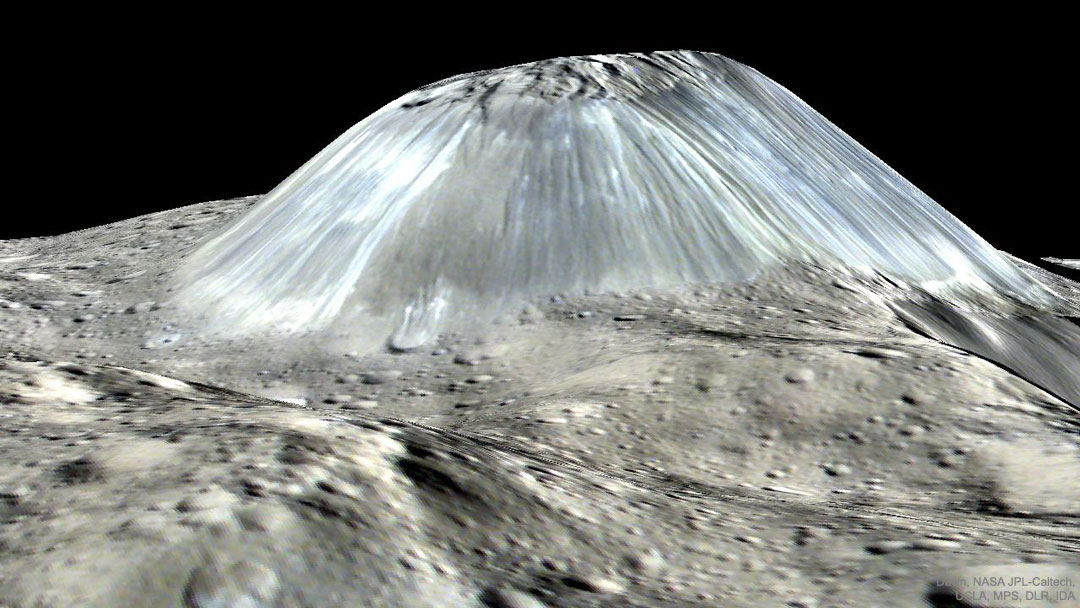
Unusual Mountain Ahuna Mons on Asteroid Ceres

What created this unusual mountain? There is a new theory. Ahuna Mons is the largest mountain on the largest known asteroid in our Solar System, Ceres, which orbits our Sun in the main asteroid belt between Mars and Jupiter. Ahuna Mons, though, is like nothing that humanity has ever seen before. For one thing, its slopes are garnished not with old craters but young vertical streaks. The new hypothesis, based on numerous gravity measurements, holds that a bubble of mud rose from deep within the dwarf planet and pushed through the icy surface at a weak point rich in reflective salt — and then froze. The bright streaks are thought to be similar to other recently surfaced material such as visible in Ceres’ famous bright spots. The featured double-height digital image was constructed from surface maps taken of Ceres in 2016 by the robotic Dawn mission. Successfully completing its mission in 2018, Dawn continues to orbit Ceres even though it has exhausted the fuel needed to keep its antennas pointed toward Earth. via NASA
https://apod.nasa.gov/apod/ap190616.html


astronomy, NASA, photos, space, #space

Thursday, June 13, 2019

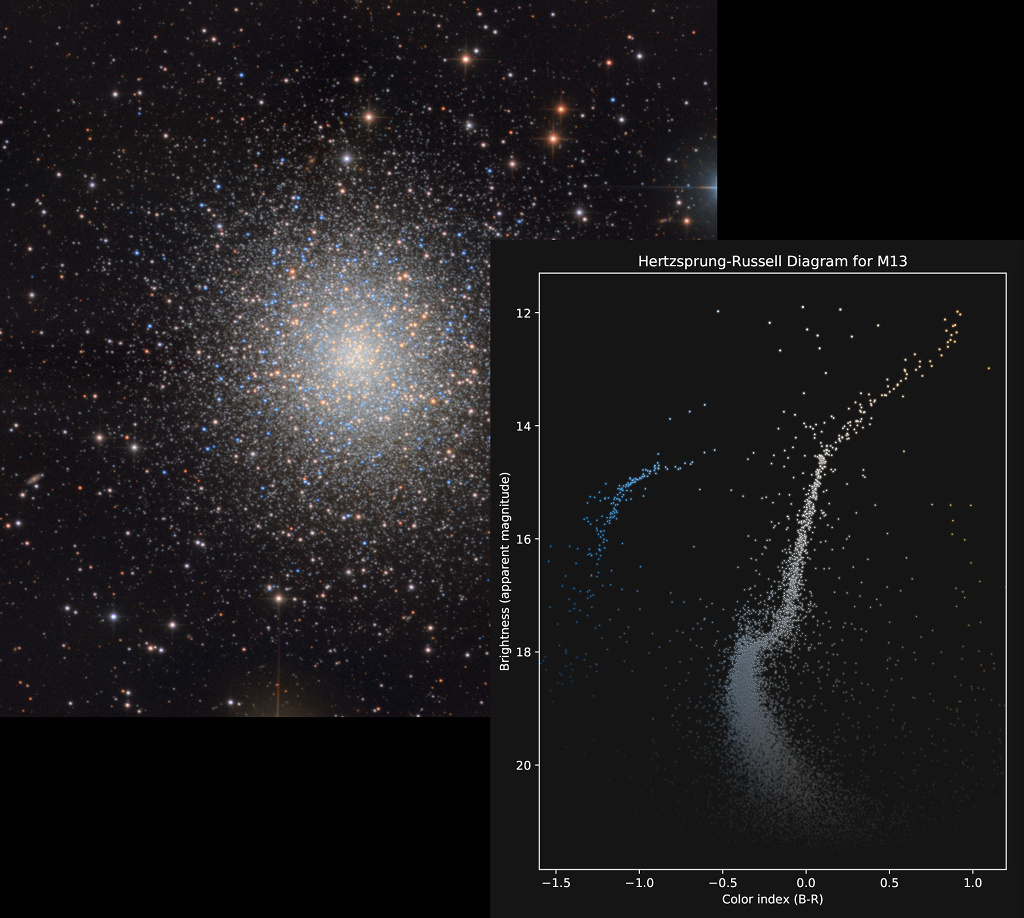
The Colors and Magnitudes of M13

M13 is modestly recognized as the Great Globular Star Cluster in Hercules. A ball of stars numbering in the hundreds of thousands crowded into a region 150 light years across, it lies some 25,000 light-years away. The sharp, color picture of M13 at upper left is familiar to many telescopic imagers. Still, M13’s Color vs Magnitude Diagram in the panel below and right, made from the same image data, can offer a more telling view. Also known as a Hertzsprung Russell (HR) diagram it plots the apparent brightness of individual cluster stars against color index. The color index is determined for each star by subtracting its brightness (in magnitudes) measured through a red filter from its brightness measured with a blue filter (B-R). Blue stars are hot and red stars are cool so that astronomical color index ranging from bluer to redder follows the relative stellar temperature scale from left (hot) to right (cool). In M13’s HR diagram, the stars clearly fall into distinct groups. The broad swath extending diagonally from the bottom right is the cluster’s main sequence. A sharp turn toward the upper right hand corner follows the red giant branch while the blue giants are found grouped in the upper left. Formed at the same time, at first M13’s stars were all located along the main sequence by mass, lower mass stars at the lower right. Over time higher mass stars have evolved off the main sequence into red, then blue giants and beyond. In fact, the position of the turn-off from the main sequence to the red giant branch indicates the cluster’s age at about 12 billion years. via NASA
https://apod.nasa.gov/apod/ap190613.html


astronomy, NASA, photos, space, #space
Tuesday, June 11, 2019

NASA Invites Media to Renaming Ceremony Honoring Hidden Figures

NASA Administrator Jim Bridenstine will be joined at 10 a.m. EDT Wednesday, June 12, by U.S. Sen. Ted Cruz of Texas, D.C. Council Chairman Phil Mendelson, and author Margot Lee Shetterly for the renaming of the street in front of NASA Headquarters in Washington – E Street SW – to “Hidden Figures Way.”

from NASA
http://www.nasa.gov/press-release/nasa-invites-media-to-renaming-ceremony-honoring-hidden-figures
#NASA #news #photos #space #astronomy


NASA, news, space, #space

NASA Invests in Tech Concepts Aimed at Exploring Lunar Craters, Mining Asteroids

Robotically surveying lunar craters in record time and mining resources in space could help NASA establish a sustained human presence at the Moon – part of the agency’s broader Moon to Mars exploration approach.

from NASA
http://www.nasa.gov/press-release/nasa-invests-in-tech-concepts-aimed-at-exploring-lunar-craters-mining-asteroids
#NASA #news #photos #space #astronomy


NASA, news, space, #space

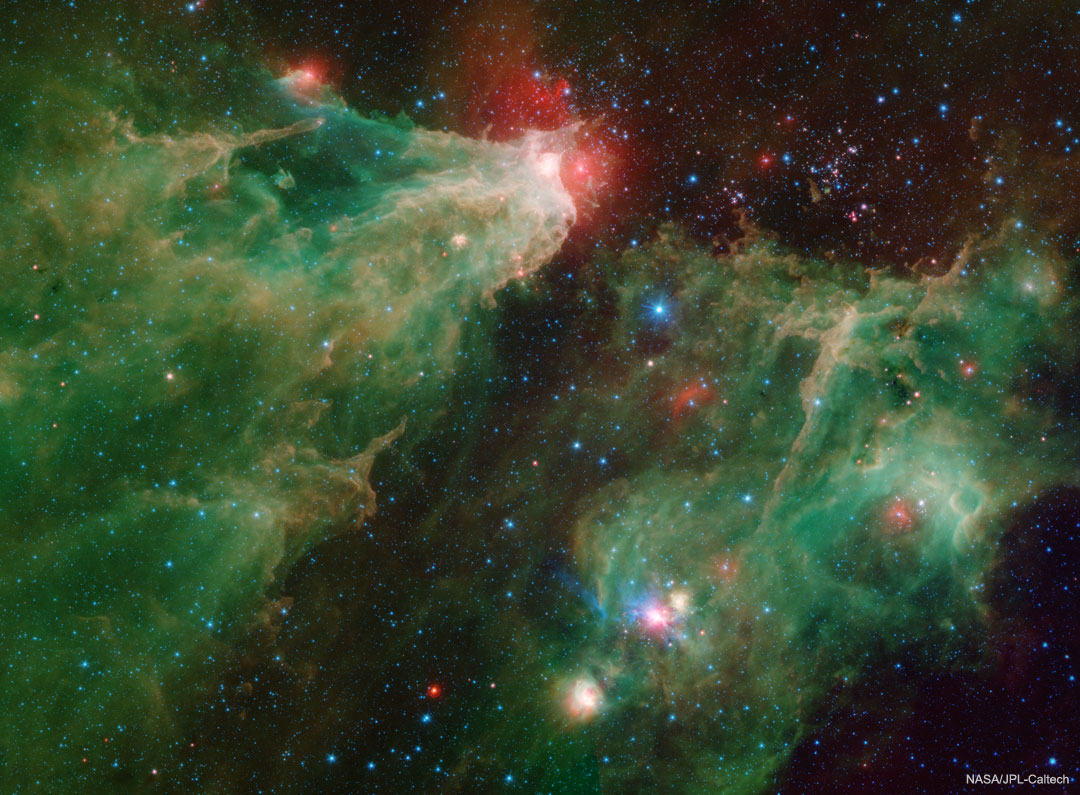
The Cave Nebula in Infrared from Spitzer

What’s happening in and around the Cave Nebula? To help find out, NASA’s orbiting Spitzer Space Telescope looked into this optically-dark star-forming region in four colors of infrared light. The Cave Nebula, cataloged as Sh2-155, is quite bright in infrared, revealing details not only of internal pillars of gas and dust, but of the illuminating star cluster too – all near the top of the image. The red glow around the Cave’s entrance is created by dust heated by bright young stars. To the right is Cepheus B, a star cluster that formed previously from the same cloud of gas and dust. Other interesting stars of Cepheus come to light in infrared as well, including those illuminating an even younger nebula toward the image bottom, and a runaway star pushing a bow shock, tinged in red near the image center. This region spans about 50 light years and lies about 2,500 light years toward the constellation of the King of Aethiopia (Cepheus). via NASA
https://apod.nasa.gov/apod/ap190611.html


astronomy, NASA, photos, space, #space
Saturday, June 8, 2019

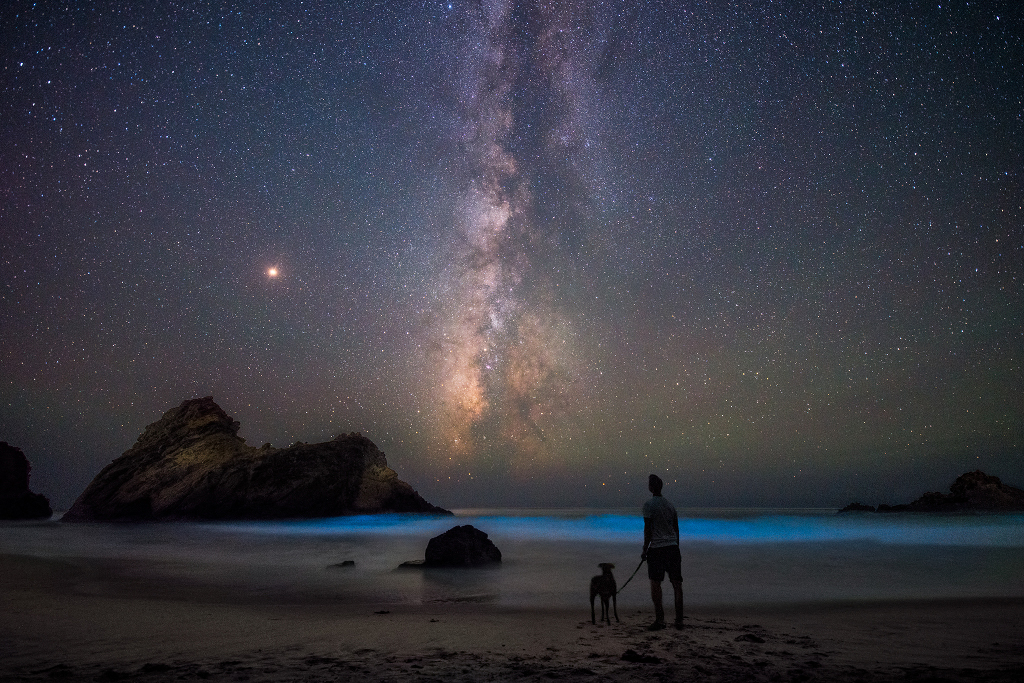
On the Beach with Mars

At the end of last year’s northern summer, after its dazzling opposition, Mars still shone brightly in the night. The celestial beacon easily attracted the attention of these two night skygazers who stood still for just a while, but long enough to be captured in the sea and night skyscape from Big Sur, planet Earth. Its central bulge near the southwestern horizon, the Milky Way runs through the scene too, while the long exposure also reveals a faint blue bioluminescence blooming in the waves along Pfeiffer Beach. Now much fainter, Mars can be spotted near the western horizon after sunset, but this month Jupiter is near its closest and brightest, reaching its own opposition on June 10. Night skygazers can spot brilliant Jupiter over southern horizons, glaring next to the stars toward the central Milky Way. via NASA
https://apod.nasa.gov/apod/ap190608.html


astronomy, NASA, photos, space, #space
Friday, June 7, 2019

NASA Opens International Space Station to New Commercial Opportunities, Private Astronauts

NASA is opening the International Space Station for commercial business so U.S. industry innovation and ingenuity can accelerate a thriving commercial economy in low-Earth orbit.

from NASA
http://www.nasa.gov/press-release/nasa-opens-international-space-station-to-new-commercial-opportunities-private
#NASA #news #photos #space #astronomy


NASA, news, space, #space

NASA Opens International Space Station to New Commercial Opportunities, Private Astronauts

NASA is opening the International Space Station for commercial business so U.S. industry innovation and ingenuity can accelerate a thriving commercial economy in low-Earth orbit.

from NASA
http://www.nasa.gov/press-release/nasa-opens-international-space-station-to-new-commercial-opportunities-private
#NASA #news #photos #space #astronomy


NASA, news, space, #space

Wednesday, June 5, 2019

The Interstellar Clouds of Orion

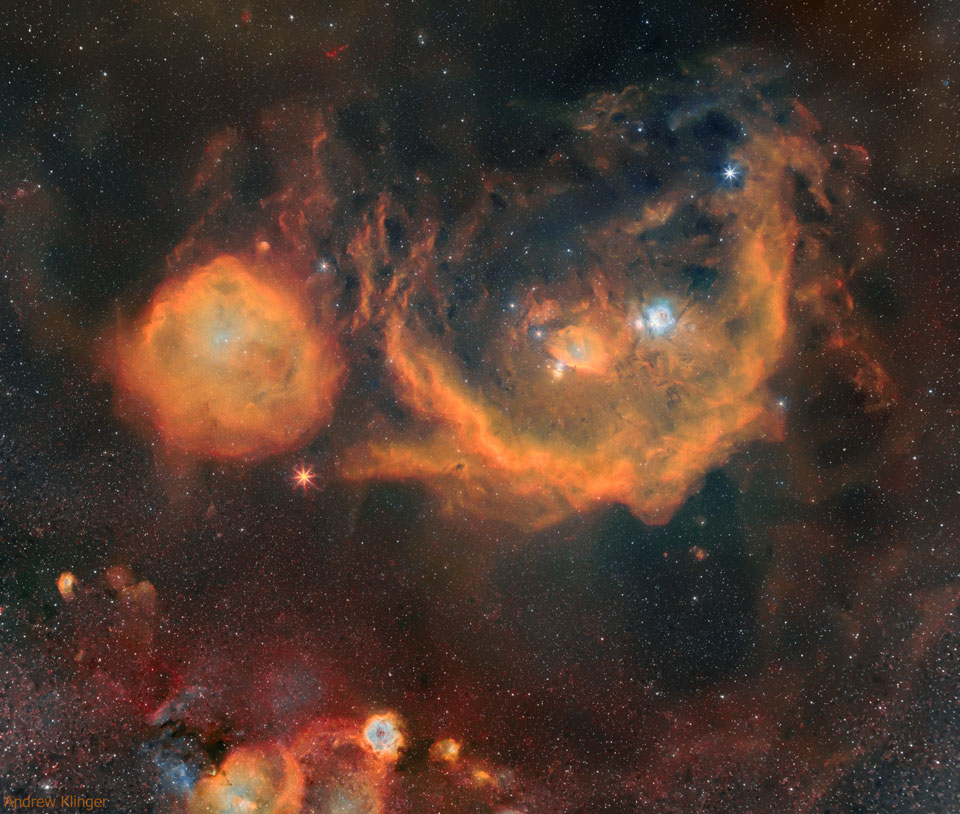
The constellation of Orion is much more than three stars in a row. It is a direction in space that is rich with impressive nebulas. To better appreciate this well-known swath of sky, a new long exposure image was taken over several clear nights in January, February and March. After 23 hours of camera time and untold hours of image processing, the featured collage in the light of hydrogen, oxygen, and sulfur was produced spanning over 40 times the angular diameter of the Moon. Of the many interesting details that have become visible, one that particularly draws the eye is Barnard’s Loop, the bright red orange arc just to the right of the image center. The Rosette Nebula is not the giant orange nebula just to the left of the image center — that is larger but lesser known nebula known as the Meissa Ring. The Rosette Nebula is visible, though: it is the bright orange, blue and white nebula near the image bottom. The bright orange star just left of the frame center is Betelgeuse, while the bright blue star on the upper right is Rigel. About those famous three stars that cross the belt of Orion the Hunter — in this busy frame they can be hard to locate, but a discerning eye will find them just to the right of the image center. via NASA
https://apod.nasa.gov/apod/ap190605.html


astronomy, NASA, photos, space, #space
Tuesday, June 4, 2019

SEIS: Listening for Marsquakes

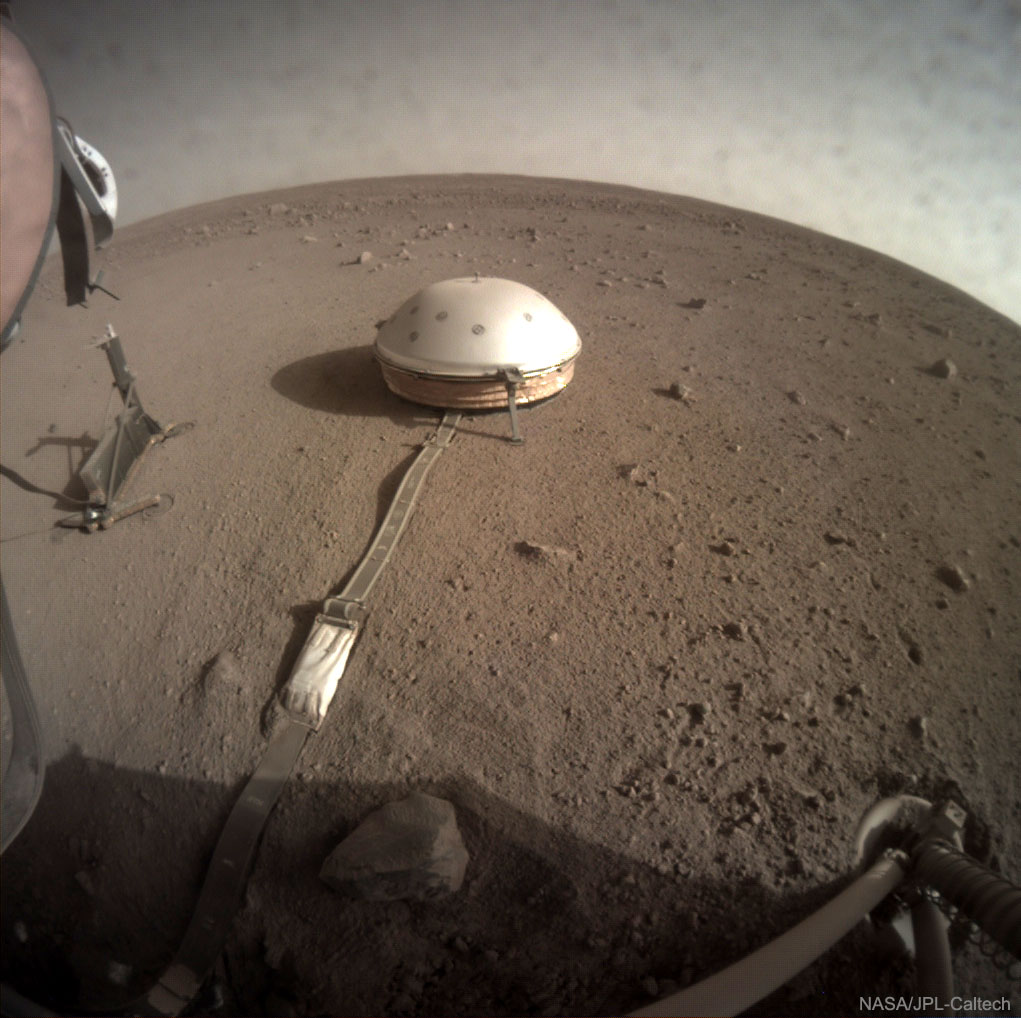
If you put your ear to Mars, what would you hear? To find out, and to explore the unknown interior of Mars, NASA’s Insight Lander deployed SEIS late last year, a sensitive seismometer that can detect marsquakes. In early April, after hearing the wind and motions initiated by the lander itself, SEIS recorded an unprecedented event that matches what was expected for a marsquake. This event can be heard on this YouTube video. Although Mars is not thought to have tectonic plates like the Earth, numerous faults are visible on the Martian surface which likely occurred as the hot interior of Mars cooled — and continues to cool. Were strong enough marsquakes to occur, SEIS could hear their rumbles reflected from large structures internal to Mars, like a liquid core, if one exists. Pictured last week, SEIS sits quietly on the Martian surface, taking in some Sun while light clouds are visible over the horizon. via NASA
https://apod.nasa.gov/apod/ap190604.html


astronomy, NASA, photos, space, #space
Monday, June 3, 2019

Media Briefing Highlights NASA Tech on Next SpaceX Falcon Heavy Launch

NASA is sending four technology missions that will help improve future spacecraft design and performance into space on the next SpaceX Falcon Heavy rocket launch. Experts will discuss these technologies, and how they complement NASA’s Moon to Mars exploration plans, during a media teleconference Monday, June 10 at 1 p.m. EDT.

from NASA
http://www.nasa.gov/press-release/media-briefing-highlights-nasa-tech-on-next-spacex-falcon-heavy-launch
#NASA #news #photos #space #astronomy


NASA, news, space, #space

Stephan’s Quintet from Hubble

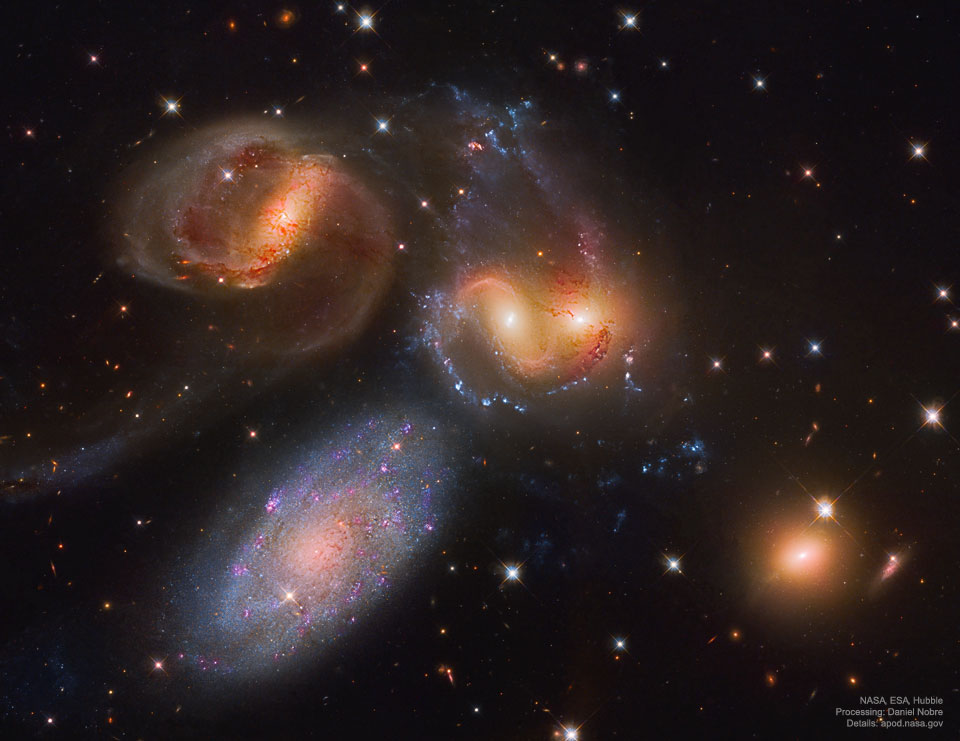
When did these big galaxies first begin to dance? Really only four of the five of Stephan’s Quintet are locked in a cosmic tango of repeated close encounters taking place some 300 million light-years away. The odd galaxy out is easy to spot in this recently reprocessed image by the Hubble Space Telescope — the interacting galaxies, NGC 7319, 7318B, 7318A, and 7317 (left to right), have a more dominant yellowish cast. They also tend to have distorted loops and tails, grown under the influence of disruptive gravitational tides. The mostly bluish galaxy, large NGC 7320 on the lower left, is in the foreground at about 40 million light-years distant, and so is not part of the interacting group. Data and modeling indicate that NGC 7318B is a relatively new intruder. A recently-discovered halo of old red stars surrounding Stephan’s Quintet indicate that at least some of these galaxies started tangling over a billion years. Stephan’s Quintet is visible with a moderate sized-telescope toward the constellation of Winged Horse (Pegasus). via NASA
https://apod.nasa.gov/apod/ap190603.html


astronomy, NASA, photos, space, #space
Friday, May 31, 2019

NASA Selects First Commercial Moon Landing Services for Artemis Program

NASA has selected three commercial Moon landing service providers that will deliver science and technology payloads under Commercial Lunar Payload Services (CLPS) as part of the Artemis program.

from NASA
http://www.nasa.gov/press-release/nasa-selects-first-commercial-moon-landing-services-for-artemis-program
#NASA #news #photos #space #astronomy


NASA, news, space, #space

Thursday, May 30, 2019

NASA to Announce Selection of Science Commercial Moon Landing Services, Hold Media Teleconference

NASA will announce the next major step in the Artemis program’s lunar surface exploration plans during a NASA Science Live broadcast at 1 p.m. EDT Friday, May 31.

from NASA
http://www.nasa.gov/press-release/nasa-to-announce-selection-of-science-commercial-moon-landing-services-hold-media
#NASA #news #photos #space #astronomy


NASA, news, space, #space

Pennsylvania Students to Speak with NASA Astronaut on International Space Station

Students from Pennsylvania will have an opportunity to speak live with a NASA astronaut aboard the International Space Station at 1:40 p.m. EDT Monday, June 3.

from NASA
http://www.nasa.gov/press-release/pennsylvania-students-to-speak-with-nasa-astronaut-on-international-space-station
#NASA #news #photos #space #astronomy


NASA, news, space, #space

NASA TV Set to Air US Cargo Ship Departure from Space Station

Filled with more than 4,200 pounds of valuable scientific experiments and other cargo, a SpaceX Dragon cargo spacecraft is set to return to Earth from the International Space Station Monday, June 3.

from NASA
http://www.nasa.gov/press-release/nasa-tv-set-to-air-us-cargo-ship-departure-from-space-station
#NASA #news #photos #space #astronomy


NASA, news, space, #space

Wednesday, May 29, 2019

M95: Spiral Galaxy with an Inner Ring

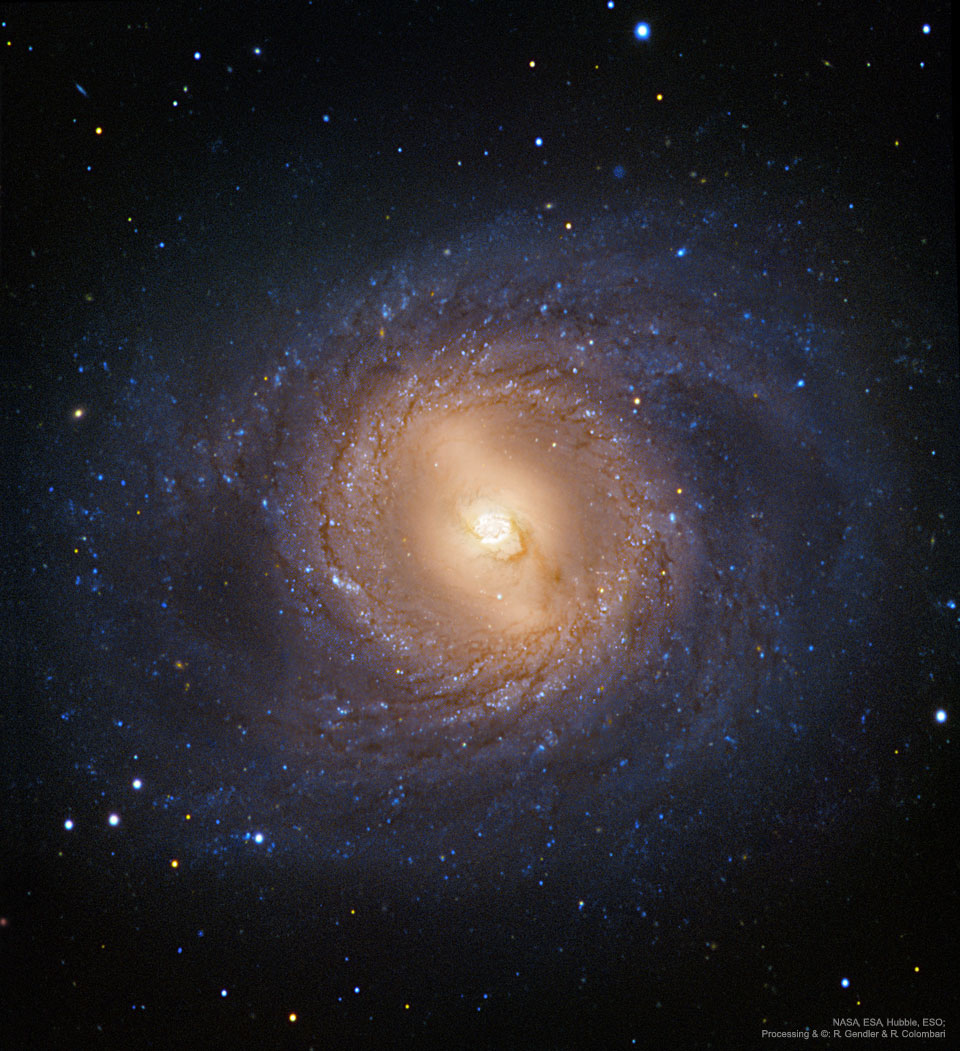
Why do some spiral galaxies have a ring around the center? First and foremost, M95 is one of the closer examples of a big and beautiful barred spiral galaxy. Visible in the featured combination of images from Hubble and several ground based telescopes are sprawling spiral arms delineated by open clusters of bright blue stars, lanes of dark dust, the diffuse glow of billions of faint stars, and a short bar across the galaxy center. What intrigues many astronomers, however, is the circumnuclear ring around the galaxy center visible just outside the central bar. Although the long term stability of this ring remains a topic of research, observations indicate its present brightness is at least enhanced by transient bursts of star formation. M95, also known as NGC 3351, spans about 50,000 light-years, lies about 30 million light years away, and can be seen with a small telescope toward the constellation of the Lion (Leo). via NASA
https://apod.nasa.gov/apod/ap190529.html


astronomy, NASA, photos, space, #space
Tuesday, May 28, 2019

Stars, Dust, and Gas near NGC 3572

Star formation can be colorful. This chromatic cosmic portrait features glowing gas and dark dust near some recently formed stars of NGC 3572, a little-studied star cluster near the Carina Nebula. Stars from NGC 3572 are visible near the bottom of the image, while the expansive gas cloud above is likely what remains of their formation nebula. The image’s striking hues were created by featuring specific colors emitted by hydrogen, oxygen, and sulfur, and blending them with images recorded through broadband filters in red, green, and blue. This nebula near NGC 3572 spans about 100 light years and lies about 9,000 light years away toward the southern constellation of the Ship’s Keel (Carina). Within a few million years the pictured gas will likely disperse, while gravitational encounters will likely disperse the cluster stars over about a billion years. via NASA
https://apod.nasa.gov/apod/ap190528.html


astronomy, NASA, photos, space, #space
Sunday, May 26, 2019

A Solar Prominence Eruption from SDO

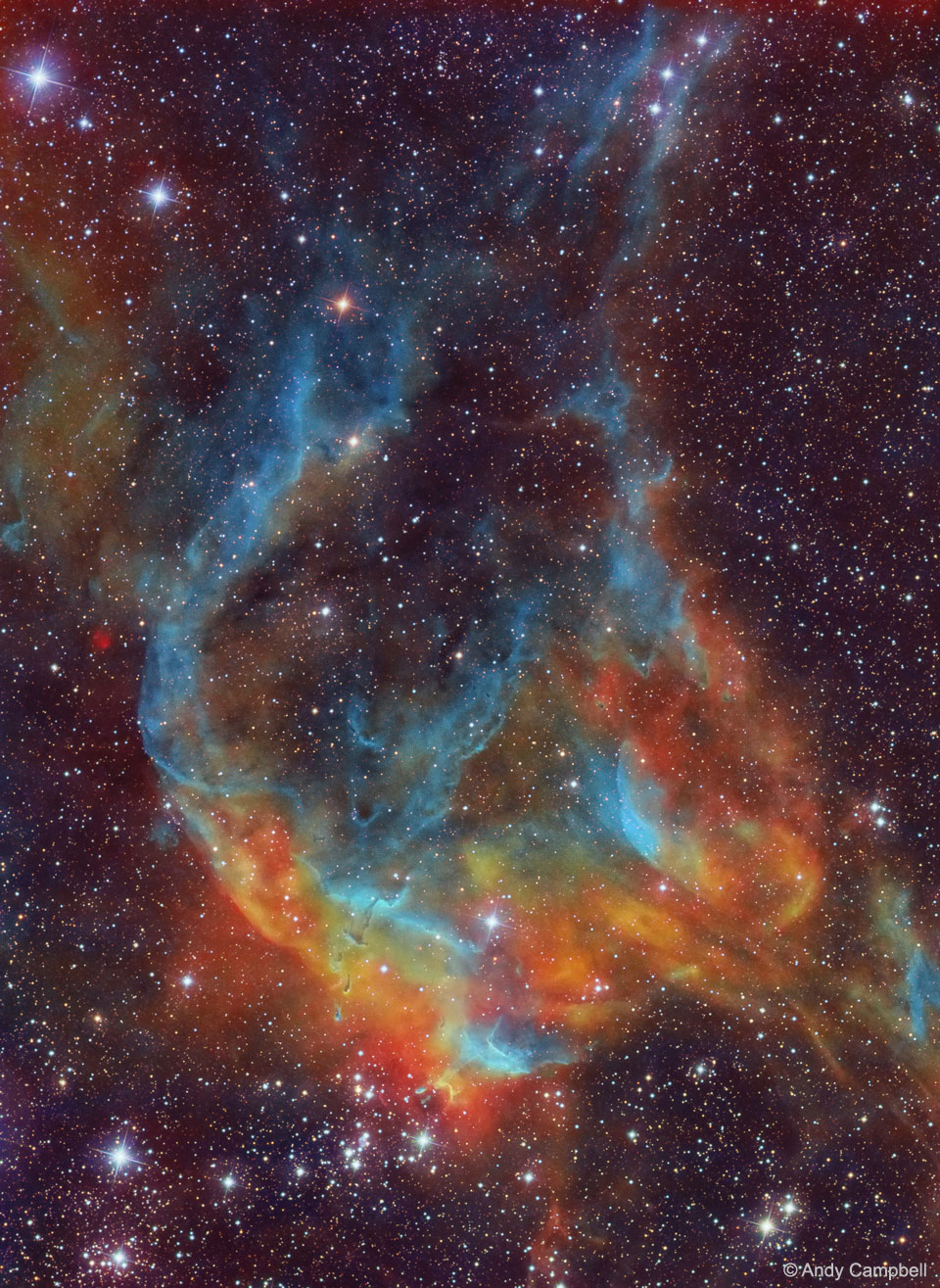
One of the most spectacular solar sights is an erupting prominence. In 2011, NASA’s Sun-orbiting Solar Dynamic Observatory spacecraft imaged an impressively large prominence erupting from the surface. The dramatic explosion was captured in ultraviolet light in the featured time lapse video covering 90 minutes, where a new frame was taken every 24 seconds. The scale of the prominence is huge — the entire Earth would easily fit under the flowing curtain of hot gas. A solar prominence is channeled and sometimes held above the Sun’s surface by the Sun’s magnetic field. A quiescent prominence typically lasts about a month, and may erupt in a Coronal Mass Ejection (CME) expelling hot gas into the Solar System. The energy mechanism that creates a solar prominence is still a topic of research. After our Sun passes the current Solar Minimum, solar activity like eruptive prominences are expected to become more common over the next few years. via NASA
https://apod.nasa.gov/apod/ap190526.html


astronomy, NASA, photos, space, #space

Friday, May 24, 2019

NASA Television to Air Russian Spacewalk at International Space Station

Two veteran Russian cosmonauts will venture outside the International Space Station for a spacewalk Wednesday, May 29, to retrieve science experiments and conduct maintenance on the orbiting laboratory.

from NASA
http://www.nasa.gov/press-release/nasa-television-to-air-russian-spacewalk-at-international-space-station-0
#NASA #news #photos #space #astronomy


NASA, news, space, #space