Showing posts with label astronomy. Show all posts

Sunday, June 16, 2019

Unusual Mountain Ahuna Mons on Asteroid Ceres

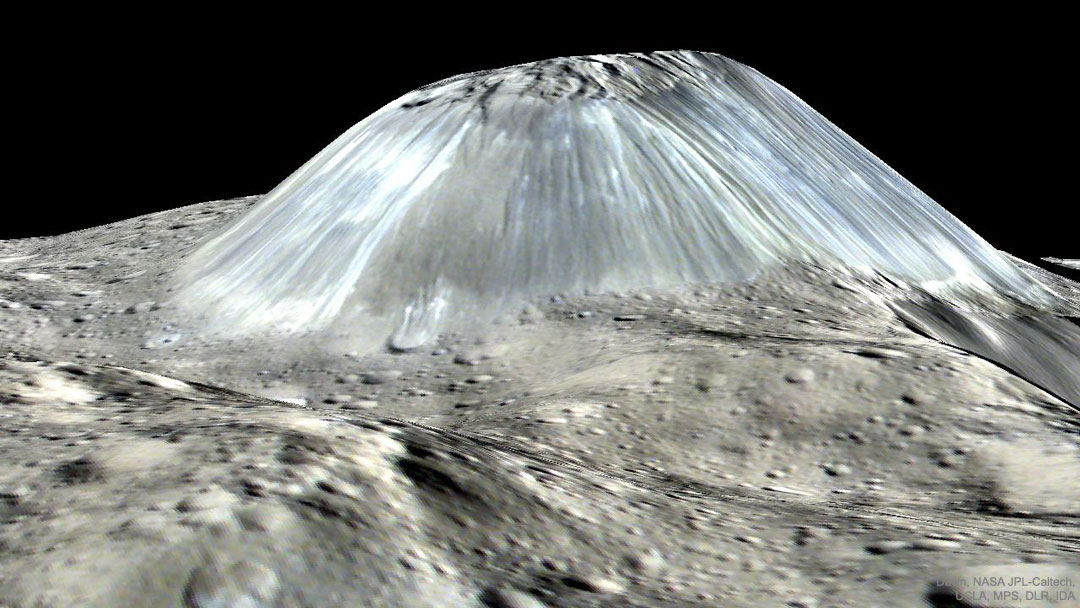
What created this unusual mountain? There is a new theory. Ahuna Mons is the largest mountain on the largest known asteroid in our Solar System, Ceres, which orbits our Sun in the main asteroid belt between Mars and Jupiter. Ahuna Mons, though, is like nothing that humanity has ever seen before. For one thing, its slopes are garnished not with old craters but young vertical streaks. The new hypothesis, based on numerous gravity measurements, holds that a bubble of mud rose from deep within the dwarf planet and pushed through the icy surface at a weak point rich in reflective salt — and then froze. The bright streaks are thought to be similar to other recently surfaced material such as visible in Ceres’ famous bright spots. The featured double-height digital image was constructed from surface maps taken of Ceres in 2016 by the robotic Dawn mission. Successfully completing its mission in 2018, Dawn continues to orbit Ceres even though it has exhausted the fuel needed to keep its antennas pointed toward Earth. via NASA
https://apod.nasa.gov/apod/ap190616.html


astronomy, NASA, photos, space, #space

Thursday, June 13, 2019

The Colors and Magnitudes of M13

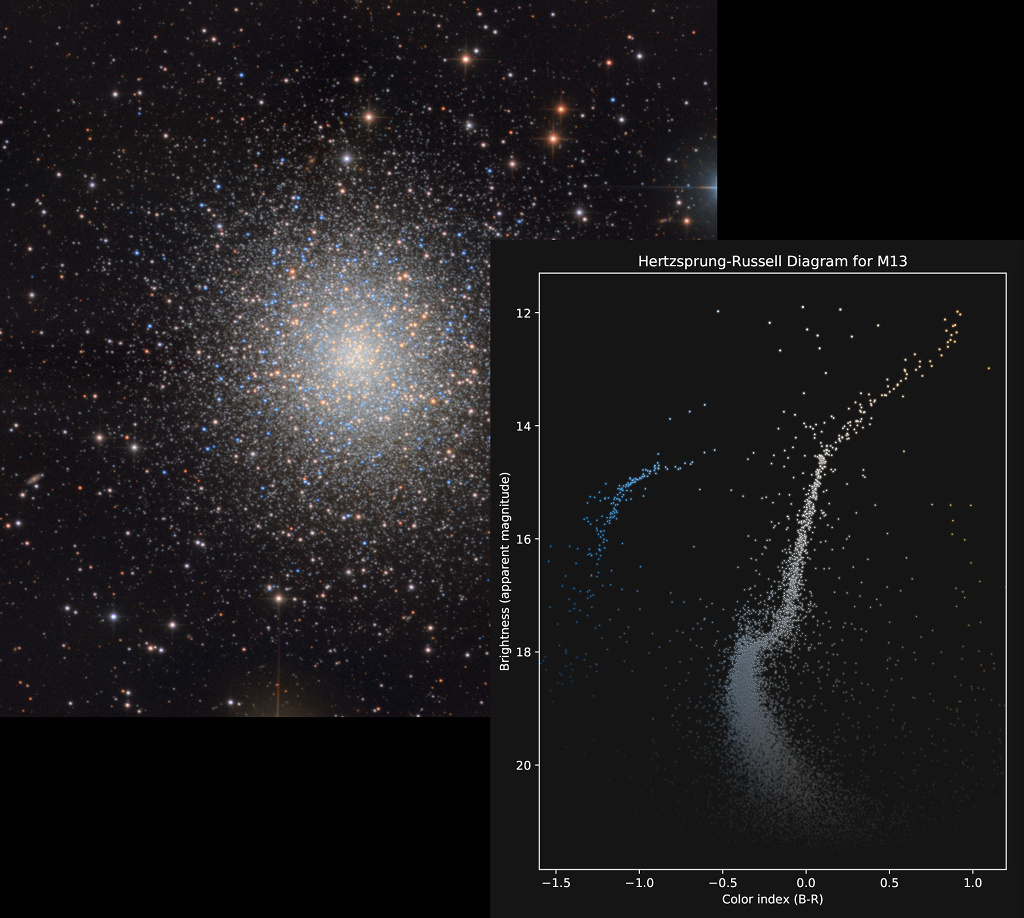
M13 is modestly recognized as the Great Globular Star Cluster in Hercules. A ball of stars numbering in the hundreds of thousands crowded into a region 150 light years across, it lies some 25,000 light-years away. The sharp, color picture of M13 at upper left is familiar to many telescopic imagers. Still, M13’s Color vs Magnitude Diagram in the panel below and right, made from the same image data, can offer a more telling view. Also known as a Hertzsprung Russell (HR) diagram it plots the apparent brightness of individual cluster stars against color index. The color index is determined for each star by subtracting its brightness (in magnitudes) measured through a red filter from its brightness measured with a blue filter (B-R). Blue stars are hot and red stars are cool so that astronomical color index ranging from bluer to redder follows the relative stellar temperature scale from left (hot) to right (cool). In M13’s HR diagram, the stars clearly fall into distinct groups. The broad swath extending diagonally from the bottom right is the cluster’s main sequence. A sharp turn toward the upper right hand corner follows the red giant branch while the blue giants are found grouped in the upper left. Formed at the same time, at first M13’s stars were all located along the main sequence by mass, lower mass stars at the lower right. Over time higher mass stars have evolved off the main sequence into red, then blue giants and beyond. In fact, the position of the turn-off from the main sequence to the red giant branch indicates the cluster’s age at about 12 billion years. via NASA
https://apod.nasa.gov/apod/ap190613.html


astronomy, NASA, photos, space, #space
Tuesday, June 11, 2019

The Cave Nebula in Infrared from Spitzer

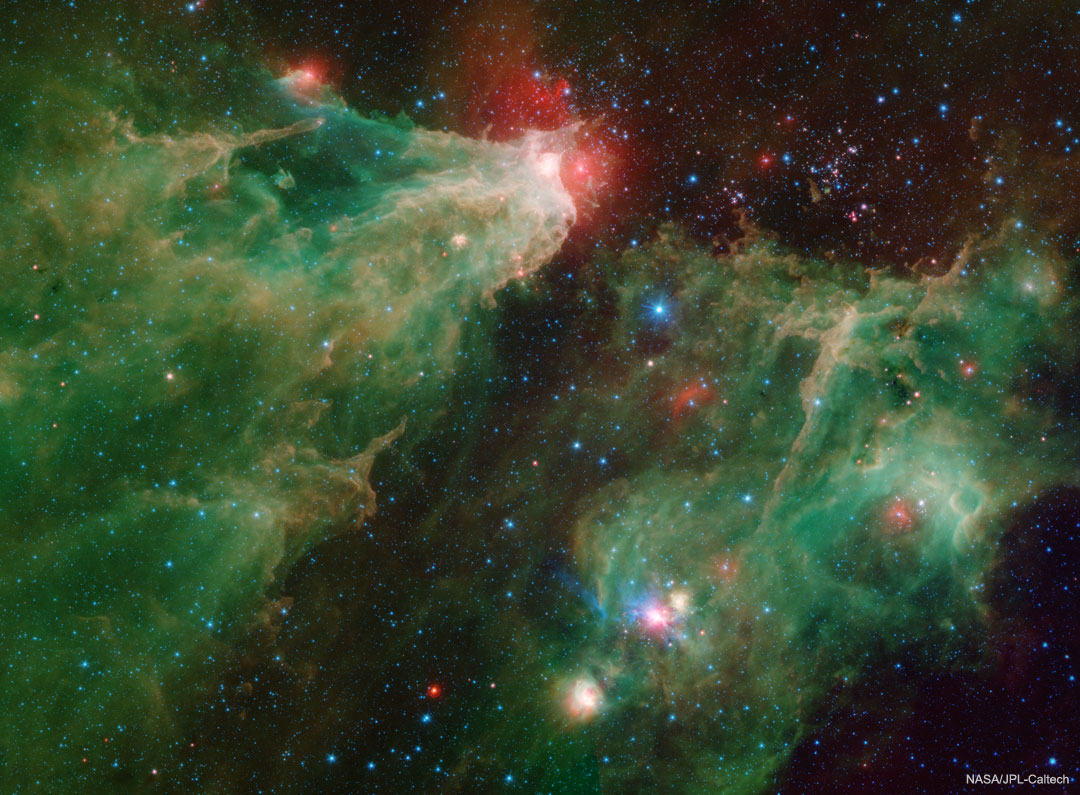
What’s happening in and around the Cave Nebula? To help find out, NASA’s orbiting Spitzer Space Telescope looked into this optically-dark star-forming region in four colors of infrared light. The Cave Nebula, cataloged as Sh2-155, is quite bright in infrared, revealing details not only of internal pillars of gas and dust, but of the illuminating star cluster too – all near the top of the image. The red glow around the Cave’s entrance is created by dust heated by bright young stars. To the right is Cepheus B, a star cluster that formed previously from the same cloud of gas and dust. Other interesting stars of Cepheus come to light in infrared as well, including those illuminating an even younger nebula toward the image bottom, and a runaway star pushing a bow shock, tinged in red near the image center. This region spans about 50 light years and lies about 2,500 light years toward the constellation of the King of Aethiopia (Cepheus). via NASA
https://apod.nasa.gov/apod/ap190611.html


astronomy, NASA, photos, space, #space
Saturday, June 8, 2019

On the Beach with Mars

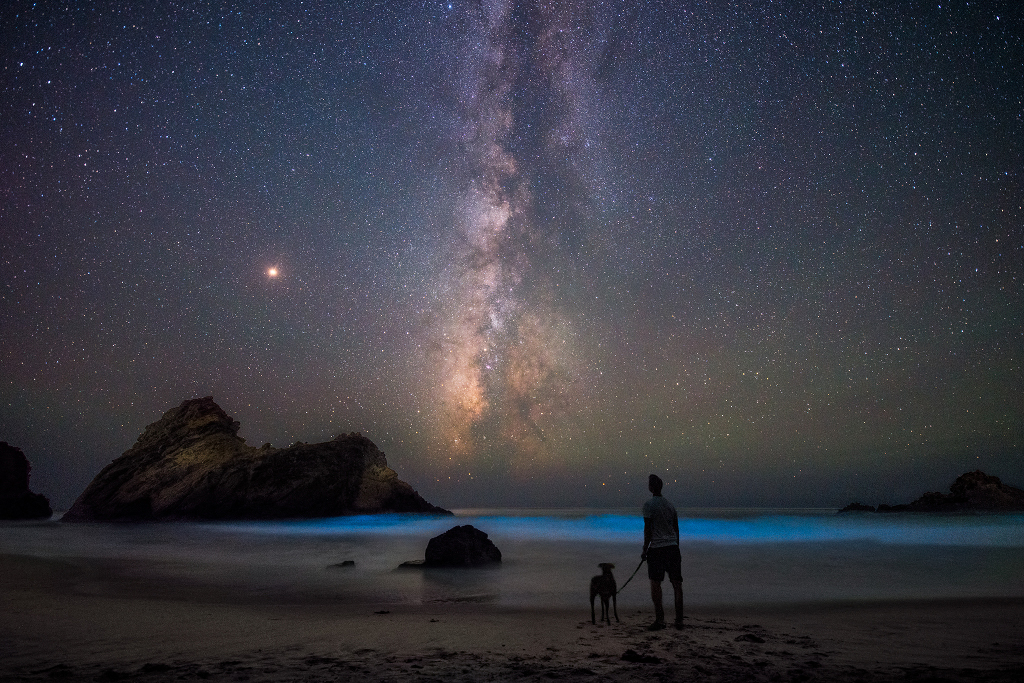
At the end of last year’s northern summer, after its dazzling opposition, Mars still shone brightly in the night. The celestial beacon easily attracted the attention of these two night skygazers who stood still for just a while, but long enough to be captured in the sea and night skyscape from Big Sur, planet Earth. Its central bulge near the southwestern horizon, the Milky Way runs through the scene too, while the long exposure also reveals a faint blue bioluminescence blooming in the waves along Pfeiffer Beach. Now much fainter, Mars can be spotted near the western horizon after sunset, but this month Jupiter is near its closest and brightest, reaching its own opposition on June 10. Night skygazers can spot brilliant Jupiter over southern horizons, glaring next to the stars toward the central Milky Way. via NASA
https://apod.nasa.gov/apod/ap190608.html


astronomy, NASA, photos, space, #space
Wednesday, June 5, 2019

The Interstellar Clouds of Orion

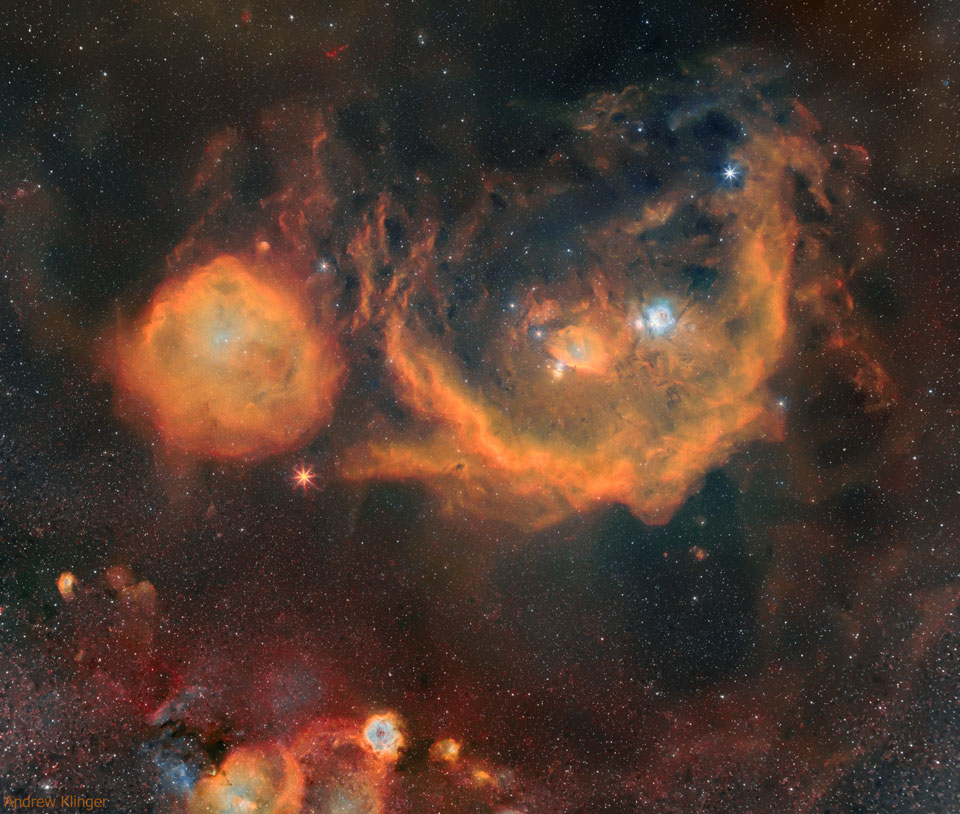
The constellation of Orion is much more than three stars in a row. It is a direction in space that is rich with impressive nebulas. To better appreciate this well-known swath of sky, a new long exposure image was taken over several clear nights in January, February and March. After 23 hours of camera time and untold hours of image processing, the featured collage in the light of hydrogen, oxygen, and sulfur was produced spanning over 40 times the angular diameter of the Moon. Of the many interesting details that have become visible, one that particularly draws the eye is Barnard’s Loop, the bright red orange arc just to the right of the image center. The Rosette Nebula is not the giant orange nebula just to the left of the image center — that is larger but lesser known nebula known as the Meissa Ring. The Rosette Nebula is visible, though: it is the bright orange, blue and white nebula near the image bottom. The bright orange star just left of the frame center is Betelgeuse, while the bright blue star on the upper right is Rigel. About those famous three stars that cross the belt of Orion the Hunter — in this busy frame they can be hard to locate, but a discerning eye will find them just to the right of the image center. via NASA
https://apod.nasa.gov/apod/ap190605.html


astronomy, NASA, photos, space, #space
Tuesday, June 4, 2019

SEIS: Listening for Marsquakes

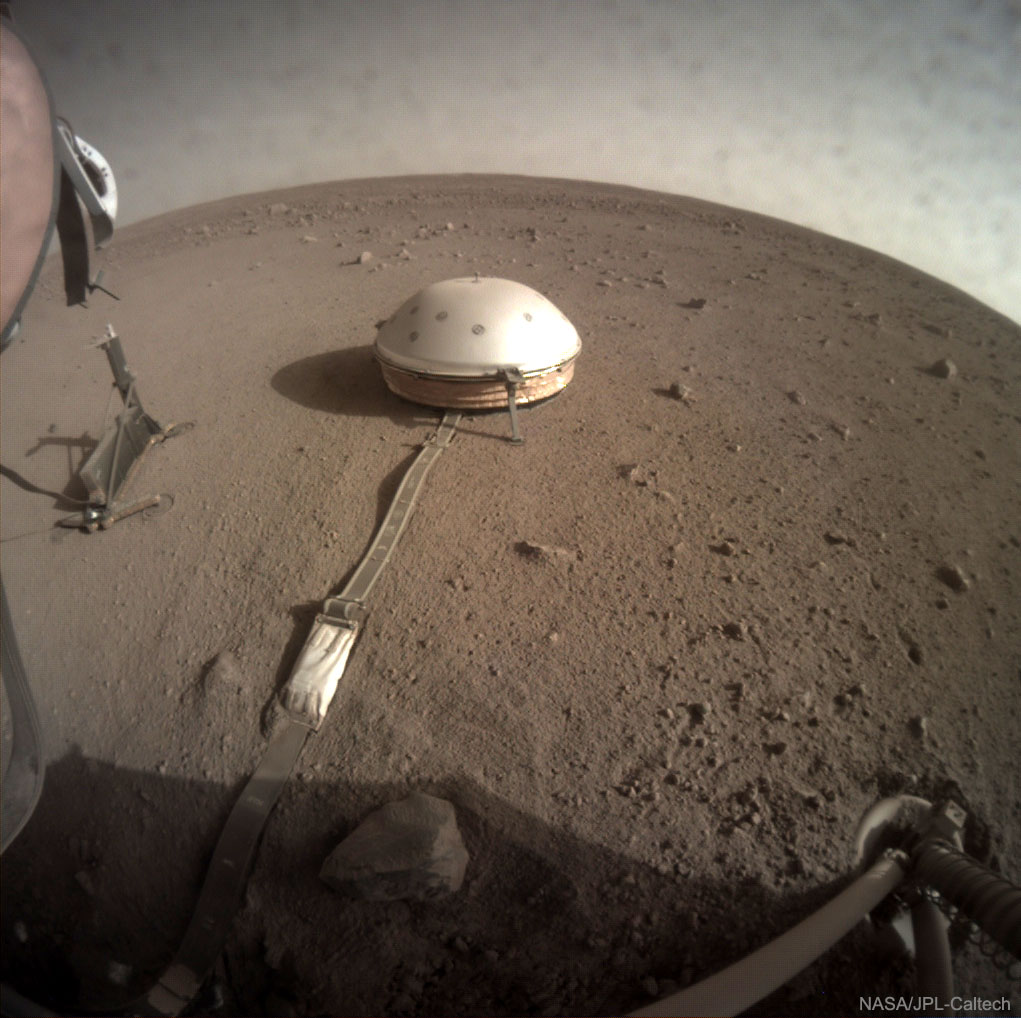
If you put your ear to Mars, what would you hear? To find out, and to explore the unknown interior of Mars, NASA’s Insight Lander deployed SEIS late last year, a sensitive seismometer that can detect marsquakes. In early April, after hearing the wind and motions initiated by the lander itself, SEIS recorded an unprecedented event that matches what was expected for a marsquake. This event can be heard on this YouTube video. Although Mars is not thought to have tectonic plates like the Earth, numerous faults are visible on the Martian surface which likely occurred as the hot interior of Mars cooled — and continues to cool. Were strong enough marsquakes to occur, SEIS could hear their rumbles reflected from large structures internal to Mars, like a liquid core, if one exists. Pictured last week, SEIS sits quietly on the Martian surface, taking in some Sun while light clouds are visible over the horizon. via NASA
https://apod.nasa.gov/apod/ap190604.html


astronomy, NASA, photos, space, #space
Monday, June 3, 2019

Stephan’s Quintet from Hubble

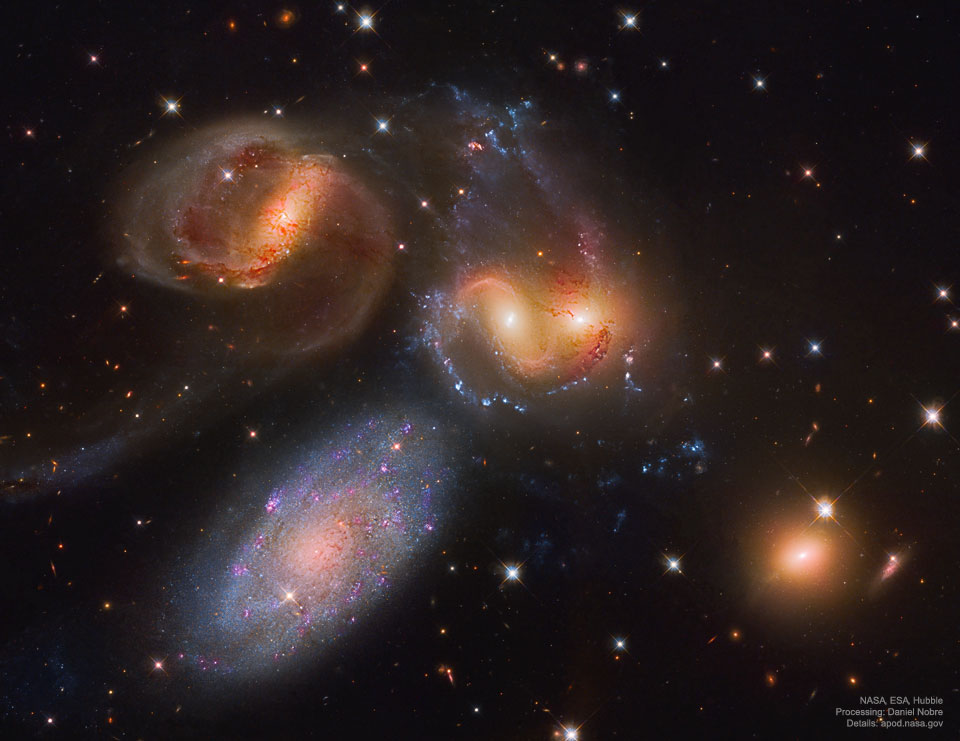
When did these big galaxies first begin to dance? Really only four of the five of Stephan’s Quintet are locked in a cosmic tango of repeated close encounters taking place some 300 million light-years away. The odd galaxy out is easy to spot in this recently reprocessed image by the Hubble Space Telescope — the interacting galaxies, NGC 7319, 7318B, 7318A, and 7317 (left to right), have a more dominant yellowish cast. They also tend to have distorted loops and tails, grown under the influence of disruptive gravitational tides. The mostly bluish galaxy, large NGC 7320 on the lower left, is in the foreground at about 40 million light-years distant, and so is not part of the interacting group. Data and modeling indicate that NGC 7318B is a relatively new intruder. A recently-discovered halo of old red stars surrounding Stephan’s Quintet indicate that at least some of these galaxies started tangling over a billion years. Stephan’s Quintet is visible with a moderate sized-telescope toward the constellation of Winged Horse (Pegasus). via NASA
https://apod.nasa.gov/apod/ap190603.html


astronomy, NASA, photos, space, #space
Wednesday, May 29, 2019

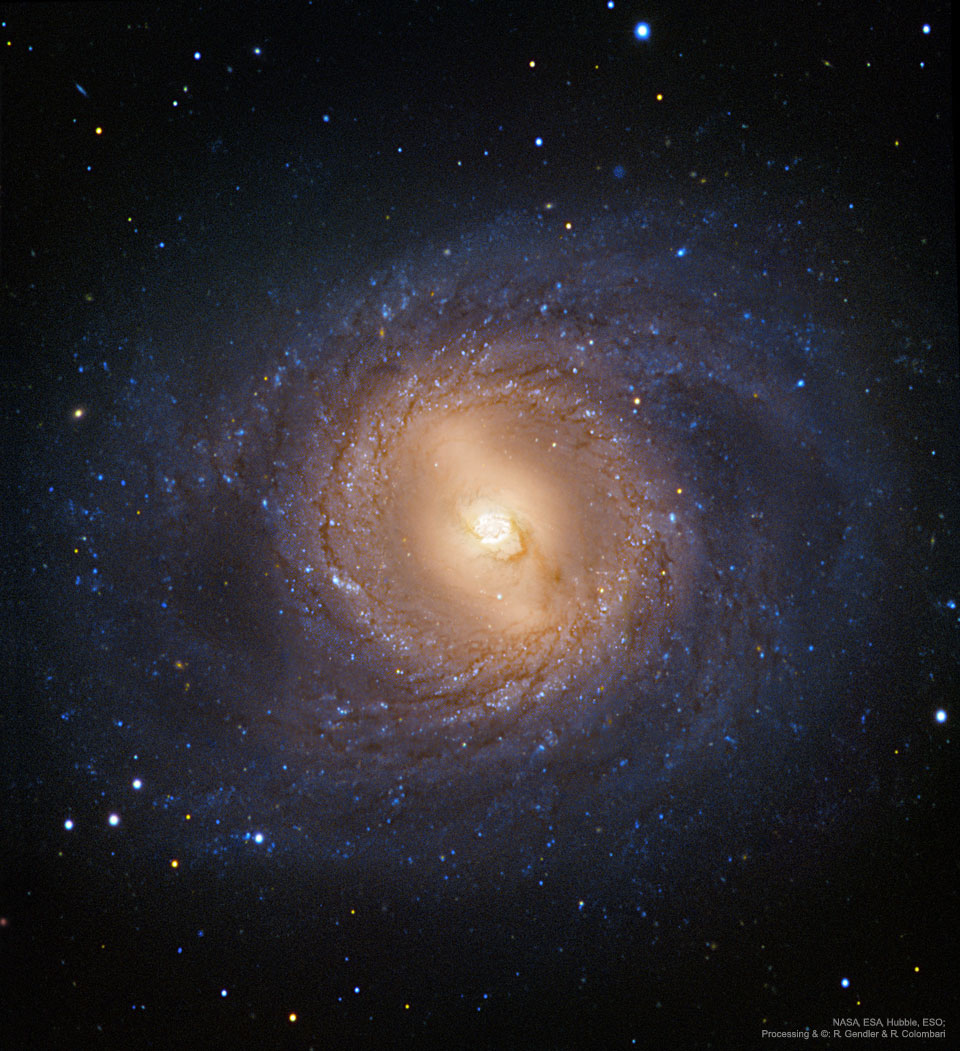
M95: Spiral Galaxy with an Inner Ring

Why do some spiral galaxies have a ring around the center? First and foremost, M95 is one of the closer examples of a big and beautiful barred spiral galaxy. Visible in the featured combination of images from Hubble and several ground based telescopes are sprawling spiral arms delineated by open clusters of bright blue stars, lanes of dark dust, the diffuse glow of billions of faint stars, and a short bar across the galaxy center. What intrigues many astronomers, however, is the circumnuclear ring around the galaxy center visible just outside the central bar. Although the long term stability of this ring remains a topic of research, observations indicate its present brightness is at least enhanced by transient bursts of star formation. M95, also known as NGC 3351, spans about 50,000 light-years, lies about 30 million light years away, and can be seen with a small telescope toward the constellation of the Lion (Leo). via NASA
https://apod.nasa.gov/apod/ap190529.html


astronomy, NASA, photos, space, #space
Tuesday, May 28, 2019

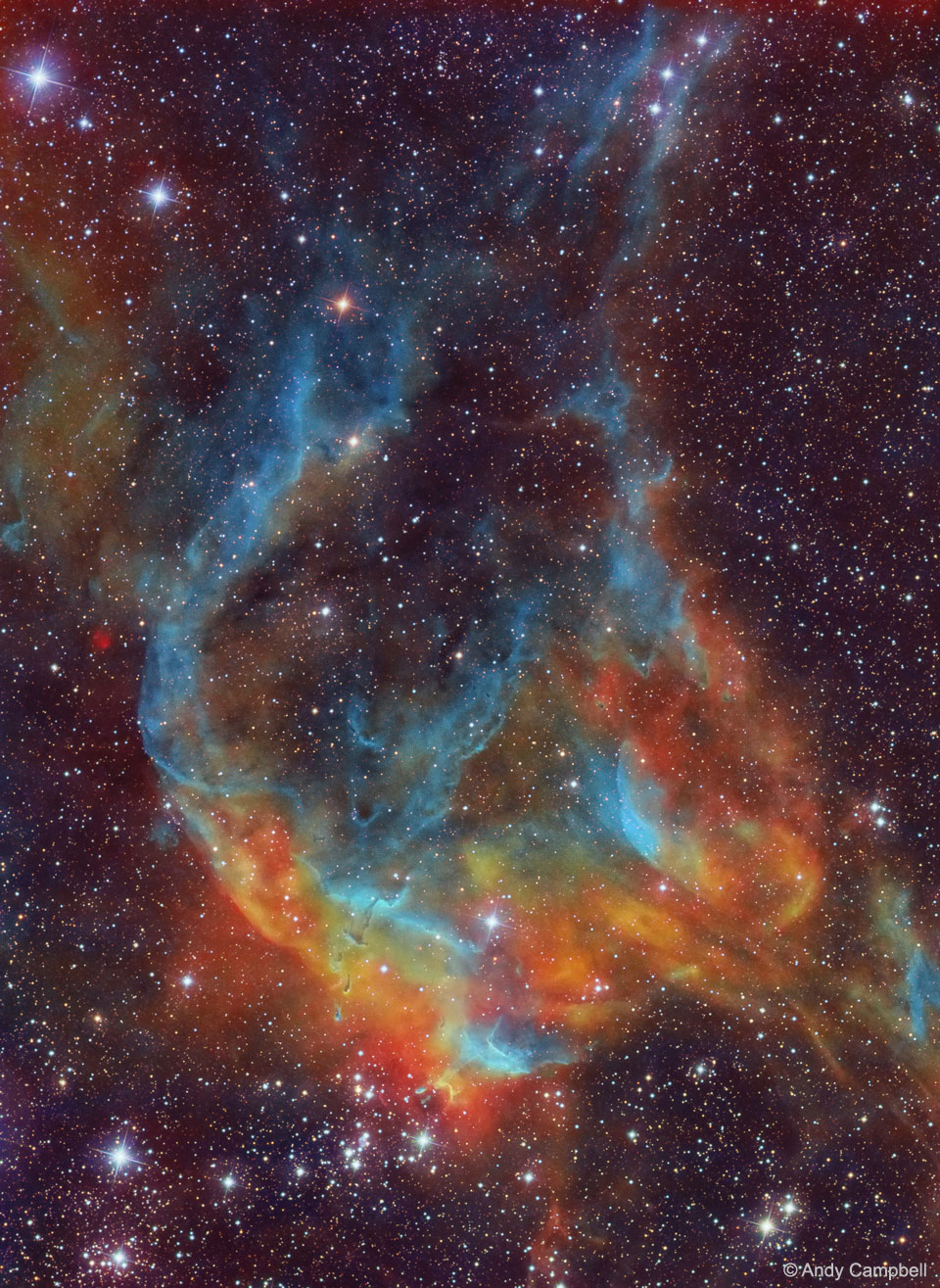
Stars, Dust, and Gas near NGC 3572

Star formation can be colorful. This chromatic cosmic portrait features glowing gas and dark dust near some recently formed stars of NGC 3572, a little-studied star cluster near the Carina Nebula. Stars from NGC 3572 are visible near the bottom of the image, while the expansive gas cloud above is likely what remains of their formation nebula. The image’s striking hues were created by featuring specific colors emitted by hydrogen, oxygen, and sulfur, and blending them with images recorded through broadband filters in red, green, and blue. This nebula near NGC 3572 spans about 100 light years and lies about 9,000 light years away toward the southern constellation of the Ship’s Keel (Carina). Within a few million years the pictured gas will likely disperse, while gravitational encounters will likely disperse the cluster stars over about a billion years. via NASA
https://apod.nasa.gov/apod/ap190528.html


astronomy, NASA, photos, space, #space
Sunday, May 26, 2019

A Solar Prominence Eruption from SDO

One of the most spectacular solar sights is an erupting prominence. In 2011, NASA’s Sun-orbiting Solar Dynamic Observatory spacecraft imaged an impressively large prominence erupting from the surface. The dramatic explosion was captured in ultraviolet light in the featured time lapse video covering 90 minutes, where a new frame was taken every 24 seconds. The scale of the prominence is huge — the entire Earth would easily fit under the flowing curtain of hot gas. A solar prominence is channeled and sometimes held above the Sun’s surface by the Sun’s magnetic field. A quiescent prominence typically lasts about a month, and may erupt in a Coronal Mass Ejection (CME) expelling hot gas into the Solar System. The energy mechanism that creates a solar prominence is still a topic of research. After our Sun passes the current Solar Minimum, solar activity like eruptive prominences are expected to become more common over the next few years. via NASA
https://apod.nasa.gov/apod/ap190526.html


astronomy, NASA, photos, space, #space

Friday, May 24, 2019

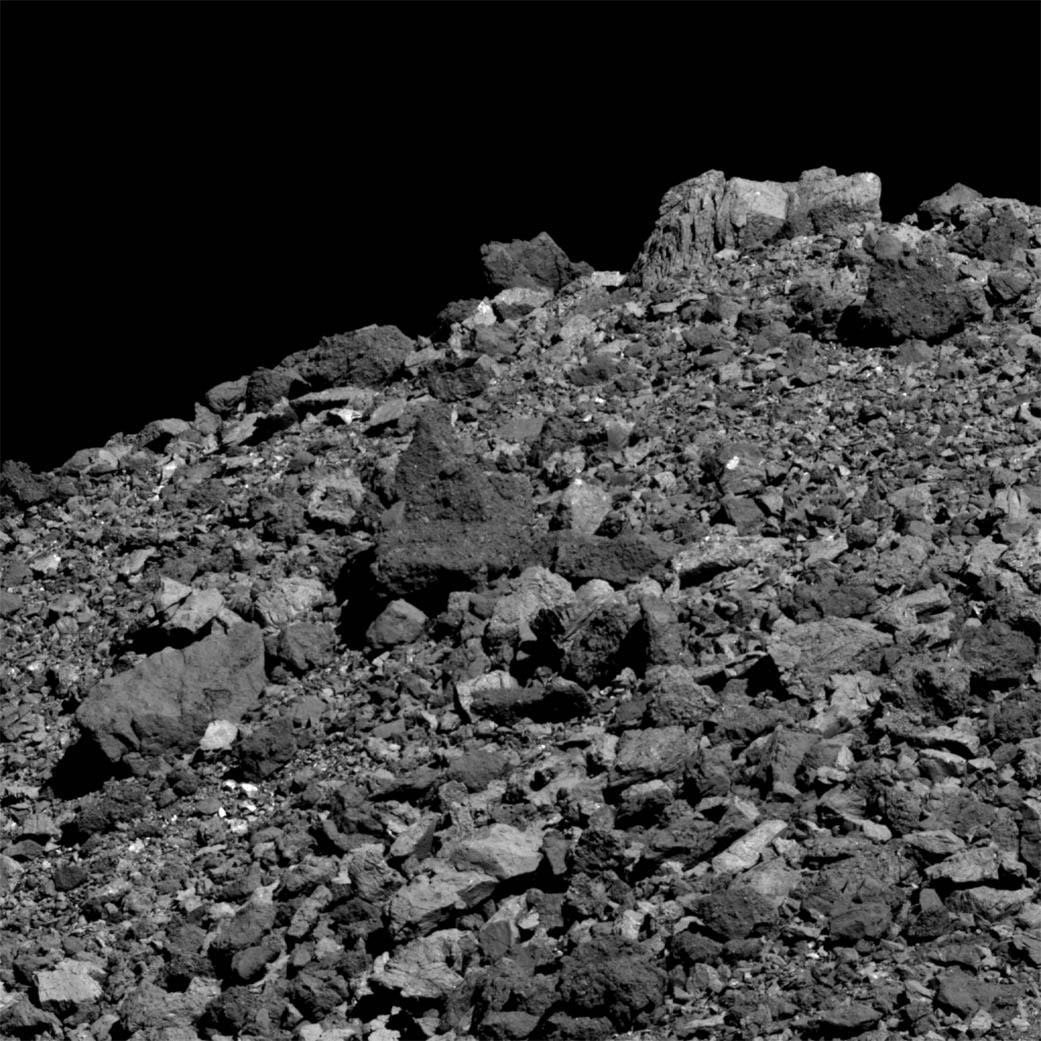
Boulders on Bennu

An abundance of boulders litters the surface asteroid 101955 Bennu in this dramatic close-up from the OSIRIS-REx spacecraft. Taken on March 28 from a distance of just 3.4 kilometers (2.1 miles) the field of view is about 50 meters across while the light colored boulder at top right is 4.8 meters tall. Likely a loose conglomerate rubble pile asteroid, Bennu itself spans less than 500 meters. That’s about the height of the Empire State Building. Mapping the near Earth asteroid since the spacecraft’s arrival in December of 2018, the OSIRIS-REx mission plans a TAG (Touch-and-Go) maneuver for July 2020 to sample Bennu’s rugged surface, returning the sample to planet Earth in September 2023. Citizen scientists have been invited to help choose the sample collection site. via NASA
https://apod.nasa.gov/apod/ap190524.html


astronomy, NASA, photos, space, #space
Tuesday, May 21, 2019

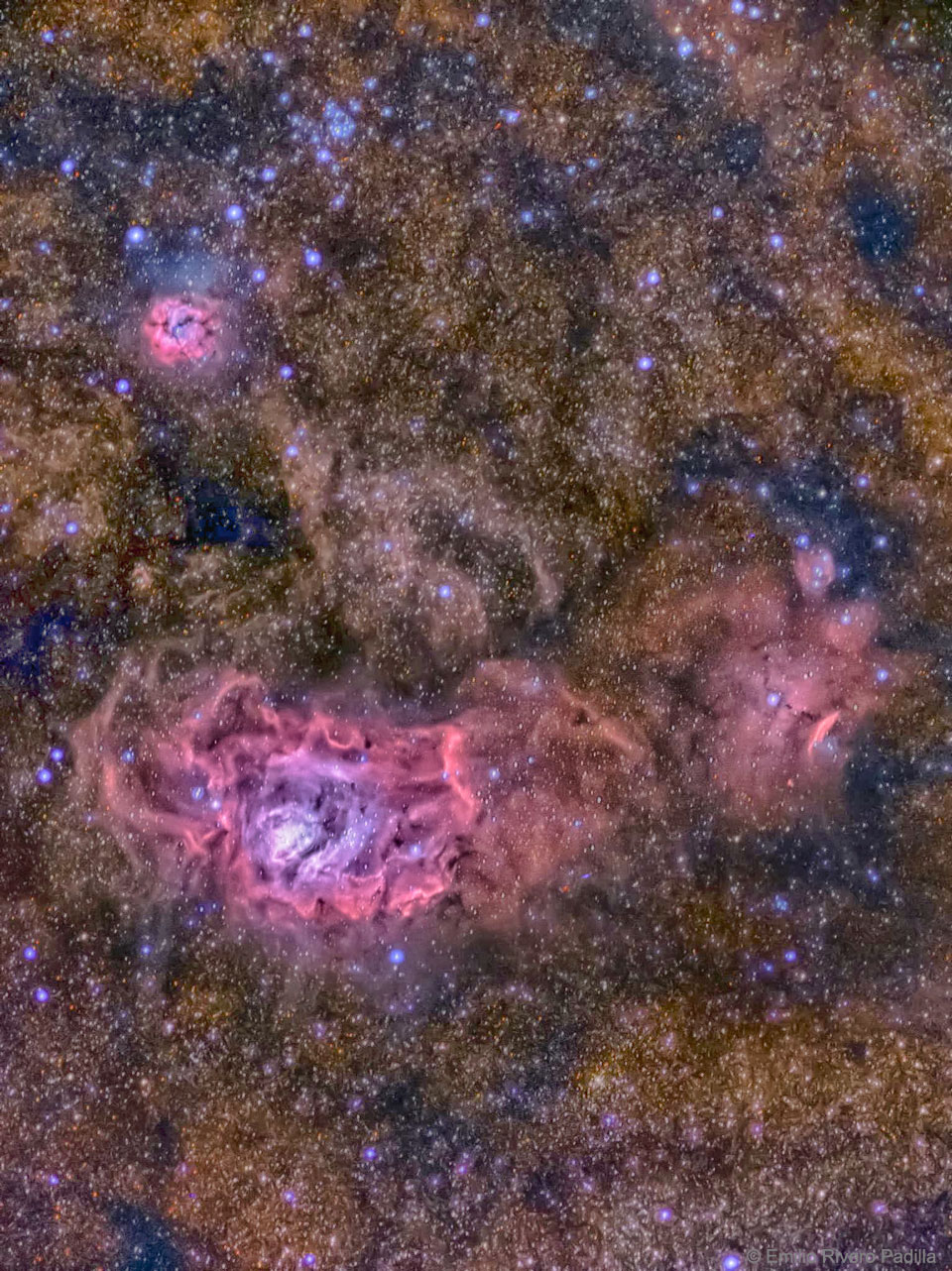
Deep Field: Nebulae of Sagittarius

These three bright nebulae are often featured on telescopic tours of the constellation Sagittarius and the crowded starfields of the central Milky Way. In fact, 18th century cosmic tourist Charles Messier cataloged two of them; M8, the large nebula just left of center, and colorful M20 on the top left. The third emission region includes NGC 6559 and can be found to the right of M8. All three are stellar nurseries about five thousand light-years or so distant. Over a hundred light-years across, the expansive M8 is also known as the Lagoon Nebula. M20’s popular moniker is the Trifid. Glowing hydrogen gas creates the dominant red color of the emission nebulae. In striking contrast, blue hues in the Trifid are due to dust reflected starlight. Recently formed bright blue stars are visible nearby. The colorful composite skyscape was recorded in 2018 in Teide National Park in the Canary Islands, Spain. via NASA
https://apod.nasa.gov/apod/ap190521.html


astronomy, NASA, photos, space, #space
Monday, May 20, 2019

Planets of the Solar System: Tilts and Spins

How does your favorite planet spin? Does it spin rapidly around a nearly vertical axis, or horizontally, or backwards? The featured video animates NASA images of all eight planets in our Solar System to show them spinning side-by-side for an easy comparison. In the time-lapse video, a day on Earth — one Earth rotation — takes just a few seconds. Jupiter rotates the fastest, while Venus spins not only the slowest (can you see it?), but backwards. The inner rocky planets, across the top, most certainly underwent dramatic spin-altering collisions during the early days of the Solar System. The reasons why planets spin and tilt as they do remains a topic of research with much insight gained from modern computer modeling and the recent discovery and analysis of hundreds of exoplanets: planets orbiting other stars. via NASA
https://apod.nasa.gov/apod/ap190520.html


astronomy, NASA, photos, space, #space

Sunday, May 19, 2019

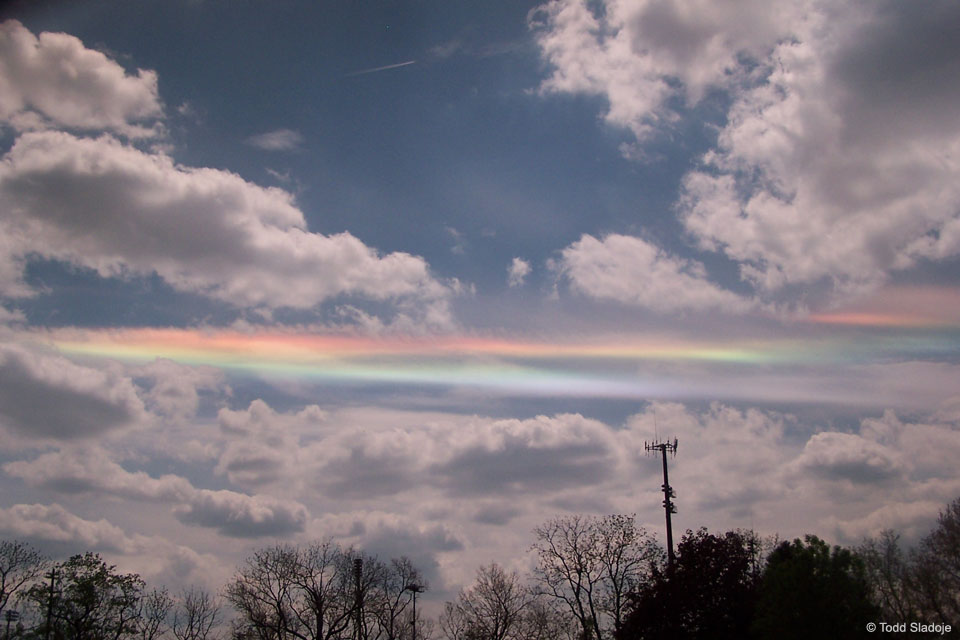
A Circumhorizontal Arc Over Ohio

Why would clouds appear to be different colors? The reason here is that ice crystals in distant cirrus clouds are acting like little floating prisms. Sometimes known as a fire rainbow for its flame-like appearance, a circumhorizon arc lies parallel to the horizon. For a circumhorizontal arc to be visible, the Sun must be at least 58 degrees high in a sky where cirrus clouds are present. Furthermore, the numerous, flat, hexagonal ice-crystals that compose the cirrus cloud must be aligned horizontally to properly refract sunlight in a collectively similar manner. Therefore, circumhorizontal arcs are quite unusual to see. This circumhorizon display was photographed through a polarized lens above Dublin, Ohio in 2009. via NASA
https://apod.nasa.gov/apod/ap190519.html


astronomy, NASA, photos, space, #space
Wednesday, May 15, 2019

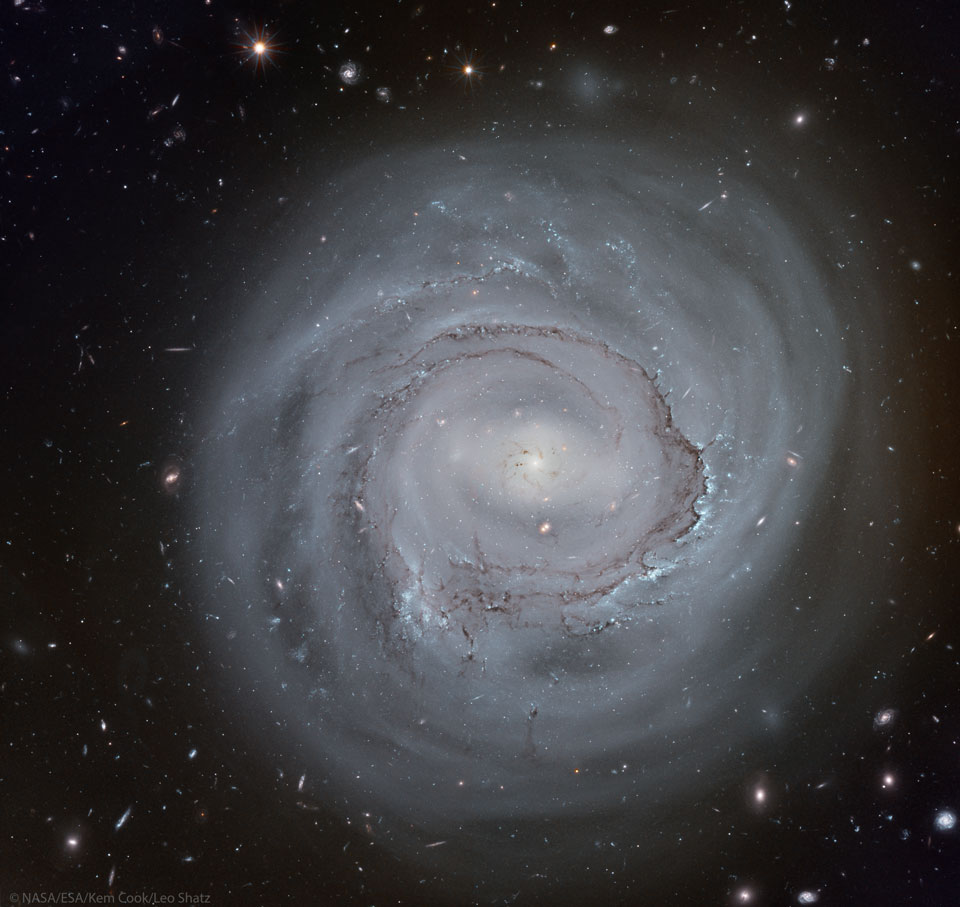
Anemic Spiral NGC 4921 from Hubble

How far away is spiral galaxy NGC 4921? It’s surpringly important to know. Although presently estimated to be about 300 million light years distant, a more precise determination could be coupled with its known recession speed to help humanity better calibrate the expansion rate of the entire visible universe. Toward this goal, several images were taken by the Hubble Space Telescope in order to help identify key stellar distance markers known as Cepheid variable stars. Since NGC 4921 is a member of the Coma Cluster of Galaxies, refining its distance would also allow a better distance determination to one of the largest nearby clusters in the local universe. The magnificent spiral NGC 4921 has been informally dubbed anemic because of its low rate of star formation and low surface brightness. Visible in the featured image are, from the center, a bright nucleus, a bright central bar, a prominent ring of dark dust, blue clusters of recently formed stars, several smaller companion galaxies, unrelated galaxies in the far distant universe, and unrelated stars in our Milky Way Galaxy. via NASA
https://apod.nasa.gov/apod/ap190515.html


astronomy, NASA, photos, space, #space
Tuesday, May 14, 2019

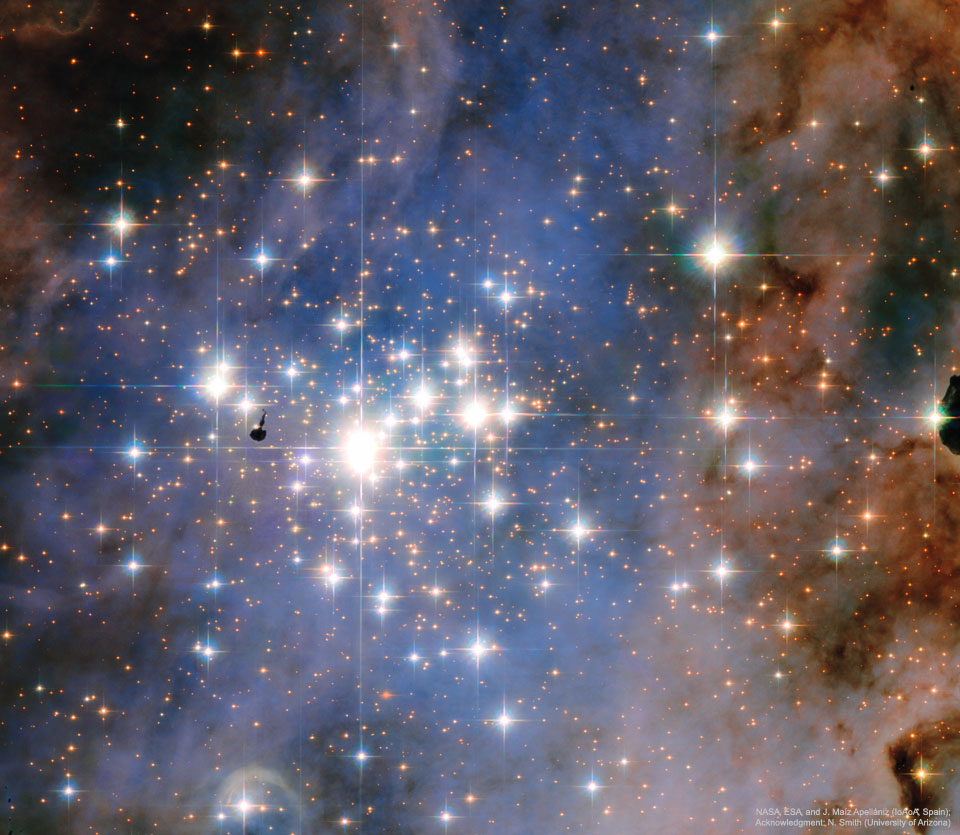
Young Star Cluster Trumpler 14 from Hubble

Why does star cluster Trumpler 14 have so many bright stars? Because it is so young. Many cluster stars have formed only in the past 5 million years and are so hot they emit detectable X-rays. In older star clusters, most stars this young have already died — typically exploding in a supernova — leaving behind stars that are fainter and redder. Trumpler 14 spans about 40 light years and lies about 9,000 light years away on the edge of the famous Carina Nebula. A discerning eye can spot two unusual objects in this detailed 2006 image of Trumpler 14 by the Hubble Space Telescope. First, a dark cloud just left of center may be a planetary system trying to form before being destroyed by the energetic winds of Trumpler 14’s massive stars. Second is the arc at the bottom left, which one hypothesis holds is the supersonic shock wave of a fast star ejected 100,000 years ago from a completely different star cluster. via NASA
https://apod.nasa.gov/apod/ap190514.html


astronomy, NASA, photos, space, #space
Monday, May 13, 2019

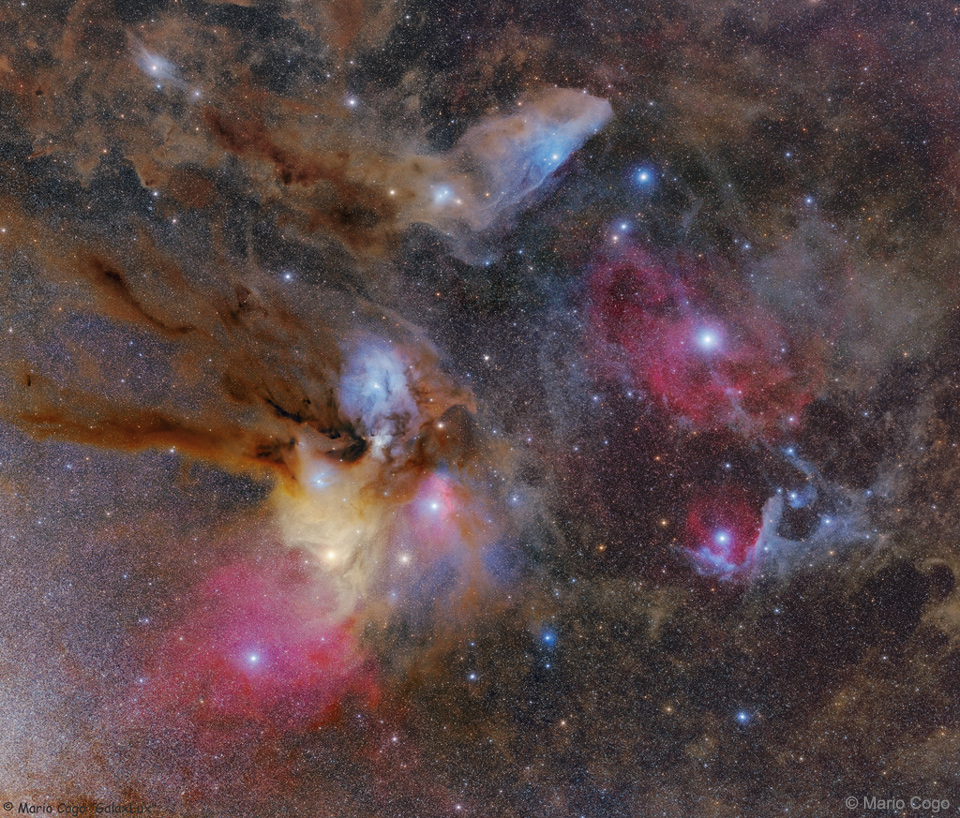
Rho Ophiuchi Wide Field

The colorful clouds surrounding the star system Rho Ophiuchi compose one of the closest star forming regions. Rho Ophiuchi itself is a binary star system visible in the blue reflection nebula just to the left of the image center. The star system, located only 400 light years away, is distinguished by its multi-colored surroundings, which include a red emission nebula and numerous light and dark brown dust lanes. Near the lower left of the Rho Ophiuchi molecular cloud system is the yellow star Antares, while a distant but coincidently-superposed globular cluster of stars, M4, is visible just to the right of Antares. Near the image top lies IC 4592, the Blue Horsehead nebula. The blue glow that surrounds the Blue Horsehead’s eye — and other stars around the image — is a reflection nebula composed of fine dust. On the featured image right is a geometrically angled reflection nebula cataloged as Sharpless 1. Here, the bright star near the dust vortex creates the light of surrounding reflection nebula. Although most of these features are visible through a small telescope pointed toward the constellations of Ophiuchus, Scorpius, and Sagittarius, the only way to see the intricate details of the dust swirls, as featured above, is to use a long exposure camera. via NASA
https://apod.nasa.gov/apod/ap190513.html


astronomy, NASA, photos, space, #space
Saturday, May 11, 2019

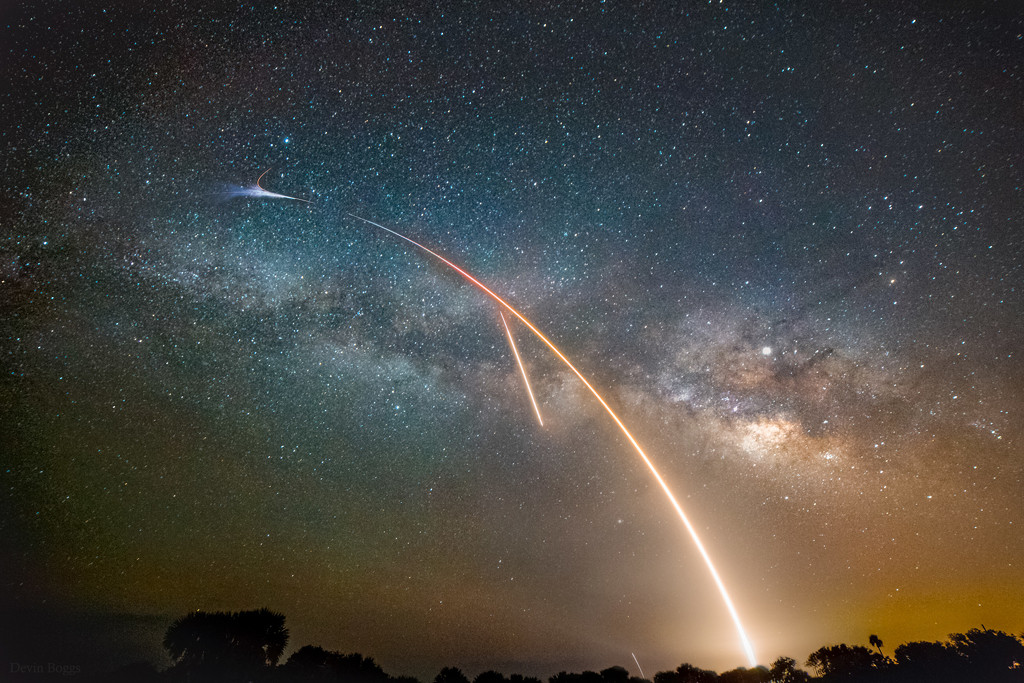
Milky Way, Launch, and Landing

The Milky Way doesn’t look quite this colorful and bright to the eye, but a rocket launch does. So a separate deep exposure with a sensitive digital camera was used in this composite skyscape to bring out our galaxy’s central crowded starfields and cosmic dust clouds. In the scene from Merritt Island National Wildlife Refuge, a nine minute long exposure begun about 20 minutes after the Miky Way image recorded a rocket launch and landing. The Falcon 9 rocket, named for the Millennium Falcon of Star Wars fame, appropriately launched a Dragon resupply ship to the International Space Station in the early morning hours of May the 4th. The plume and flare at the peak of the launch arc mark the rocket’s first stage boost back burn. Two shorter diagonal streaks are the rocket engines bringing the Falcon 9 stage back to an offshore landing on autonomous drone ship Of course I Still Love You. via NASA
https://apod.nasa.gov/apod/ap190511.html


astronomy, NASA, photos, space, #space
Monday, May 6, 2019

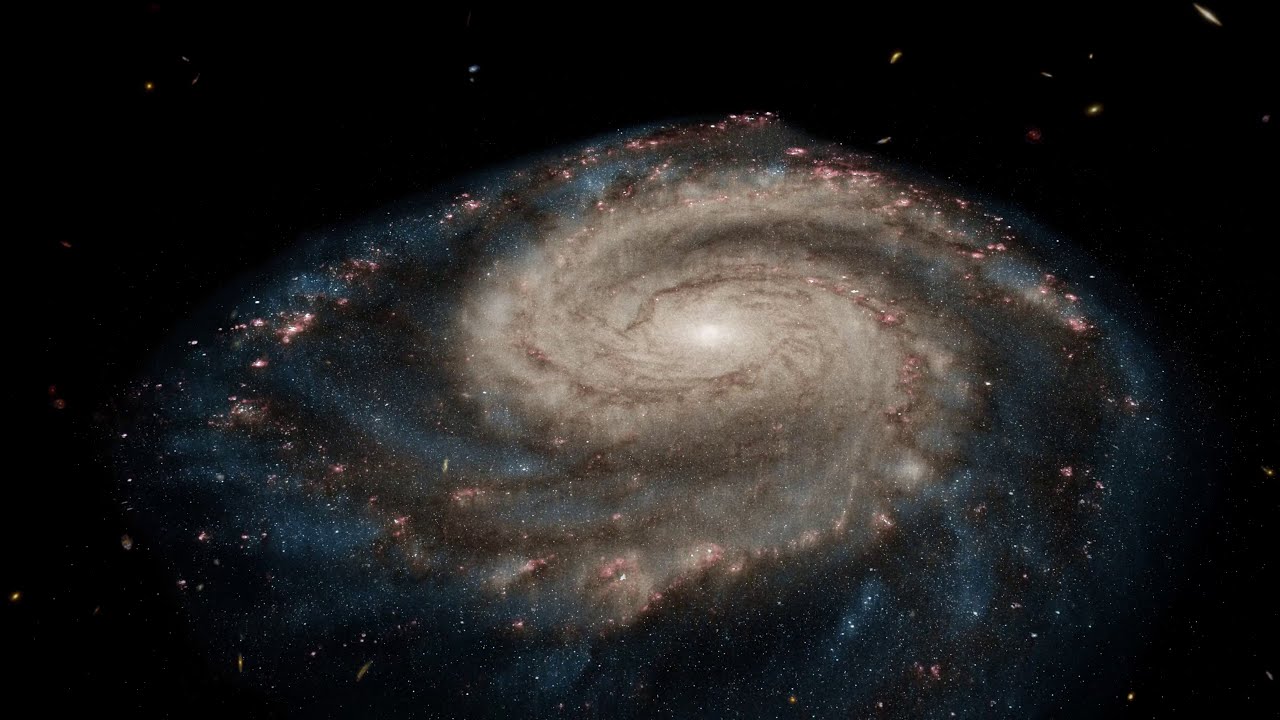
Virtual Flyby of the Whirlpool Galaxy

What would it look like to fly over a spiral galaxy? To help visualize this, astronomers and animators at the Space Telescope Science Institute computed a virtual flyby of the Whirlpool Galaxy (M51) using data and images from the Hubble Space Telescope. At only 25 million light years distant and fully 50 thousand light years across, the Whirlpool is one of the brightest and most picturesque galaxies on the sky. Visible during the virtual flyby are spiral arms dominated by young blue stars, older lighter-colored stars, dark lanes of dust, and bright red emission nebulae. Many galaxies far in the distance can be seen right through M51. The visualization should be considered a time-lapse, because otherwise the speed of the virtual camera would need to be very near the speed of light. via NASA
https://apod.nasa.gov/apod/ap190506.html


astronomy, NASA, photos, space, #space
Sunday, May 5, 2019

Saturn, Titan, Rings, and Haze

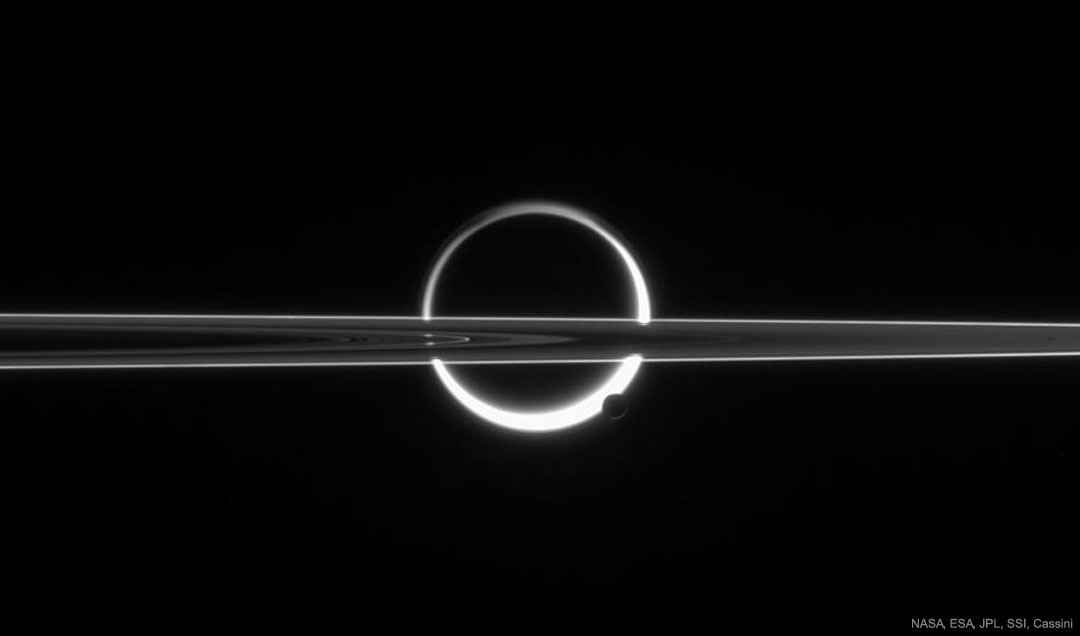
This is not a solar eclipse. Pictured here is a busy vista of moons and rings taken at Saturn. The large circular object in the center of the image is Titan, the largest moon of Saturn and one of the most intriguing objects in the entire Solar System. The dark spot in the center is the main solid part of the moon. The bright surrounding ring is atmospheric haze above Titan, gas that is scattering sunlight to a camera operating onboard the robotic Cassini spacecraft. Cutting horizontally across the image are the rings of Saturn, seen nearly edge on. At the lower right of Titan is Enceladus, a small moon of Saturn. Since the image was taken pointing nearly at the Sun, the surfaces of Titan and Enceladus appear in silhouette, and the rings of Saturn appear similar to a photographic negative. Now if you look really really closely at Enceladus, you can see a hint of icy jets shooting out toward the bottom of the image. It is these jets that inspired future proposals to land on Enceladus, burrow into the ice, and search for signs of extraterrestrial life. via NASA
https://apod.nasa.gov/apod/ap190505.html


astronomy, NASA, photos, space, #space